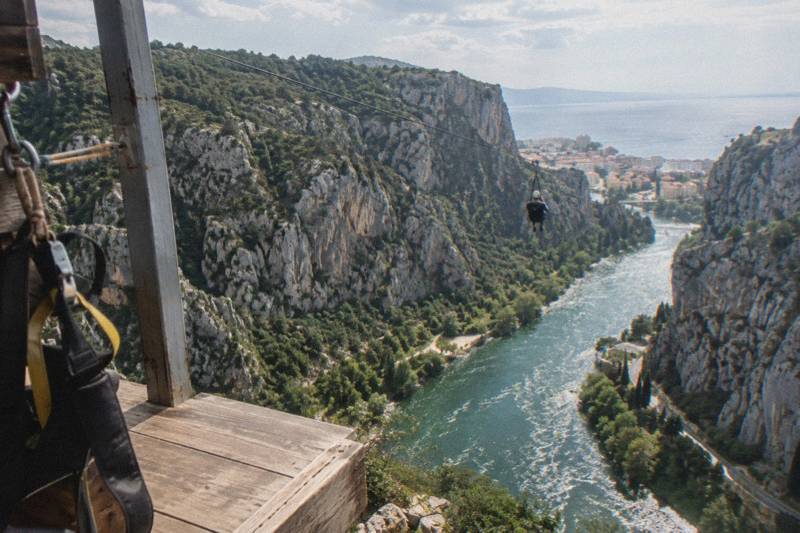
When To Ride The Zipline Above Omiš: Season, Time Of Day And Wind
The Omiš canyon zipline runs all year, off-season by appointment, and three practical factors decide your ride: the season, the time of day you book, and how wind can affect operation on the day.
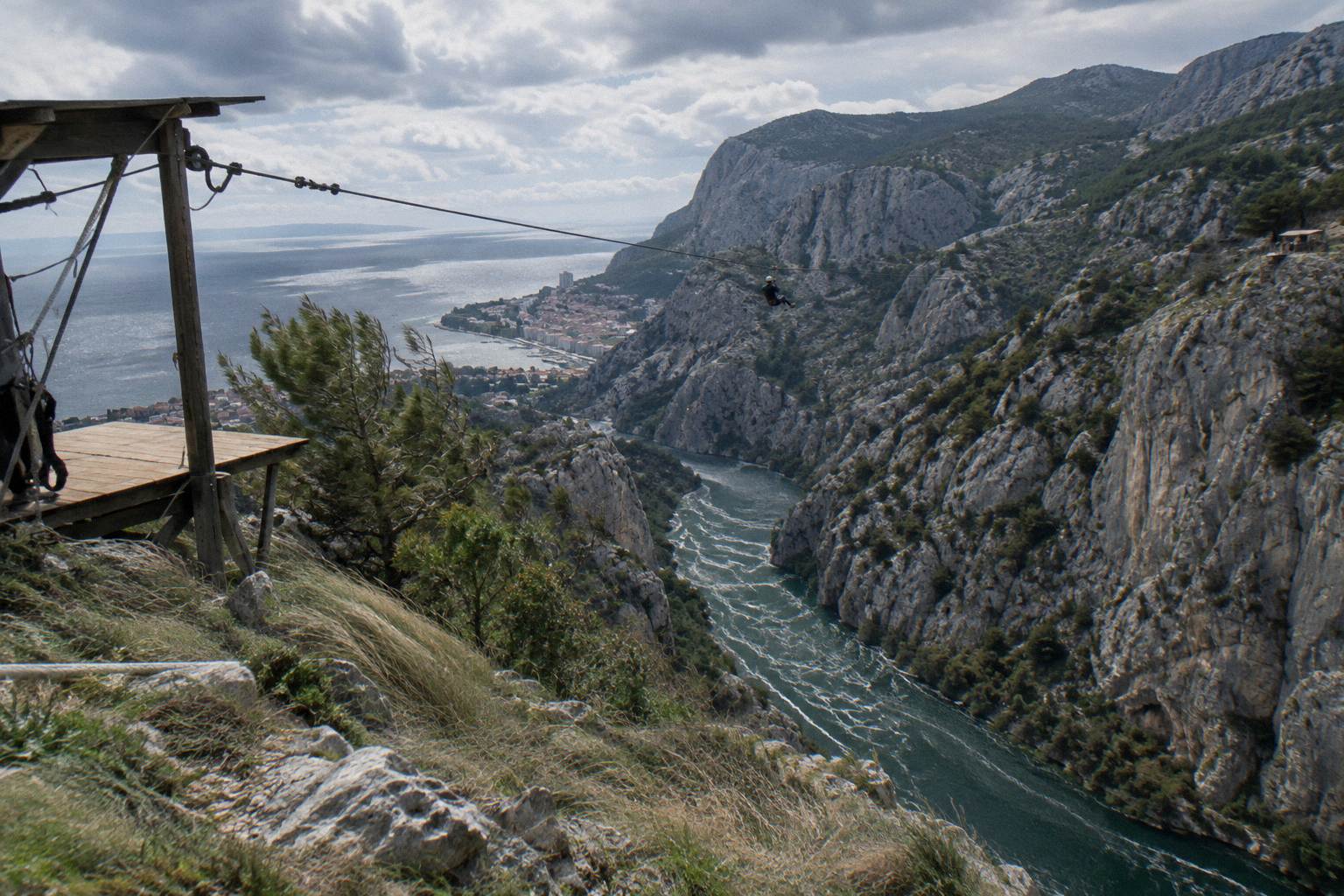
The zipline over the Cetina canyon at Omiš does not shut for winter. ZIPLINE Croatia, the operator of the 8-line canyon course, runs it all year, and off-season rides go by appointment. That single fact reframes the whole question of timing: you are not hunting for a narrow summer window, you are choosing which conditions suit you, your group and your travel dates, and then confirming that your date is running.
That matters because the three variables in this article pull in different directions. The season decides how far ahead you should book and how full a day looks. The time of day decides how the canyon feels and how the rest of your Omiš day fits around a 2.5 to 3 hour commitment. Wind is the one factor nobody controls, and the only planning advice is that conditions can affect operation on any given day, so availability for your exact date is the thing to confirm before you build a schedule around it.
In short: the Omiš canyon zipline is open all year, off-season by appointment, at €80 per person with free cancellation up to 24 hours before. Morning slots tend to be the safest structural bet for a 2.5 to 3 hour ride followed by a beach afternoon, though the operator does not publish fixed start times, so you work with whatever slots the booking page offers for your date. Wind and weather can affect operation on the day, and there is no published threshold to plan around, so the practical move is to book with the 24 hour cancellation window in mind and check availability for your date rather than guessing at a "safe" month.
If you are still deciding which course to ride at all, the broader where to zipline in Croatia breakdown covers the other parks; this post assumes the Omiš canyon course is the target and gets into the timing.
Quick Facts about timing the Omiš canyon course:
| Factor | What applies at the Omiš course |
|---|---|
| Season | Open all year; off-season rides by appointment |
| Price | From €80 per person |
| Cancellation | Free cancellation, 24 hour window |
| Ride length | 2.5 to 3 hours booked |
| Meeting point | Ul. Josipa Pupačića 4, Omiš old town, 15 minutes before |
| Course | 8 lines, 2,100 m total, longest 700 m, up to 150 m above ground |
| Minimum age | 7 |
| Minimum weight | 30 kg |
| Wind policy | Conditions can affect operation; no threshold is published, check availability for your date |
The short answer: any season works, because the Omiš canyon course runs all year, with off-season rides arranged by appointment. Time of day is the lever you actually control, and a morning slot is the most forgiving choice for a 2.5 to 3 hour ride. Wind is the one factor you cannot plan around with numbers, since no operating threshold is published, so you hold your plans loosely and rely on the 24 hour free cancellation window.
Start with the season, because it is simpler than most people expect. ZIPLINE Croatia operates the canyon course 12 months a year. In the busy part of the year you are choosing among more departures and more fellow riders; off-season, the course runs by appointment, which means you contact the operator or use the booking page to arrange a slot rather than assuming one exists. There is no closure month to dodge and no reopening date to chase, which is rare enough among canyon attractions to be worth stating plainly: the season question at Omiš is about crowds and appointment logistics, not about access.
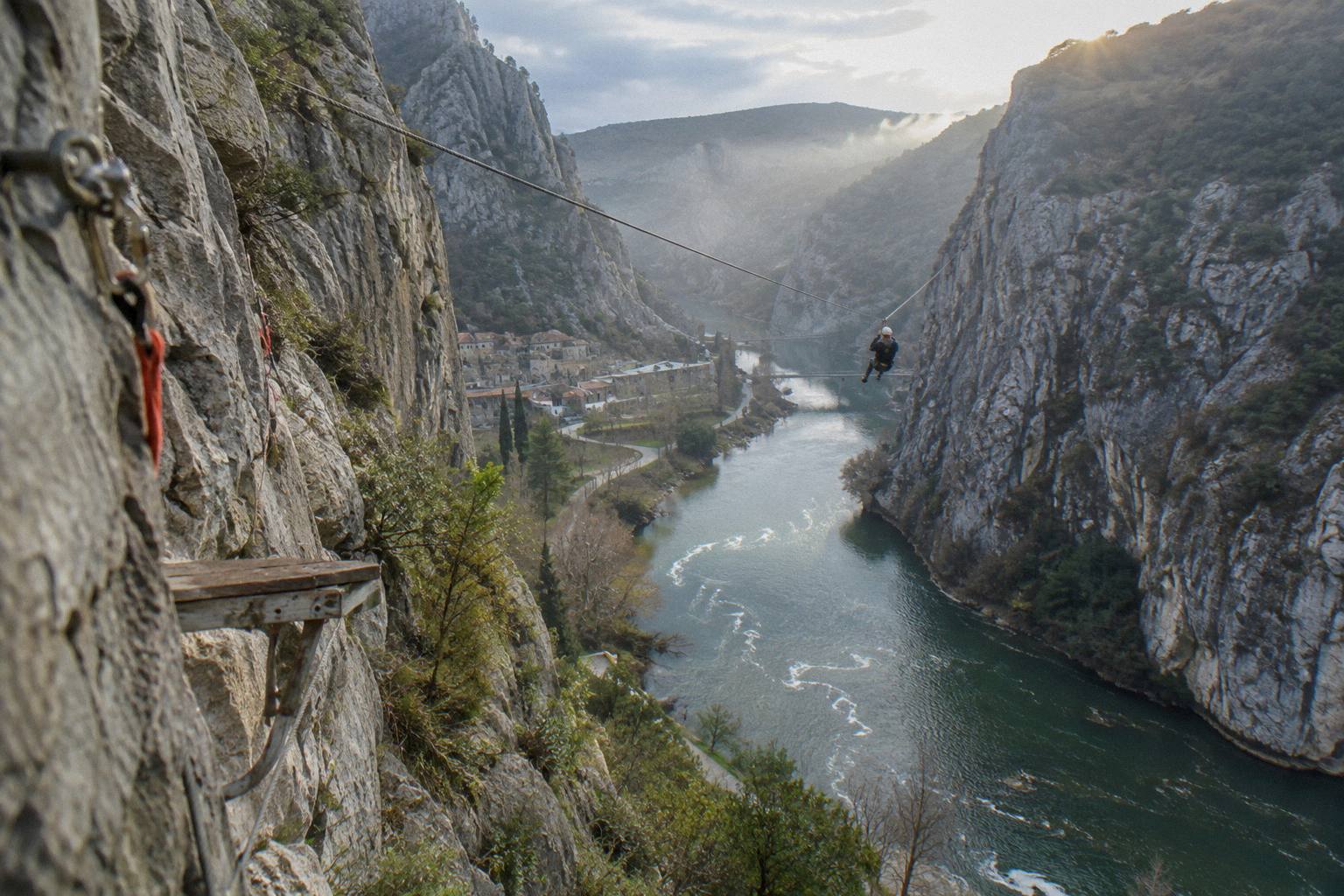
The protected landscape the course flies over is part of why the canyon reads the same in every season. The Cetina gorge is designated a Significant Landscape called Kanjon rijeke Cetine, first protected in 1963 and covering about 6,493 hectares from the Prančevići dam to the sea, and it also carries two Natura 2000 designations, per the official protected-area documentation. Protected status means no development creep into the view: whenever you ride, the canyon below is the same river gorge it has been for decades.
Time of day is where your decision actually lives. The ride takes 2.5 to 3 hours door to door, starting with a 15 minute early meet at the operator office at Ul. Josipa Pupačića 4 in Omiš old town, a vehicle transfer to the start, and a 5 to 10 minute uphill hike before the first of eight lines. The operator does not publish fixed start times, so you take the slots the booking page shows for your date. Structurally, the morning has two advantages: the ride is done before the Adriatic afternoon heat peaks, and a delay of an hour does not eat your whole day. An afternoon slot works too, and plenty of riders prefer it, but it commits your whole late day to the canyon.
Wind deserves its own paragraph. A zipline is a cable suspended across a gorge, and strong wind is the classic reason any zipline anywhere pauses operation. The operator does not publish a wind-speed threshold, and no such figure should be invented here: what you can rely on is that conditions can affect operation on the day, that the operator's guides make the call, and that your booking carries free cancellation up to 24 hours before. The practical takeaway is to treat wind as a small, unquantifiable risk on any date, not as something you can engineer around by picking a particular month.
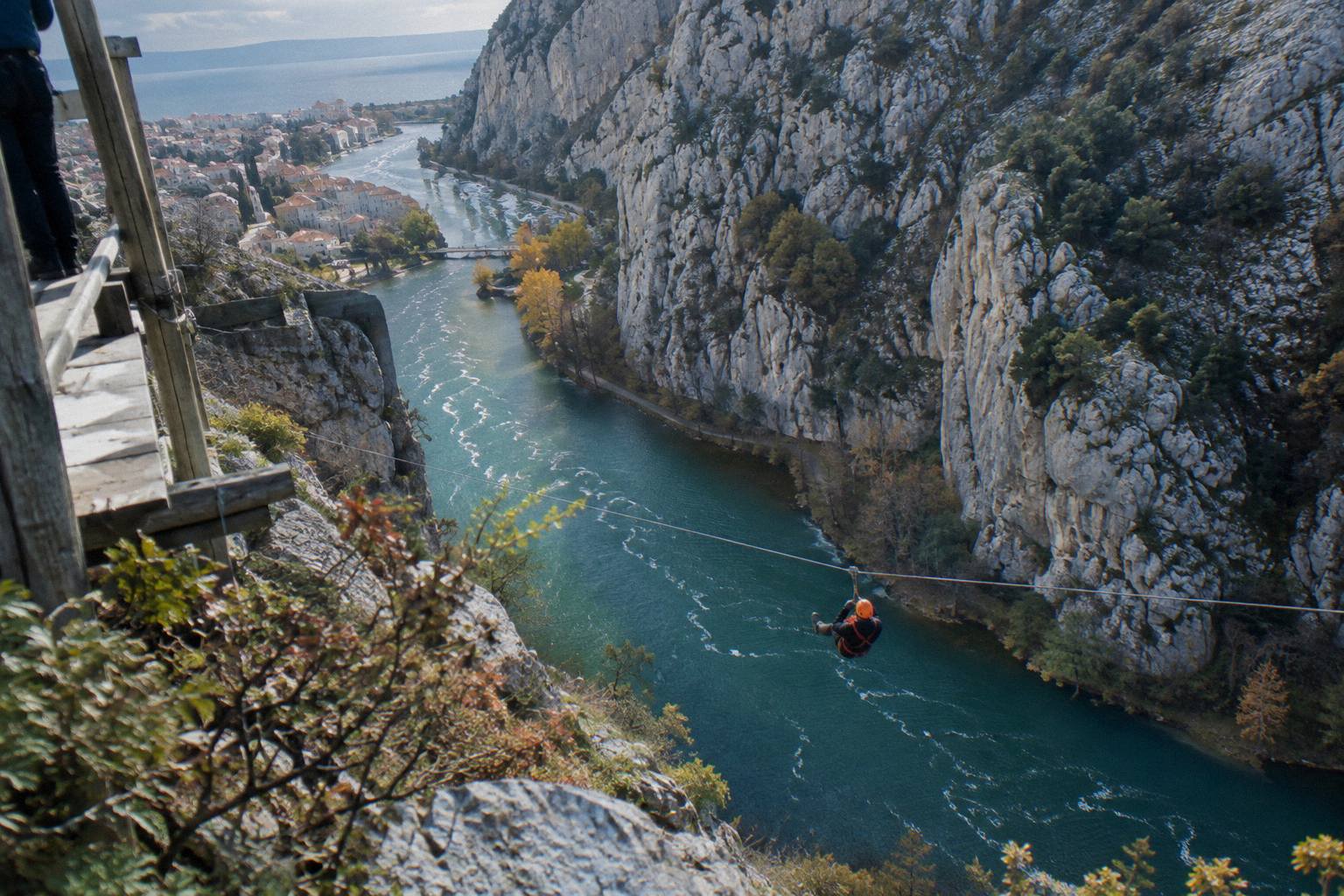
Does The Zipline Above Omiš Run All Year?
Yes. ZIPLINE Croatia runs the canyon course every month of the year, and off-season rides are arranged by appointment rather than on a fixed schedule. The price is €80 per person with free cancellation up to 24 hours before, and the same course, 8 lines and 2,100 m, operates in every season. The only thing that changes off-season is how you secure a slot, not whether one exists.
The all-year status comes straight from the operator, whose own site at zipline-croatia.com describes the course as operating year-round with by-appointment arrangement outside the main season. For a traveller fixing dates months out, this is the single most useful timing fact on this page: a November city break to Split or a February coastal drive still allows a canyon zipline day, provided you arrange it ahead rather than walking up to the office on spec.
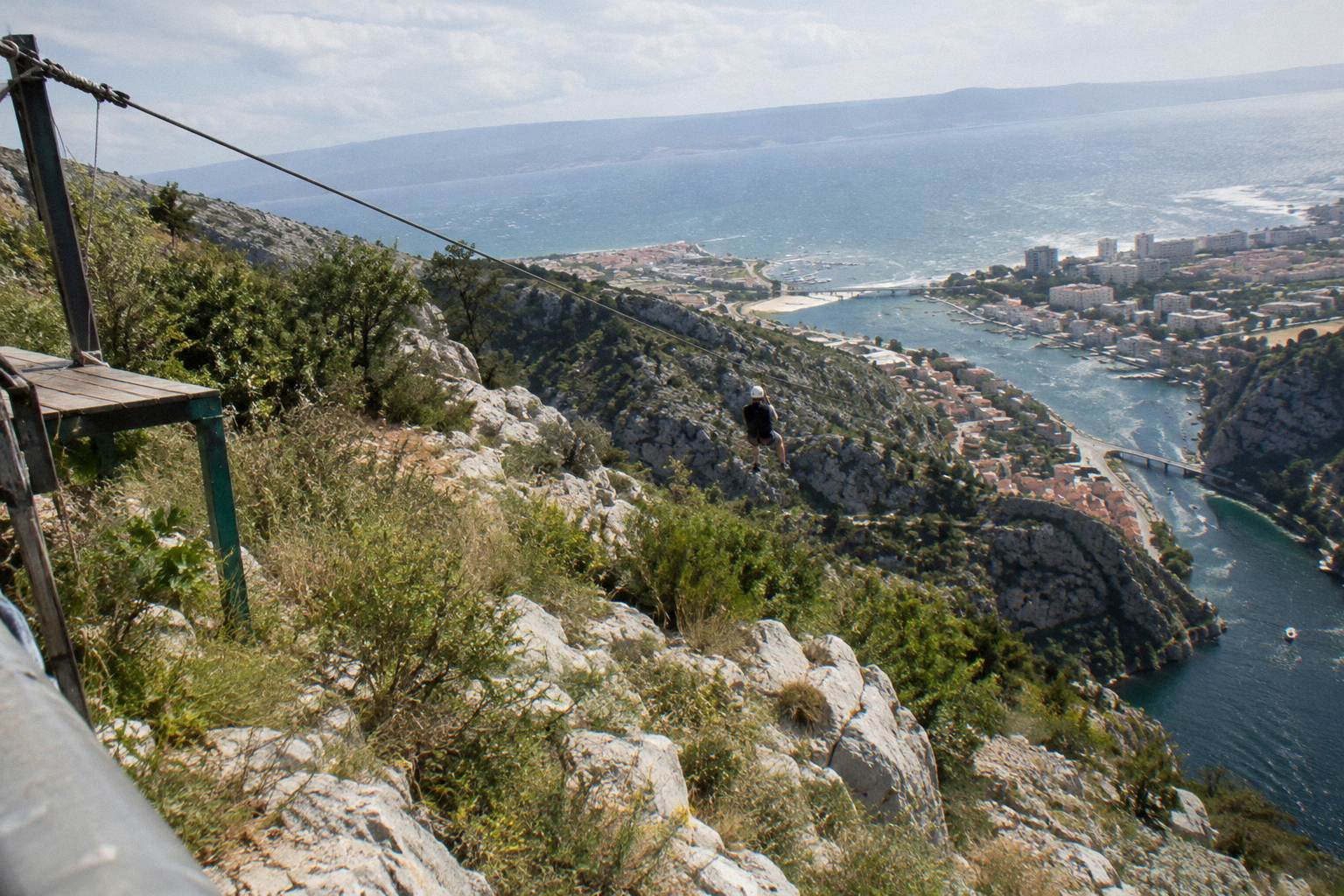
The mechanics of the day are identical whenever you ride. You meet at the operator office at Ul. Josipa Pupačića 4 in Omiš old town, 15 minutes before your slot. A vehicle takes you to the start of the course, transport included in the price. There is a short uphill hike of 5 to 10 minutes before you reach the first line, and the ride opens with two 25 m practice lines before the eight main cables, so the format does not compress or expand with the calendar. Groups run 2 to 12 people with two guides.
The Cetina itself is a constant of the scene. The river runs about 101 km from its source to the mouth at Omiš on the Adriatic, per the Cetina river overview, and it is that gorge, cut through limestone a short way upstream of town, that the lines cross. The water flows in January exactly as it does in July, which is part of why the operator can keep the course open: there is no freeze season, no low-water closure, no annual maintenance window to work around in the public information.
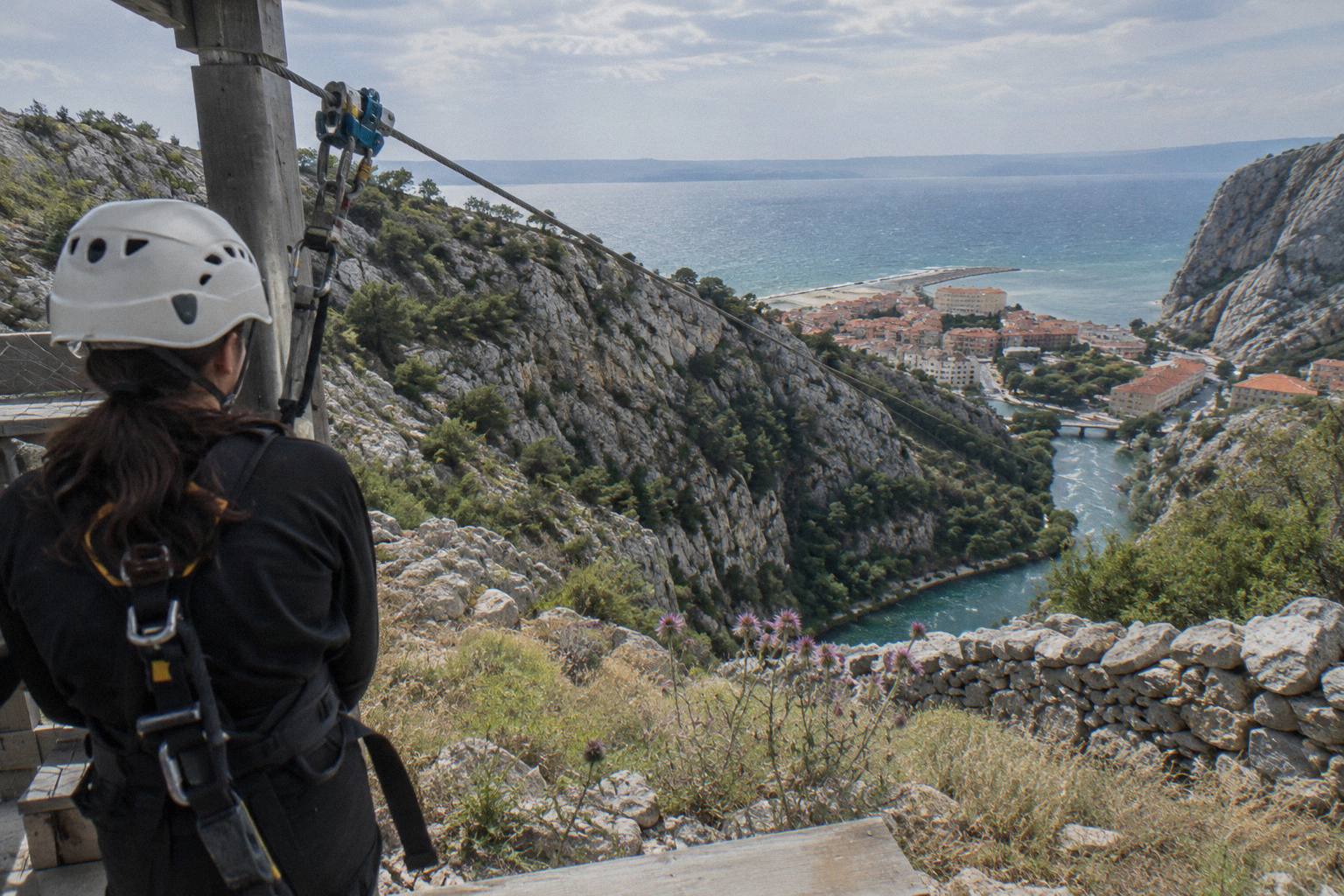
What the all-year status does not mean is that every day runs. Conditions, wind among them, can affect operation on any date, and the operator's guides decide on the day. That is precisely why the 24 hour free cancellation window matters more than the season: it is your insurance against a date that will not cooperate, and it costs nothing to use. Book the date you want, hold the cancellation window in mind, and let the operator make the weather call.
Worried about committing before your dates are locked? You can cancel free up to 24 hours before, so booking early costs you nothing if plans shift.
The 24 hour window is the whole reason booking ahead is safe even in a shoulder month. If your flight moves or the forecast turns, the cancellation option sits there, and rebooking for another day is a fresh booking rather than a penalty. Travellers who wait until they are physically in Omiš to arrange a ride give up that flexibility for nothing.
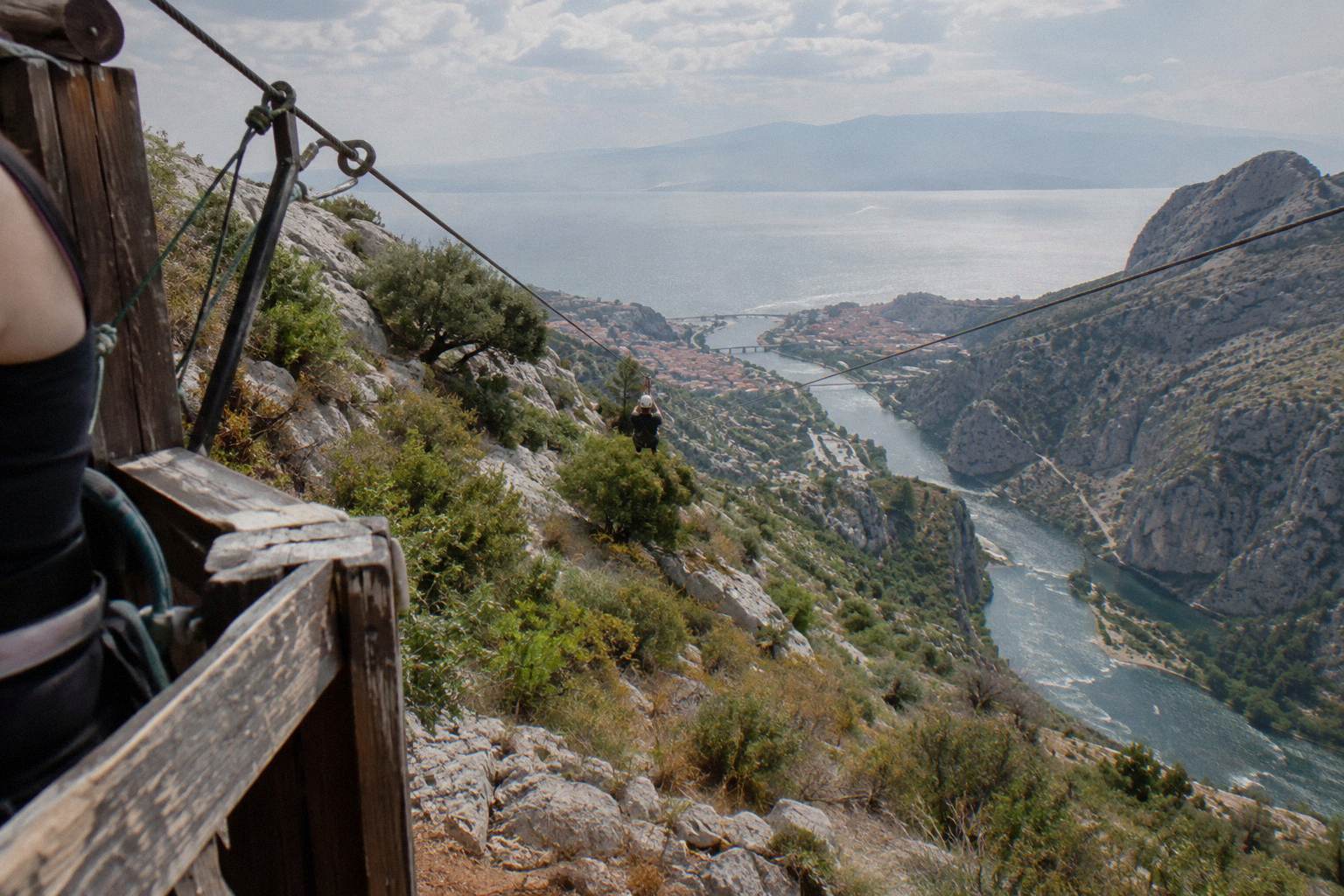
For anyone based in Split rather than Omiš, remember the two parks are not interchangeable on logistics. The Omiš course starts at the old town office with no Split transfer, while the Split zipline course on Mount Kozjak, run by Zip Line Split and Homo Volans, starts at its Klis base about 25 minutes from Split and sells a transfer as an optional paid add-on. Same country, same sport, different mountain: the Kozjak course is not on the Cetina and carries its own figures, 6 lines and 2,500 m, from €60 per person.
What Time Of Day Works Best?
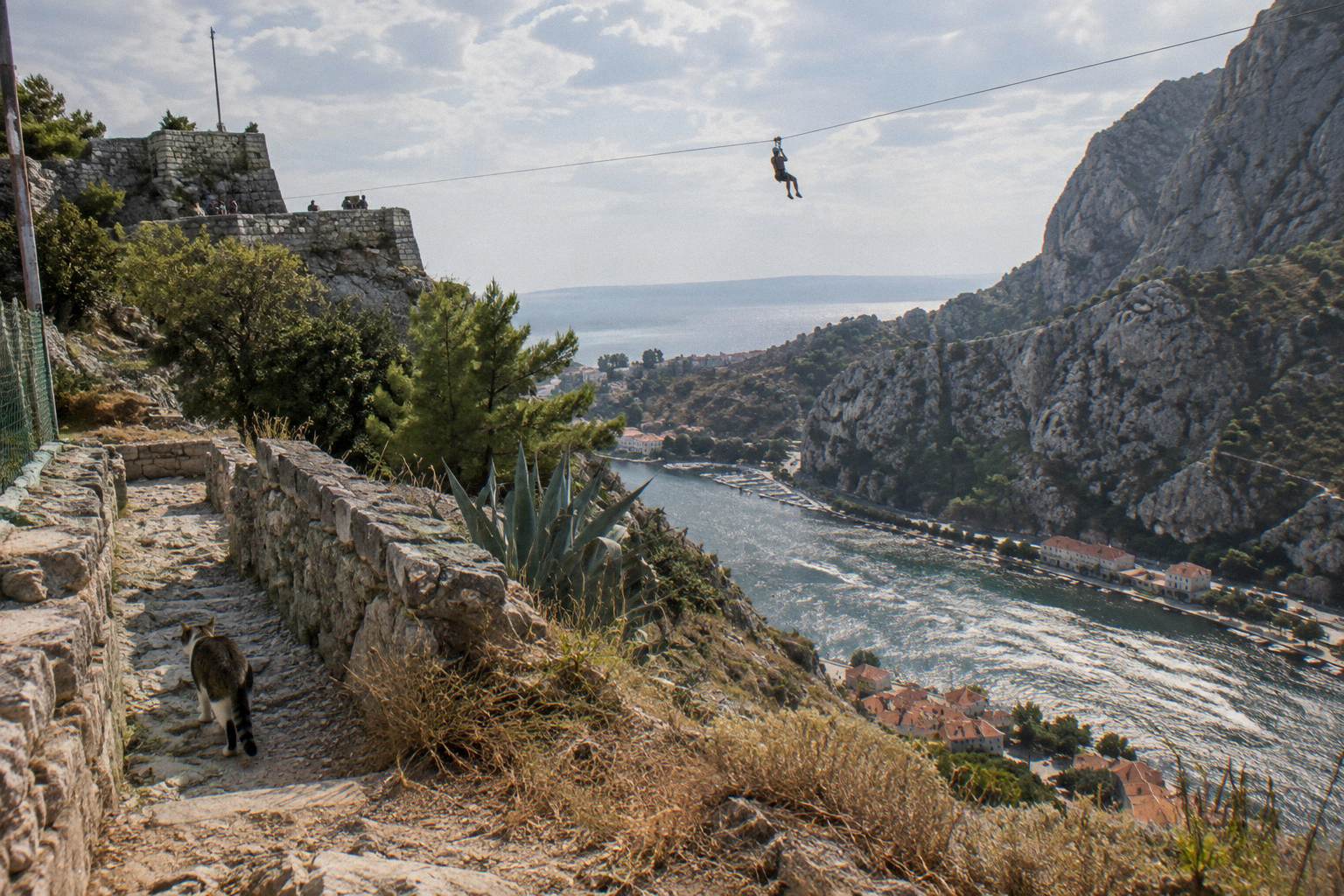
Morning slots are the most forgiving choice: they front-load the 2.5 to 3 hour ride, leave the afternoon free, and give you slack if the day runs long. Afternoon rides are equally bookable at from €80 per person, but they commit your later day to the canyon. The operator publishes no fixed start times, so take the earliest slot the booking page shows for your date.
Think about the day as a shape rather than a schedule. The Omiš course asks for a 15 minute early meet in the old town, a vehicle transfer, a 5 to 10 minute uphill hike, two 25 m practice lines and then eight main lines, with the booked duration running 2.5 hours on ZIPLINE Croatia's 2.5-Hour Canyon Zipline Ride and 3 hours on the longer-labelled version of the same course. A morning slot puts you back in town around midday with the beach, the riverside and lunch all still ahead of you. An afternoon slot means the ride ends into the evening, which some riders love and others find eats the day.
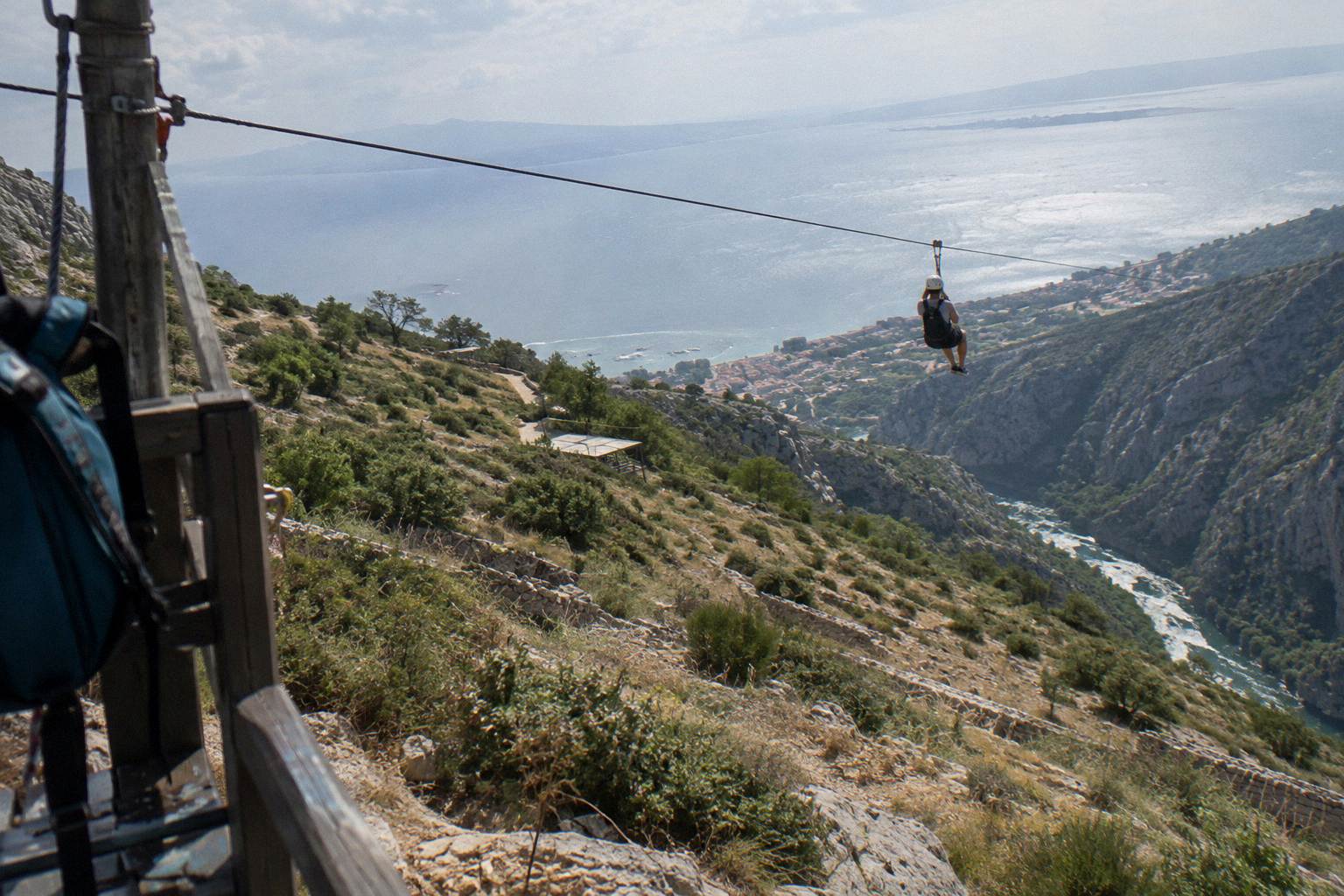
Summer afternoons on the Dalmatian coast are hot, and the course includes a hike, a harness and a helmet, none of which come with shade guarantees. That is a structural argument for mornings in the warm months, stated carefully: this is not a claim about temperatures or start times, neither of which is published, but simple logic about when you would rather carry gear uphill for 10 minutes. Off-season, the argument weakens, and the afternoon becomes as sensible as the morning.
There is also a group-size angle. Rides run in groups of 2 to 12 with two guides, so a slot is a shared experience, and morning groups often skew toward people with the same "ride first, beach after" plan. If you are travelling as a family with children at or above the minimum age of 7, the morning also has the advantage of riding before young energy flags, though that is preference, not policy.
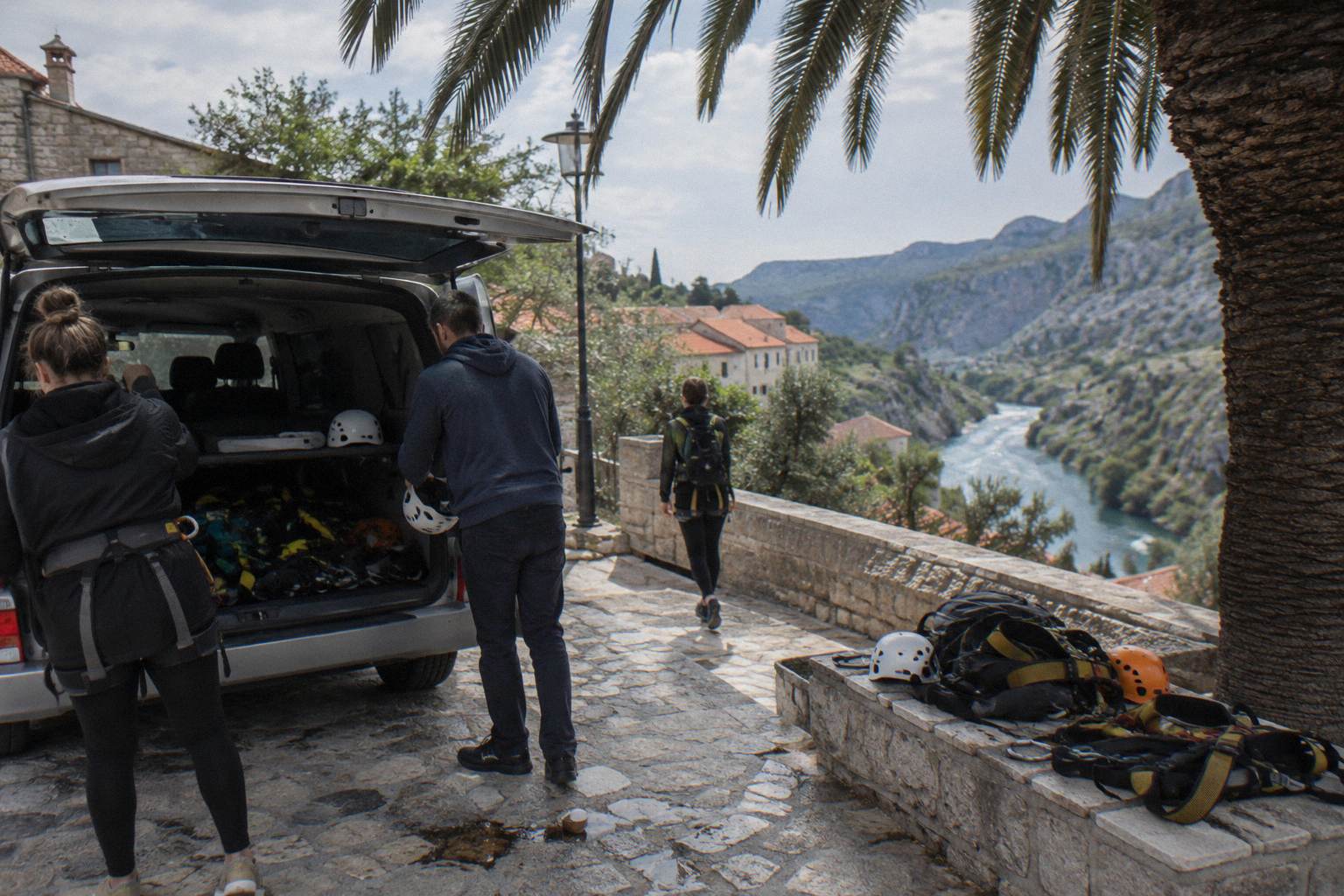
For comparison, if you end up riding the Kozjak course near Split instead, the same morning logic applies to its longer 2,500 m of cable: Zip Line Split's 2-3 Hour Zipline, Optional Transport, rated 4.9 across 1,729 reviews, is the most reviewed trip in this comparison set, and its Klis base sits about 25 minutes from Split, so a morning ride pairs naturally with a Split afternoon. The Klis course with the transfer option, rated 5 across 593 reviews, runs 3 hours and adds the paid Split transfer as an option.
One last scheduling note: the 15 minute early meet is not a suggestion to negotiate. Building your morning around an old town office at Ul. Josipa Pupačića 4 means knowing where that street is the night before, especially if you are staying outside Omiš. The riverside layout of the old town makes the office easy to find on foot, but a rushed arrival is the most common self-inflicted timing problem, covered in more detail below.
How Does Wind Affect The Ride?
Wind can pause the course on any day of the year, because a zipline cable crossing a gorge is exposed to exactly the conditions a canyon funnels. No operating threshold is published, and none should be guessed at: the operator's guides make the call on the day. What you can plan around is the 24 hour free cancellation window, which lets you move the ride if the forecast for your date looks wrong.
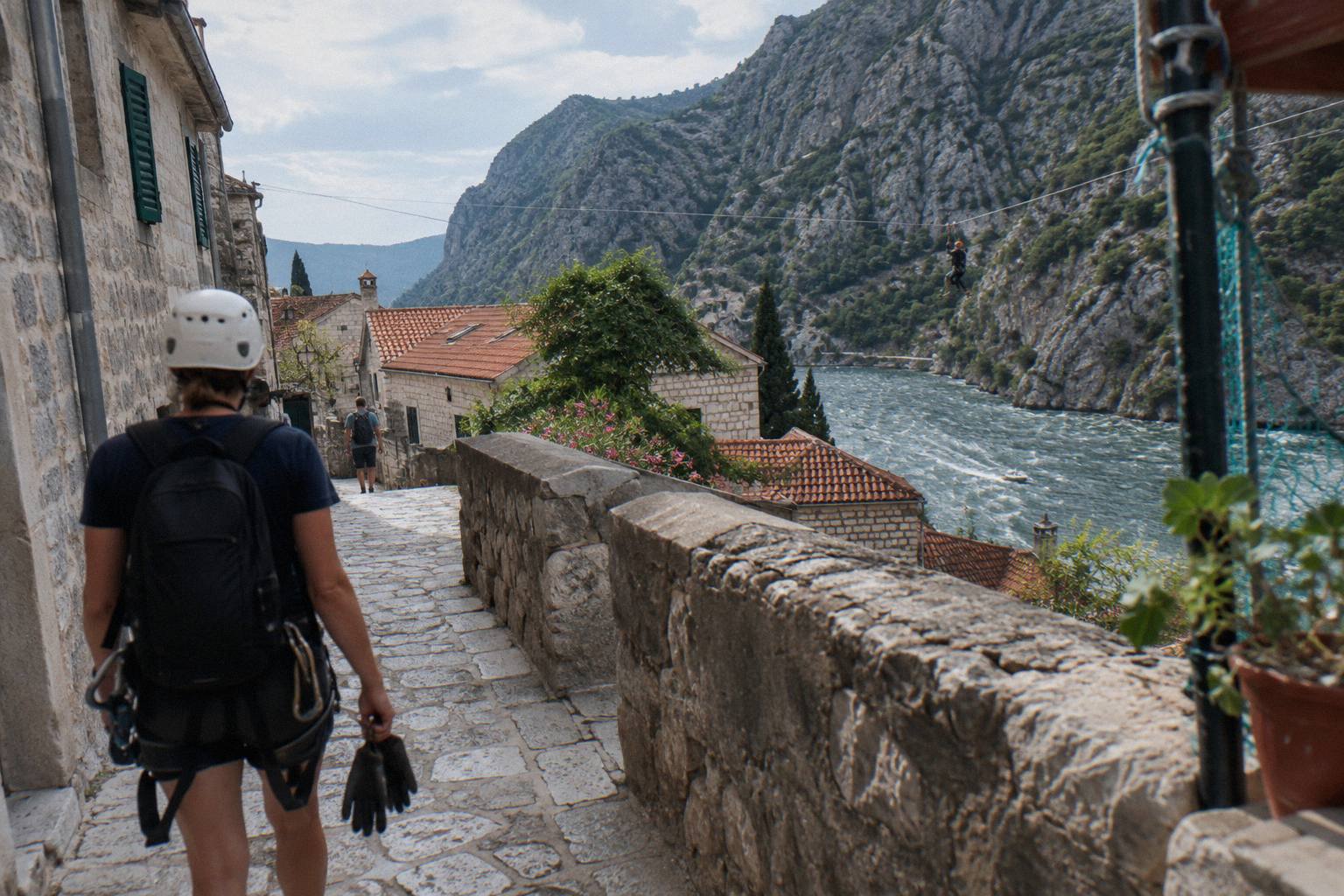
It helps to understand what wind actually does to a ride. A rider on a zipline hangs beneath a trolley on a cable, and the cable is under tension between two anchor points. Strong wind pushes the rider around the line's axis and can slow travel toward the far platform; every serious operator worldwide reserves the right to pause for it. At Omiš, the lines run up to 150 m above the ground and the longest spans 700 m, so exposure to moving air is part of the design, and the operator's judgement is the mechanism that manages it.
What the reader should not do is hunt for a number. There is no published wind speed at which the Omiš course stops, and any figure you read elsewhere is invented. The same goes for start times and hours: the operator does not publish them, and the booking page is where your date's slots appear. Treat the day's operation as confirmed by the operator, not by a spreadsheet.
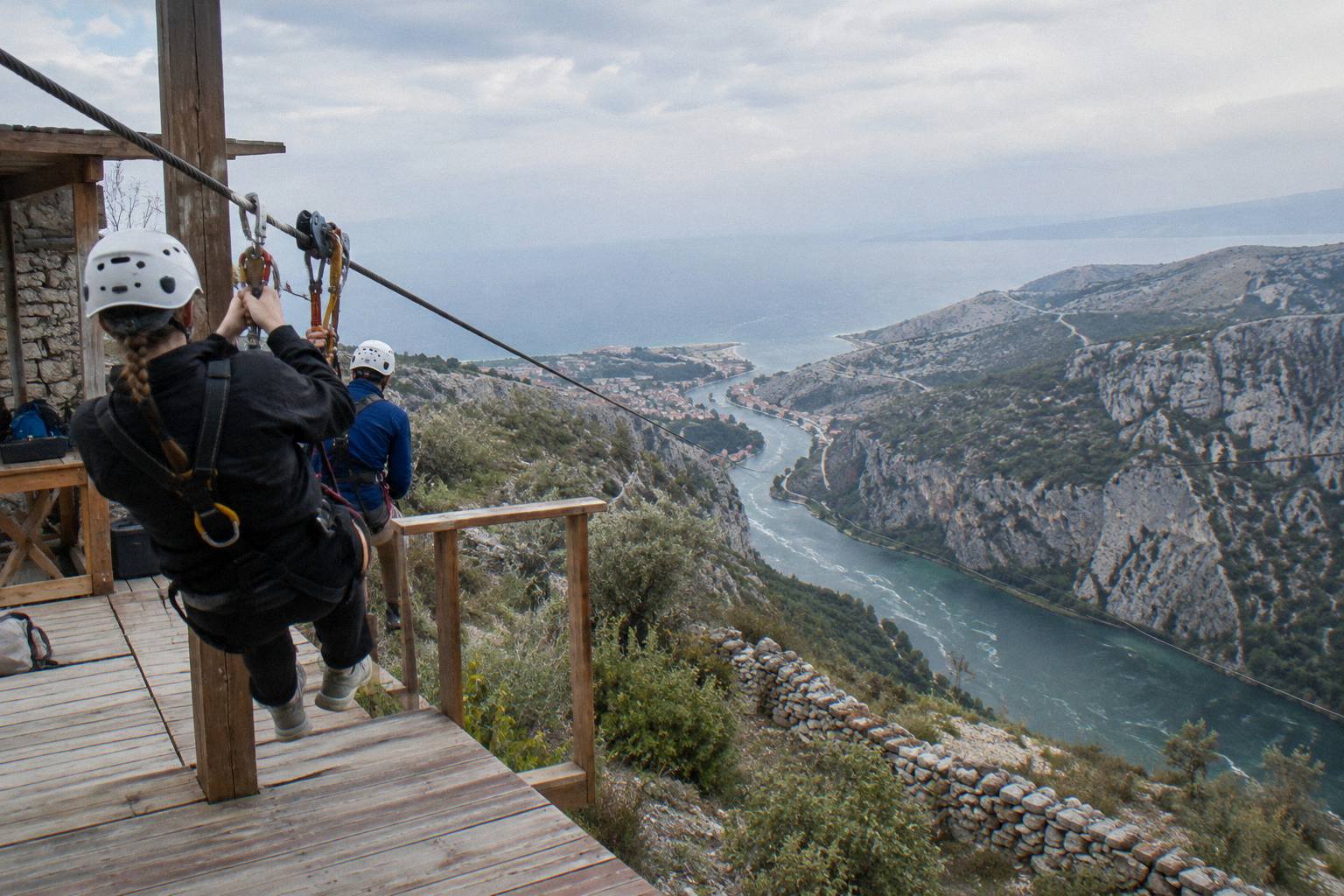
The 24 hour cancellation window is the practical tool. If the forecast for your ride date looks poor the day before, you can cancel free and rebook later in your trip, or not at all. This is why the advice throughout this article is to book early rather than late: early booking costs nothing, keeps the cancellation option alive, and lets you respond to forecasts as they sharpen. Booking on the day itself forfeits exactly the flexibility that wind makes valuable.
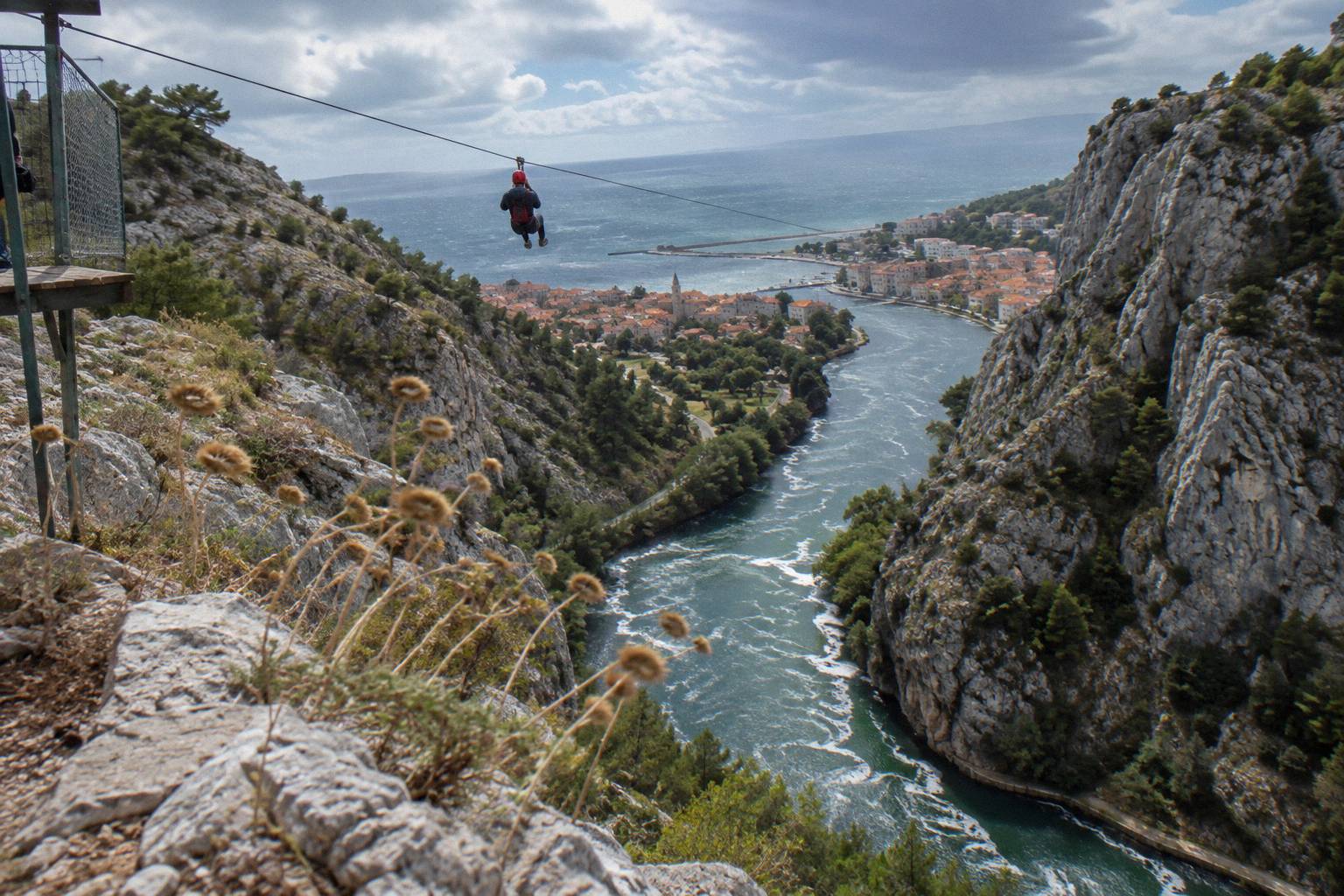
There is a comforting structural point too: the two-guide format for groups of 2 to 12 exists partly to manage conditions on the course itself, adjusting pace and sequence on the day rather than running a fixed conveyor. The two 25 m practice lines at the start give every rider a low-stakes feel for the cable before the 700 m spans, whatever the air is doing. If you want the full safety picture rather than just the timing angle, the is the Omiš zipline safe walkthrough covers it in depth.
If wind does scrub your Omiš morning, the day is not wasted. The Kozjak course at Klis runs in different terrain on a different mountain, and its operator runs its own day; a same-trip swap between the two parks is a real contingency, with the Kozjak ride at from €60 per person and its weight range of 30 to 110 kg. Check availability on the Kozjak side before assuming it, since it has its own conditions to judge.
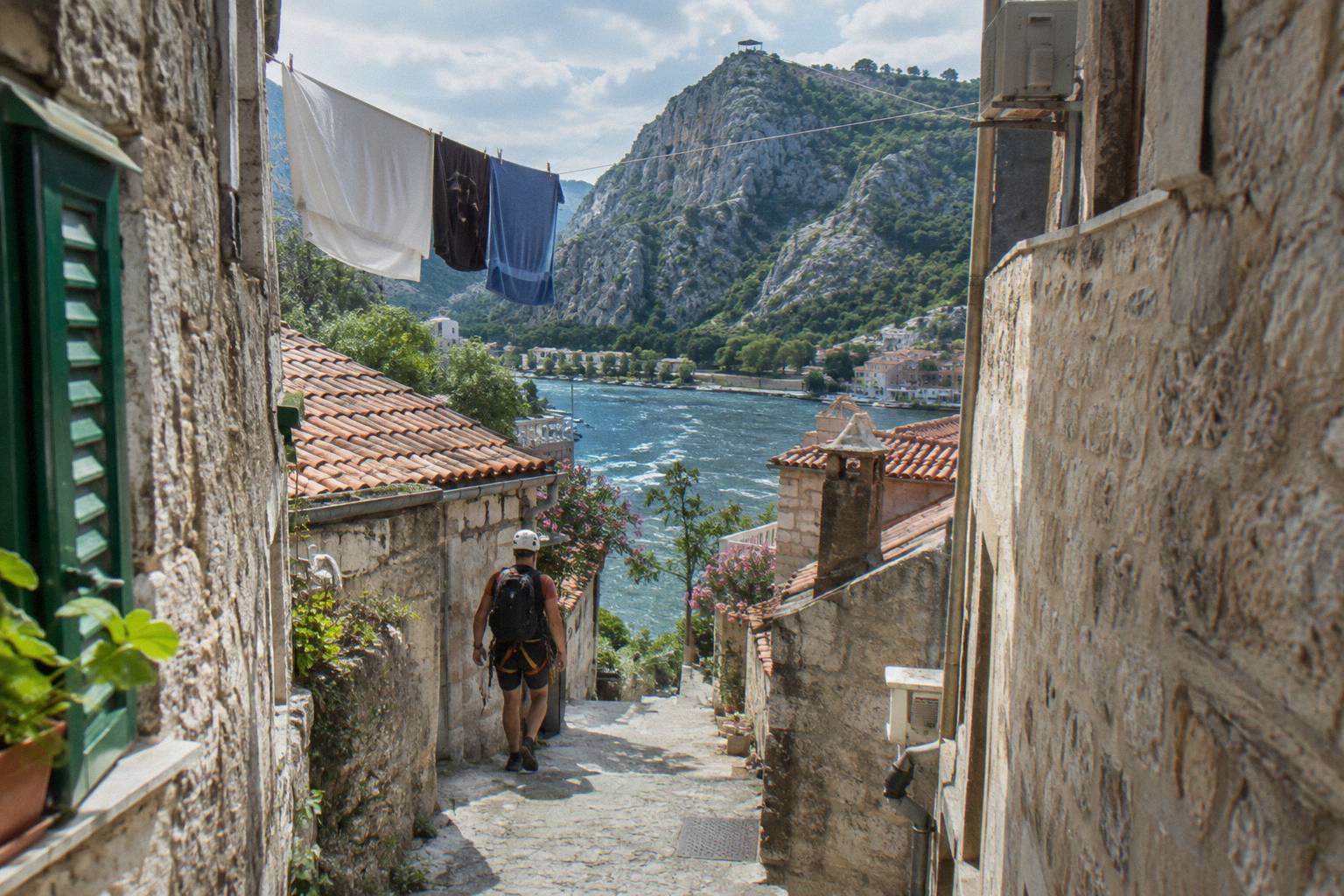
Season By Season: What Actually Changes
Nothing about the course changes with the calendar: the 8 lines, the 2,100 m, the €80 price and the two-guide format are identical in every month. What changes is how you book and who is around you: the main season runs scheduled departures you can pick from, while off-season the course operates by appointment, so you arrange the slot with the operator ahead of time rather than choosing from a full day of times.
Break the year into its two operating modes and the planning gets simple. In the scheduled season, the booking page shows real slots for real dates, and your job is standard: pick a day, pick a morning slot if the heat argument matters to you, and hold the 24 hour cancellation. Off-season, the same course runs by appointment, which shifts the work to earlier in your planning. You confirm a date and time with the operator, and once confirmed, everything else about the day is identical: the old town meet, the vehicle transfer, the hike, the practice lines, the eight spans.
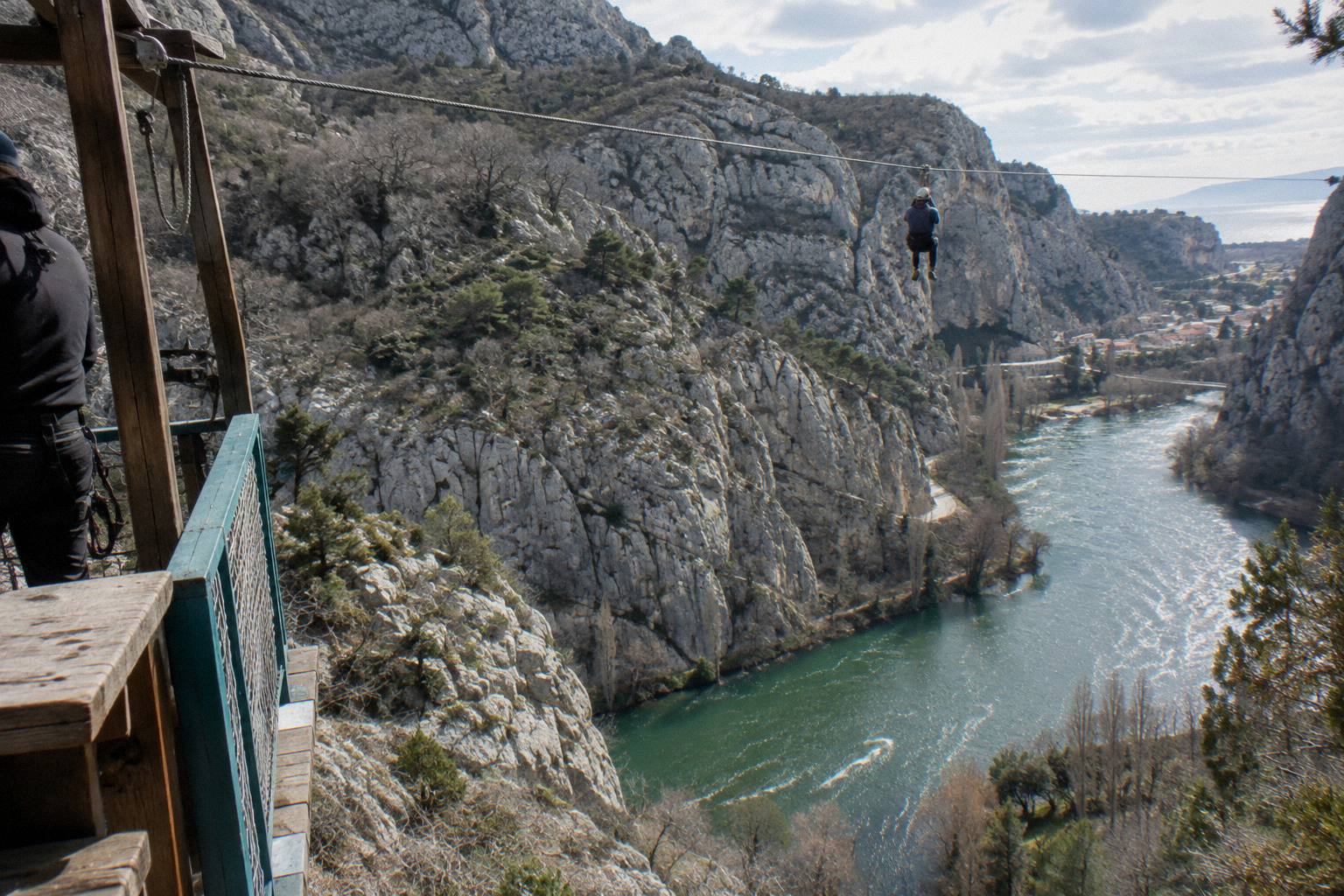
The off-season has quiet advantages worth naming. Appointment rides tend to mean smaller circles of riders around you in the old town before the transfer, and Omiš itself is a different town out of season, slower and more local. None of that is a promise about your specific day, but it is the shape of the difference: same cables, same river, thinner crowds, a bit more arranging to do up front.
| Main season | Off-season | |
|---|---|---|
| Operating mode | Scheduled departures to choose from | By appointment with the operator |
| Course | 8 lines, 2,100 m, longest 700 m | Identical |
| Price | From €80 per person | From €80 per person |
| Cancellation | Free, 24 hour window | Free, 24 hour window |
| Meet | Ul. Josipa Pupačića 4, 15 min before | Identical |
| Best planning move | Book ahead, prefer morning slots | Contact the operator well ahead to fix a slot |
The fixed elements deserve emphasis because they are what make this an easy decision. The vehicle transport to the start is included whenever you ride. The minimum age of 7 and the 30 kg minimum weight apply in every month. The booked duration is 2.5 to 3 hours whether the calendar says July or February. You are never choosing between a "full" season course and a reduced winter course; there is one course and two ways of scheduling it.
For travellers stacking this ride into a bigger Dalmatian plan, seasonality ripples outward. A summer itinerary that pairs the canyon ride with other Omiš activities needs the morning slot more, since afternoons fill with beach time; a shoulder-season itinerary has more slack and can absorb an afternoon ride.
The same all-year logic does not automatically transfer to every park in the country. The Čikola canyon zipline near Šibenik, a third course in a different region with 3 lines totalling 1.4 km, runs on its own operator's schedule, and the Kozjak course at Klis keeps its own calendar on the operator side, with departures that vary by season. If your trip spans several parks, confirm each one's availability for your dates separately; an Omiš confirmation says nothing about Klis.
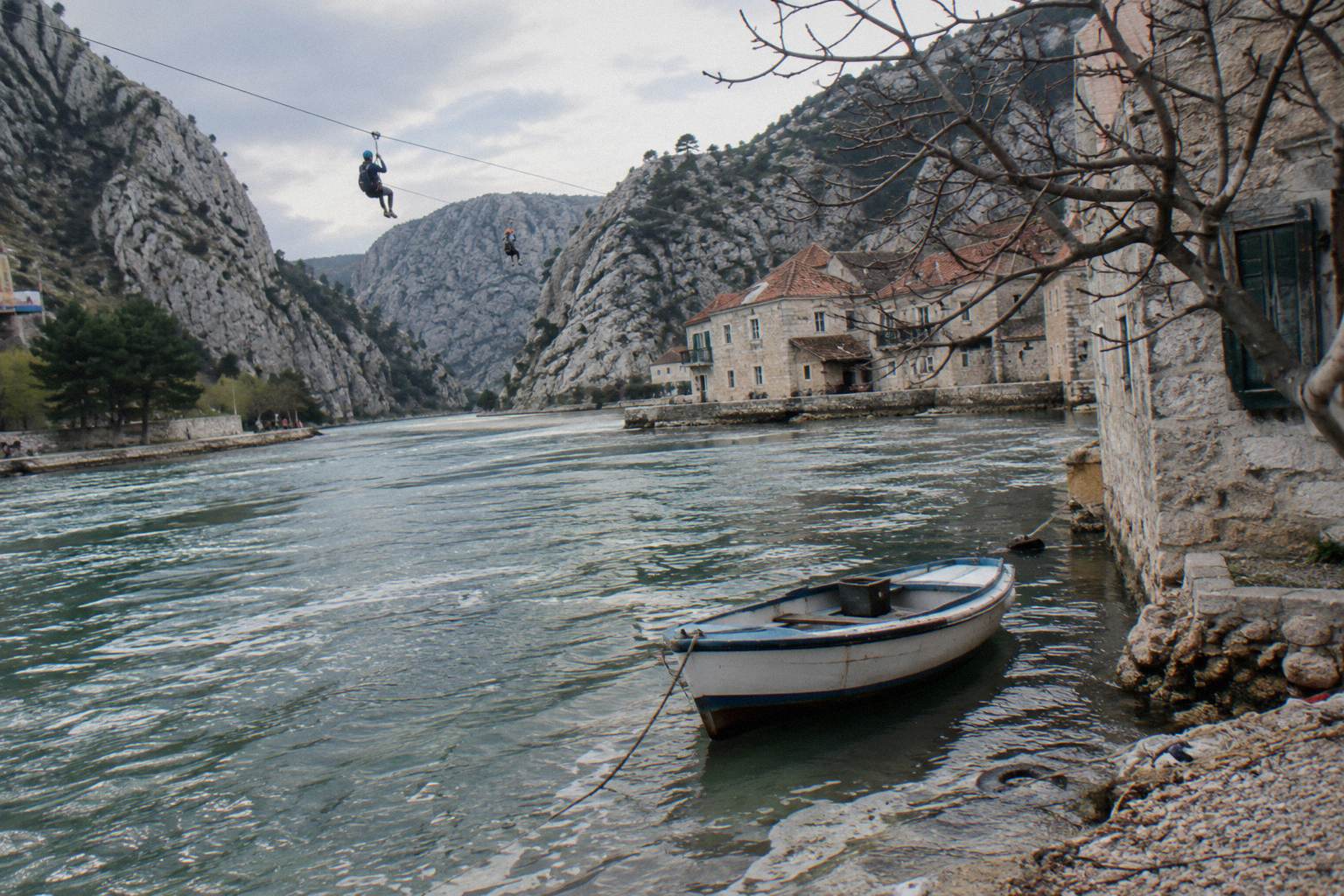
Mistakes That Trip People Up
The four common timing errors are: arriving at the old town office at the start time instead of 15 minutes before, assuming the operator publishes fixed daily start times, treating the wind question as solvable by picking a month, and skipping the early booking that keeps free 24 hour cancellation alive. Each one is avoidable with a minute of planning, and none of them requires information you do not have by now.
The late arrival is the classic. The meeting point is the operator office at Ul. Josipa Pupačića 4, and the instruction is to be there 15 minutes before your slot, because check-in, gear and the vehicle transfer to the start all flow from that office. A rider who lands at the office at the booked time has already spent the buffer the transfer needs. Know the street the night before, especially from out-of-town accommodation, since the Omiš course has no Split transfer to lean on.
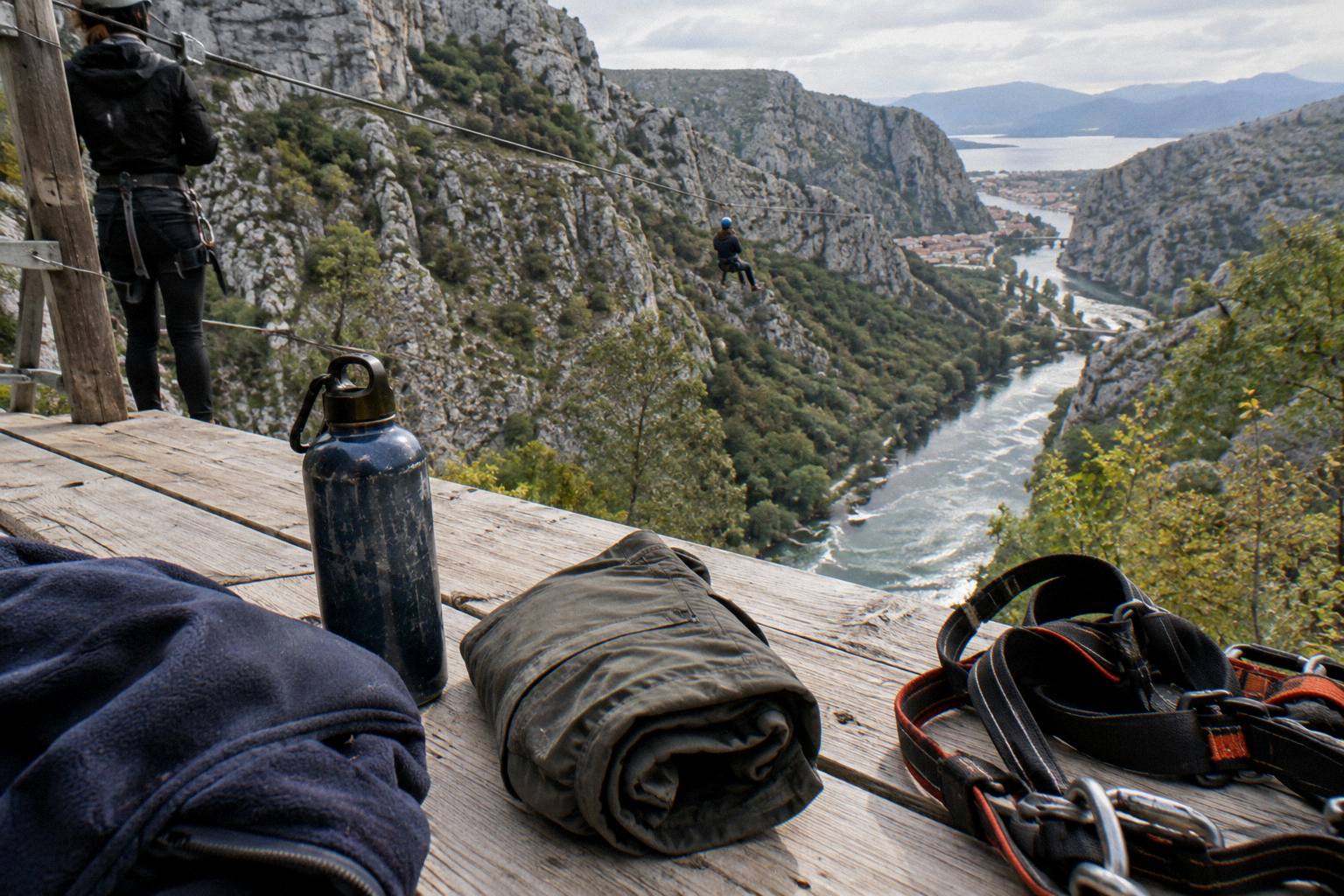
The second mistake is hunting for a published timetable that does not exist. The operator does not publish daily start times or opening hours, and the correct behaviour is to read the slots the booking page offers for your specific date rather than planning around remembered times from a forum post. This also applies off-season, where the appointment model replaces the timetable entirely: you fix the slot with the operator, and that confirmed time is your timetable.
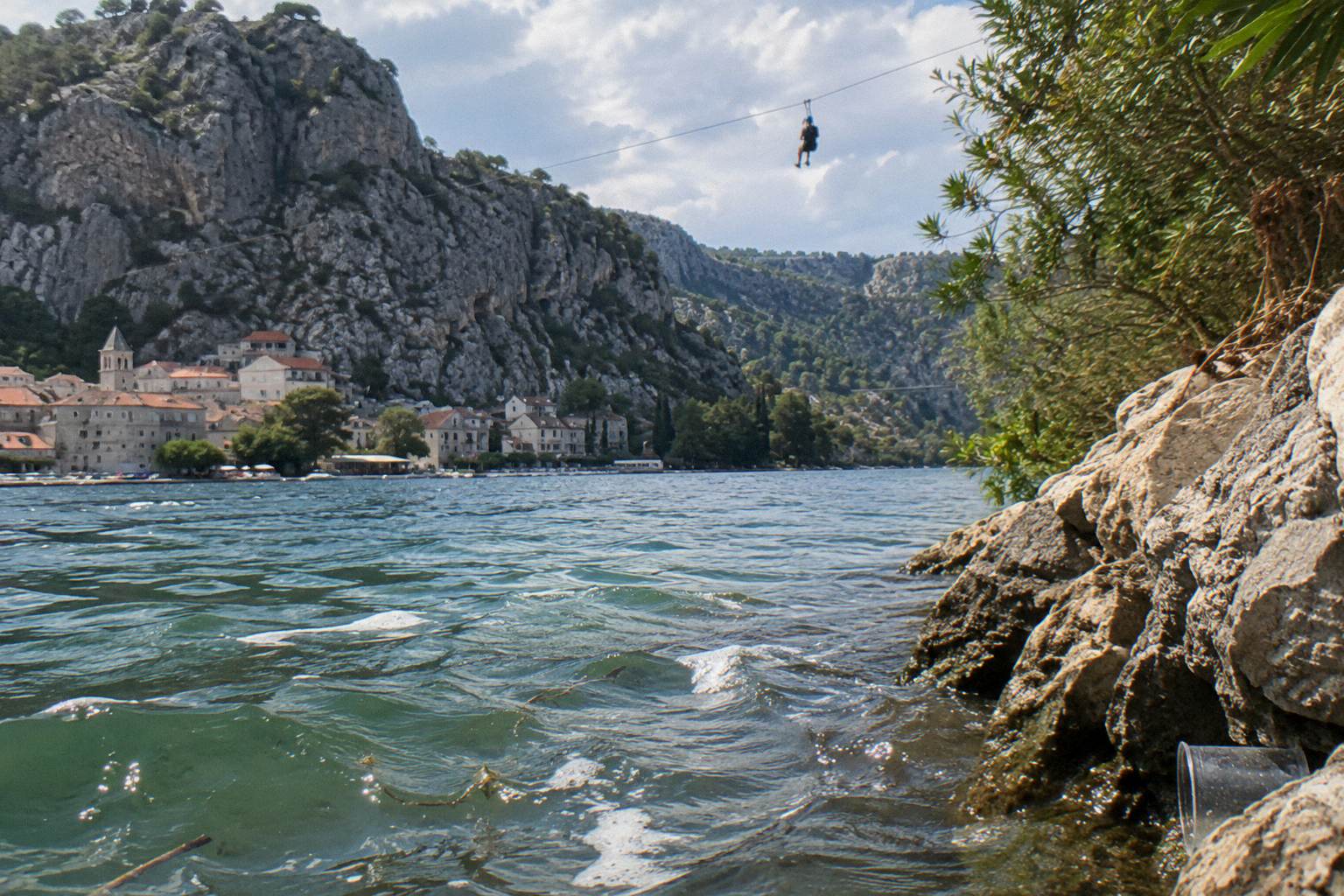
The third mistake is month-picking as wind insurance. There is no "low wind month" for a canyon course, and the operator publishes no closure threshold, so a plan built on riding in a supposedly calm month is built on nothing. The real insurance is the 24 hour free cancellation window plus a flexible rebook, which works in every month equally.
The fourth is waiting to book until you are in town. Late booking forfeits the cancellation window's value, shrinks your choice of slots in the scheduled season, and in the off-season risks finding the appointment book full for your dates. Booking ahead is free of risk here specifically because cancellation is free up to 24 hours before: the structure rewards the early planner and punishes the walk-up.
A smaller fifth point deserves a line: confusing the parks. Riders staying in Split sometimes book the Omiš course expecting a transfer, or book the Klis course expecting the Cetina gorge. The Omiš course starts in Omiš with no Split transfer; the Klis course, from €60 per person, starts at its Klis base and offers the Split transfer as an optional paid extra. Matching the course to your base town is a timing decision as much as anything else in this article.
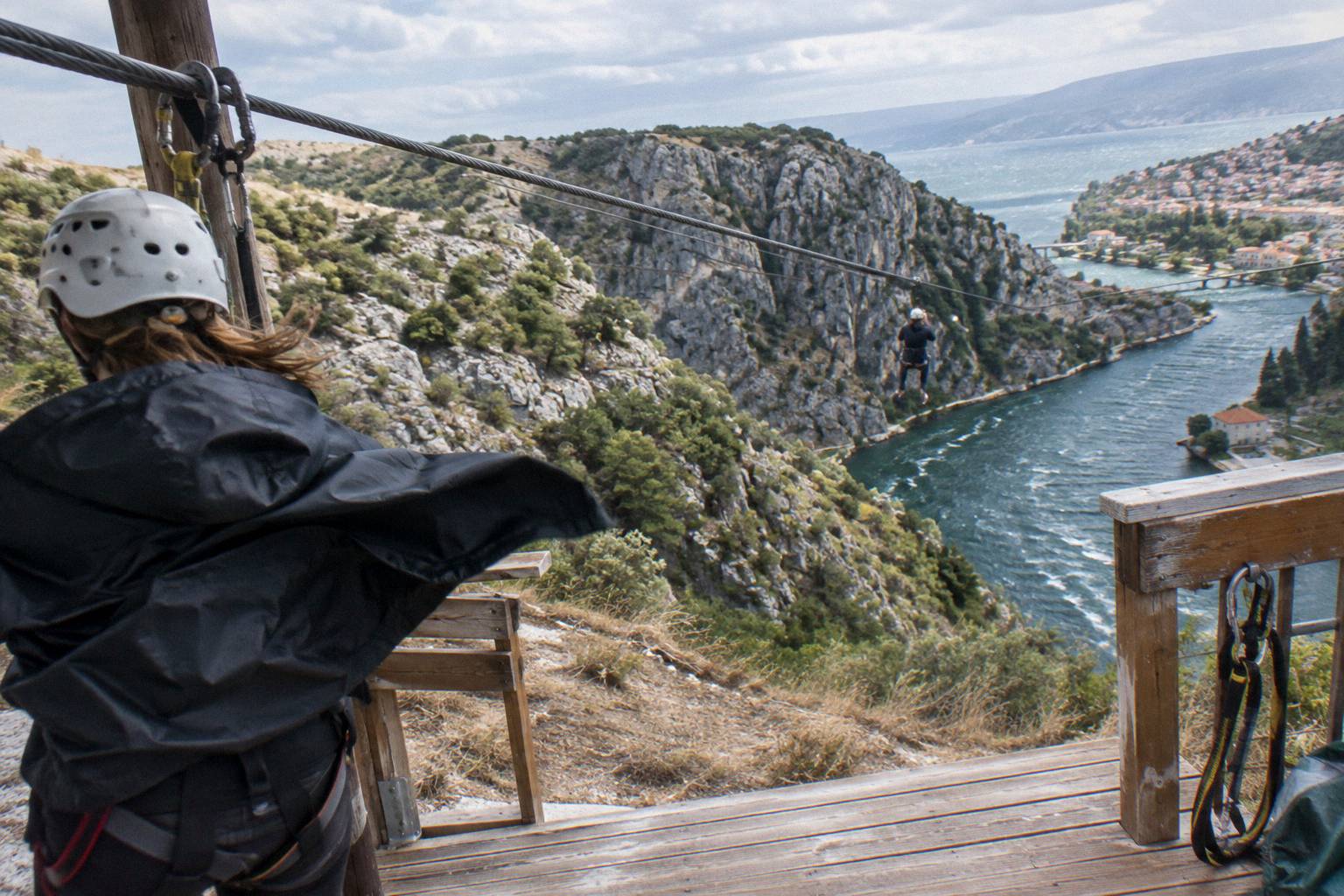
ZIPLINE Croatia's two Omiš rows are the trips these mistakes apply to: the 2.5-Hour Canyon Zipline Ride, rated 4.9 across 1,601 reviews, and its 3-hour sibling below. You can also check availability for your date directly.
Both Omiš rows cover the identical course at from €80 per person with the same 24 hour free cancellation; the 3-Hour Canyon Zipline Ride, rated 4.9 across 1,307 reviews, simply labels the day at the longer end of the 2.5 to 3 hour range. Which you pick matters less than picking a date early and holding the cancellation option, which is the entire timing strategy in one sentence. The team at Cetina Ziplines covers the ride-day logistics in the how the Omiš course works guide if you want the step-by-step beyond timing.
Common Questions About Timing Your Ride
When To Ride The Zipline Above Omiš: Season, Time Of Day And Wind?
Any season, because the course runs all year with off-season rides by appointment. Morning slots are the most forgiving choice for the 2.5 to 3 hour ride. Wind can affect operation on any date, with no published threshold, so book early and rely on free cancellation up to 24 hours before.
Is The Omiš Zipline Open In Winter?
Yes. ZIPLINE Croatia operates the canyon course all year, and off-season rides are arranged by appointment. The course, price (from €80 per person) and 24 hour free cancellation are the same in every month.
Are There Fixed Start Times I Can Plan Around?
The operator does not publish fixed daily start times. Scheduled-season slots appear on the booking page for your date, and off-season slots are fixed by appointment with the operator. Plan around the confirmed slot, not around remembered times.
What Happens If Wind Stops The Ride On My Day?
The operator's guides decide on the day, and no wind threshold is published. Your booking carries free cancellation up to 24 hours before, so a poor forecast the day before lets you cancel free and rebook another day, or not at all.
Is Morning Or Afternoon Better For The Ride?
Morning is the safer structural choice: the ride is done by midday, the afternoon stays free, and there is slack if the day runs long. Afternoon slots are equally bookable at from €80 per person but commit your later day to the canyon.
How Early Should I Book?
As early as your dates allow. Early booking keeps the free 24 hour cancellation window useful, gives you the widest choice of slots in the scheduled season, and is essential off-season when rides run by appointment.