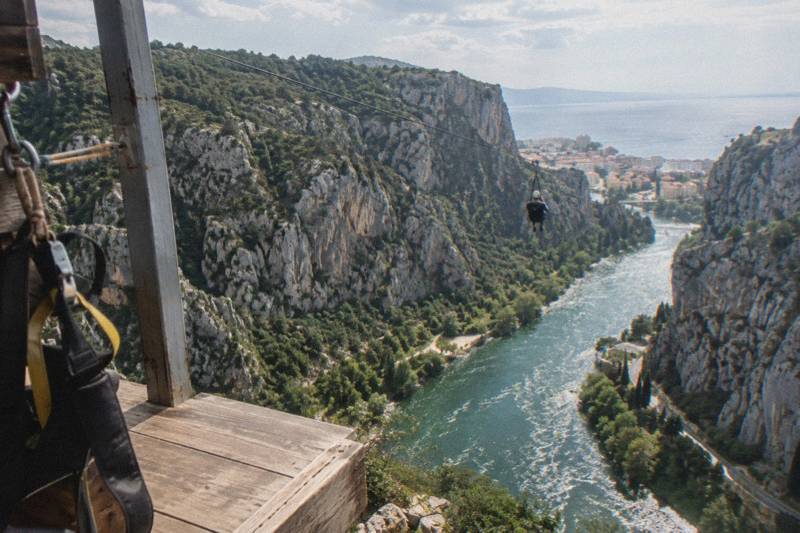
Is The Zipline Above Omiš Safe? Equipment, Braking And Guides
A clear breakdown of how safety works on the Cetina canyon course at Omiš: the guides, the group sizes, the practice lines, the age and weight limits, and the questions worth asking before you book.
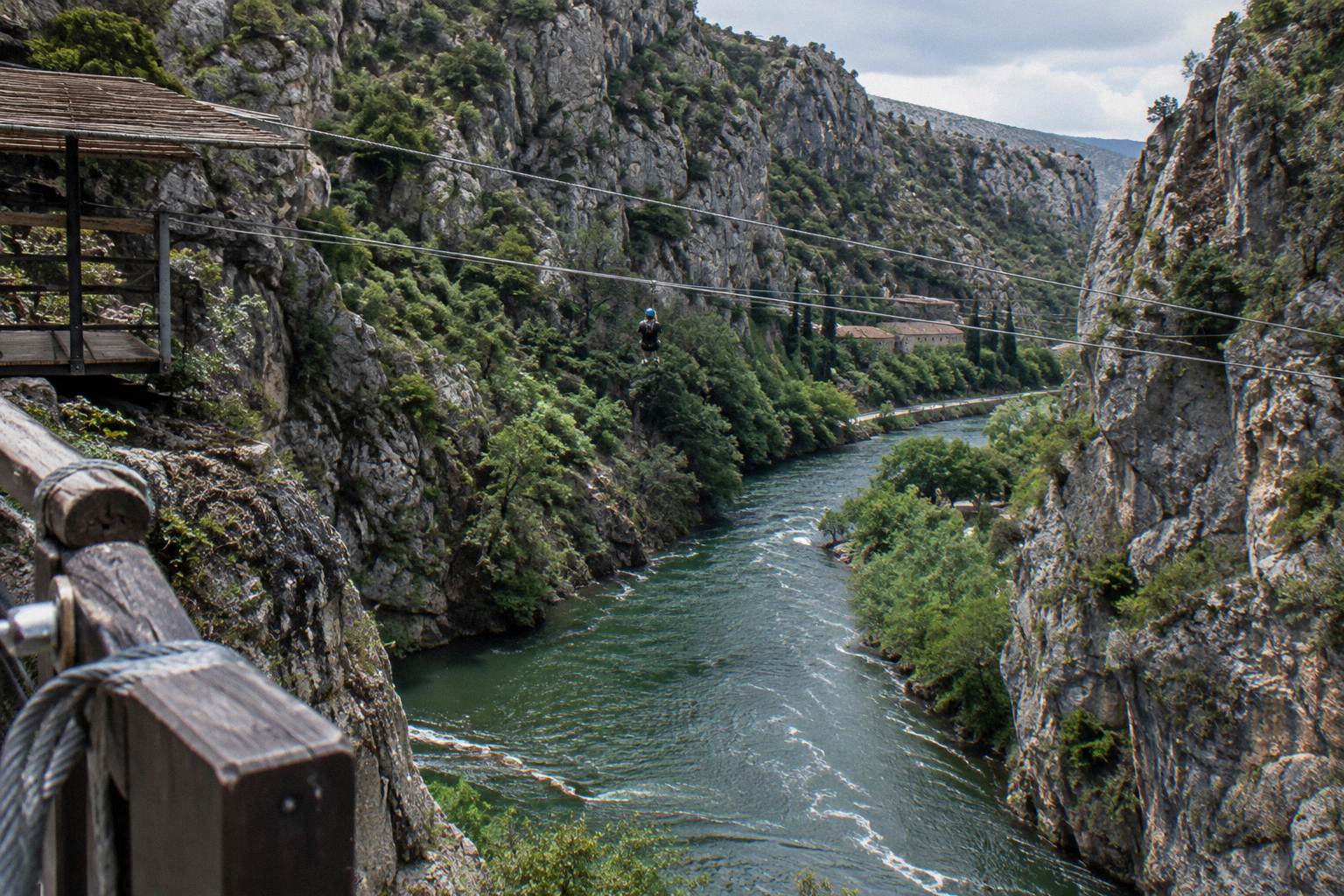
The course at Omiš is run with a structure built around nervous riders: groups of 2 to 12 people with two guides, two short 25 m practice lines before the first big descent, a minimum age of 7, and weight limits that the operator confirms at booking. The operator, ZIPLINE Croatia, describes its guides as licensed. No course can promise zero risk, but the published setup here covers most of what safety-conscious riders ask about.
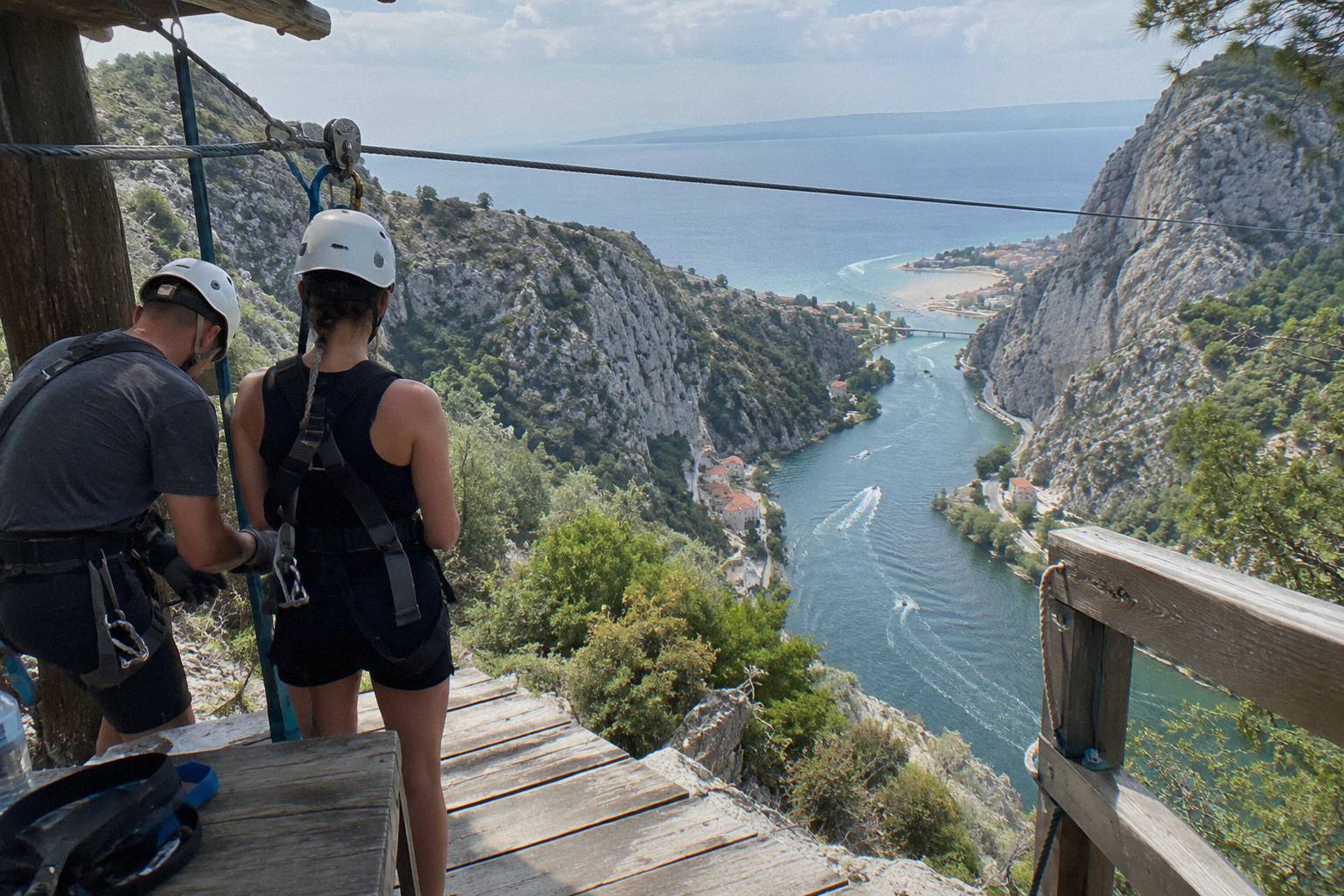
Fear of heights usually has two layers, and they need different answers. The first layer is the equipment and procedures question: are the harnesses checked, is there a braking system, is someone in charge. The second is the personal question: will my body freeze up there, and what happens if it does. This article works through both, using only what is actually published about the Omiš course by its operator, ZIPLINE Croatia, and by the booking pages that sell it.
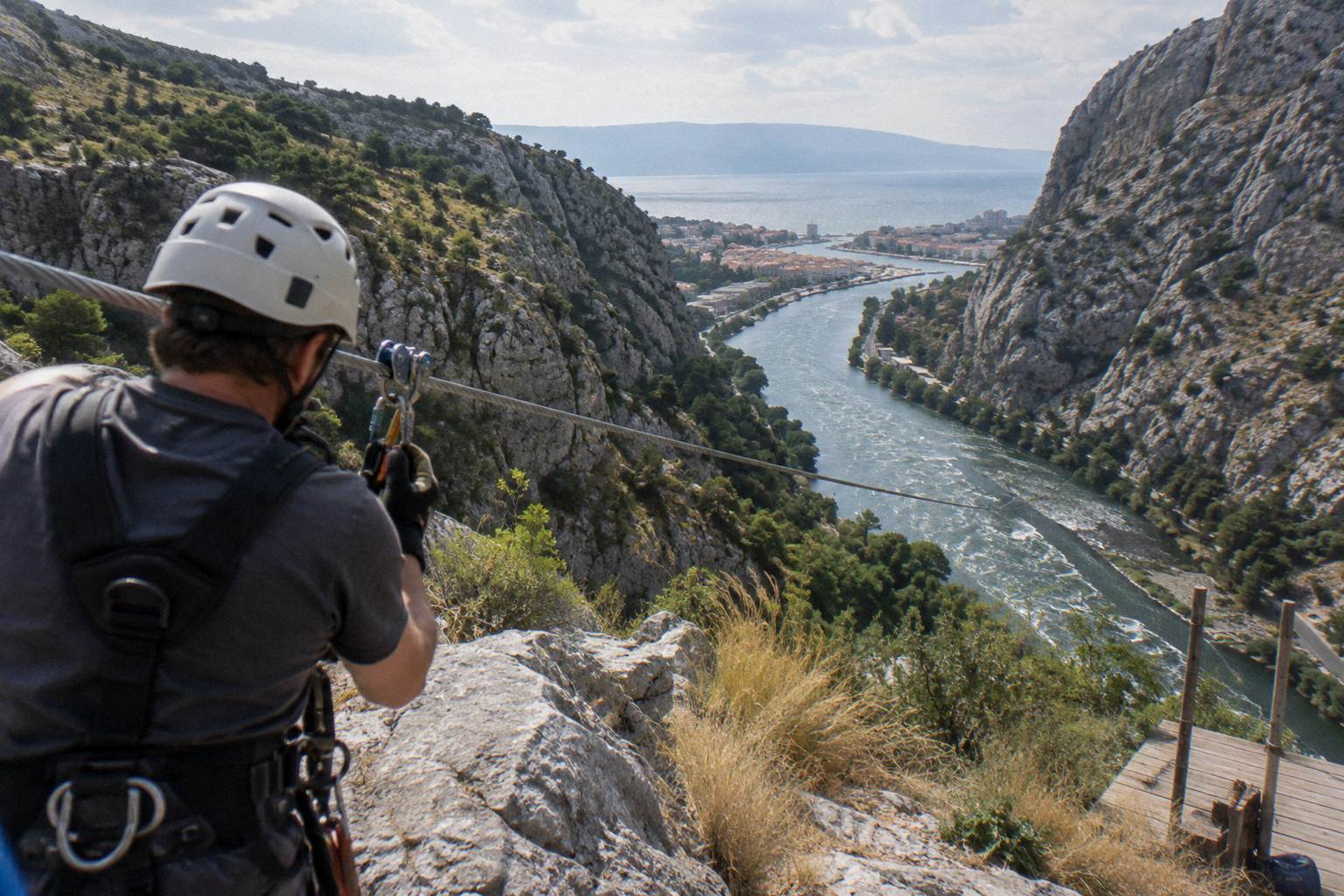
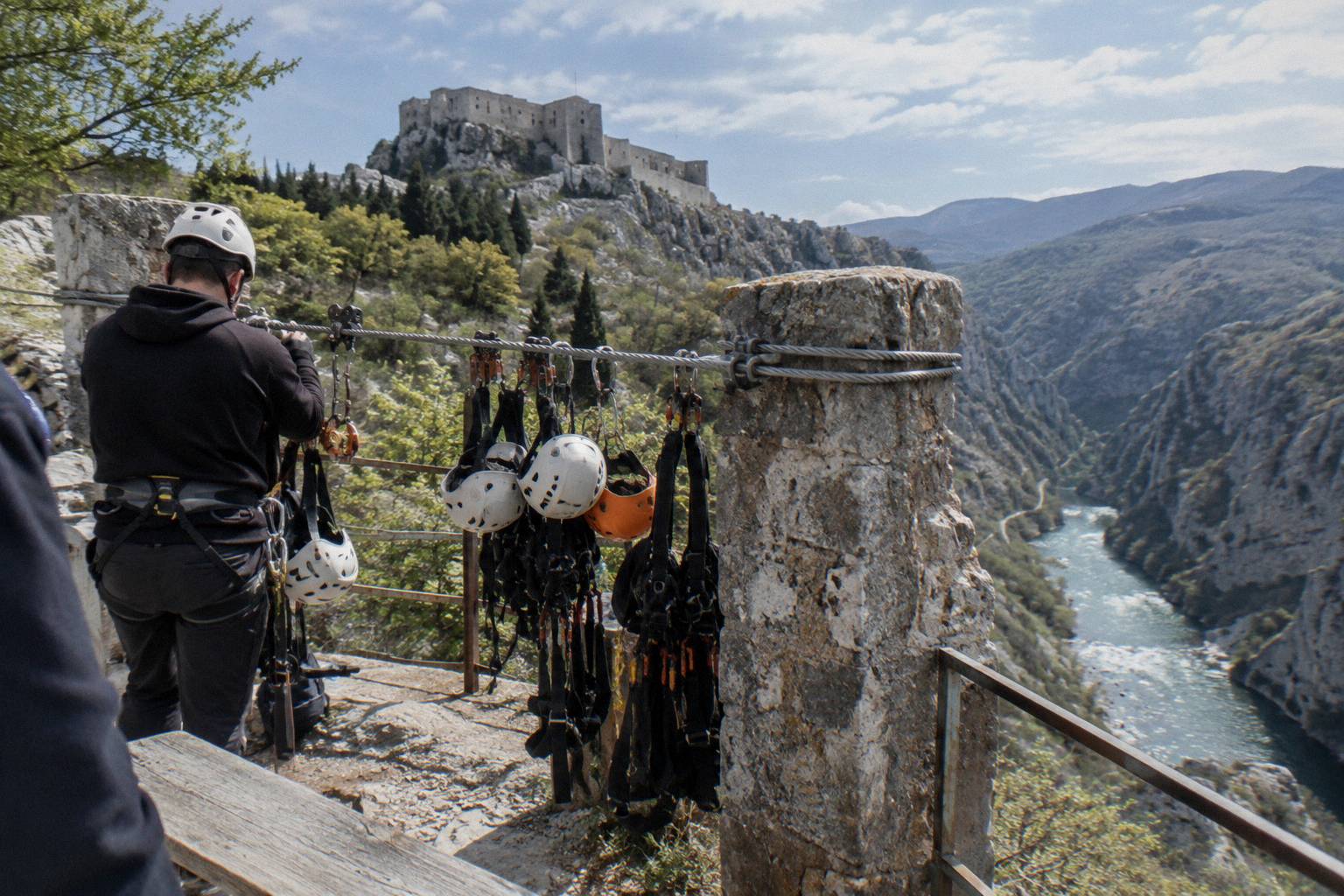
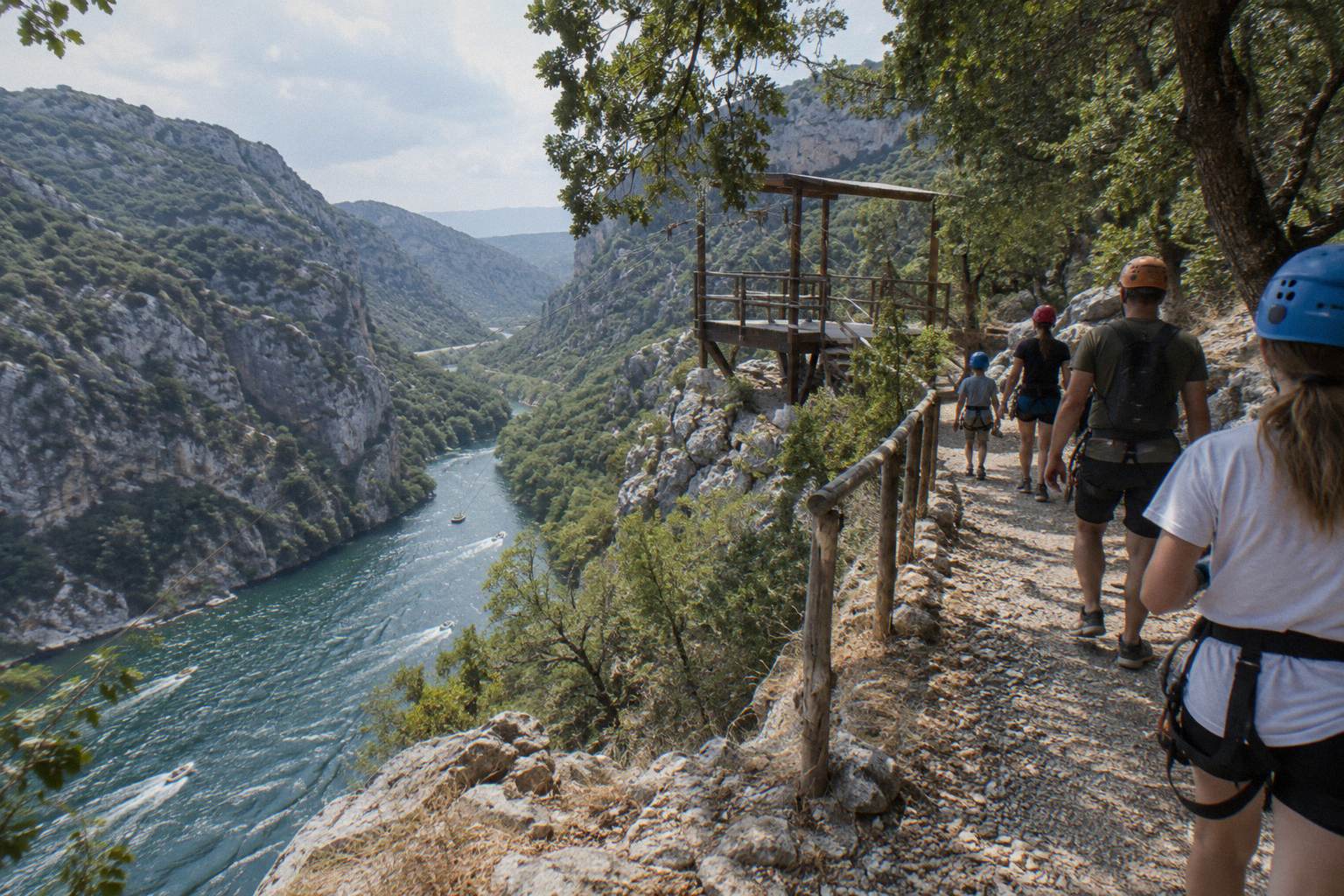
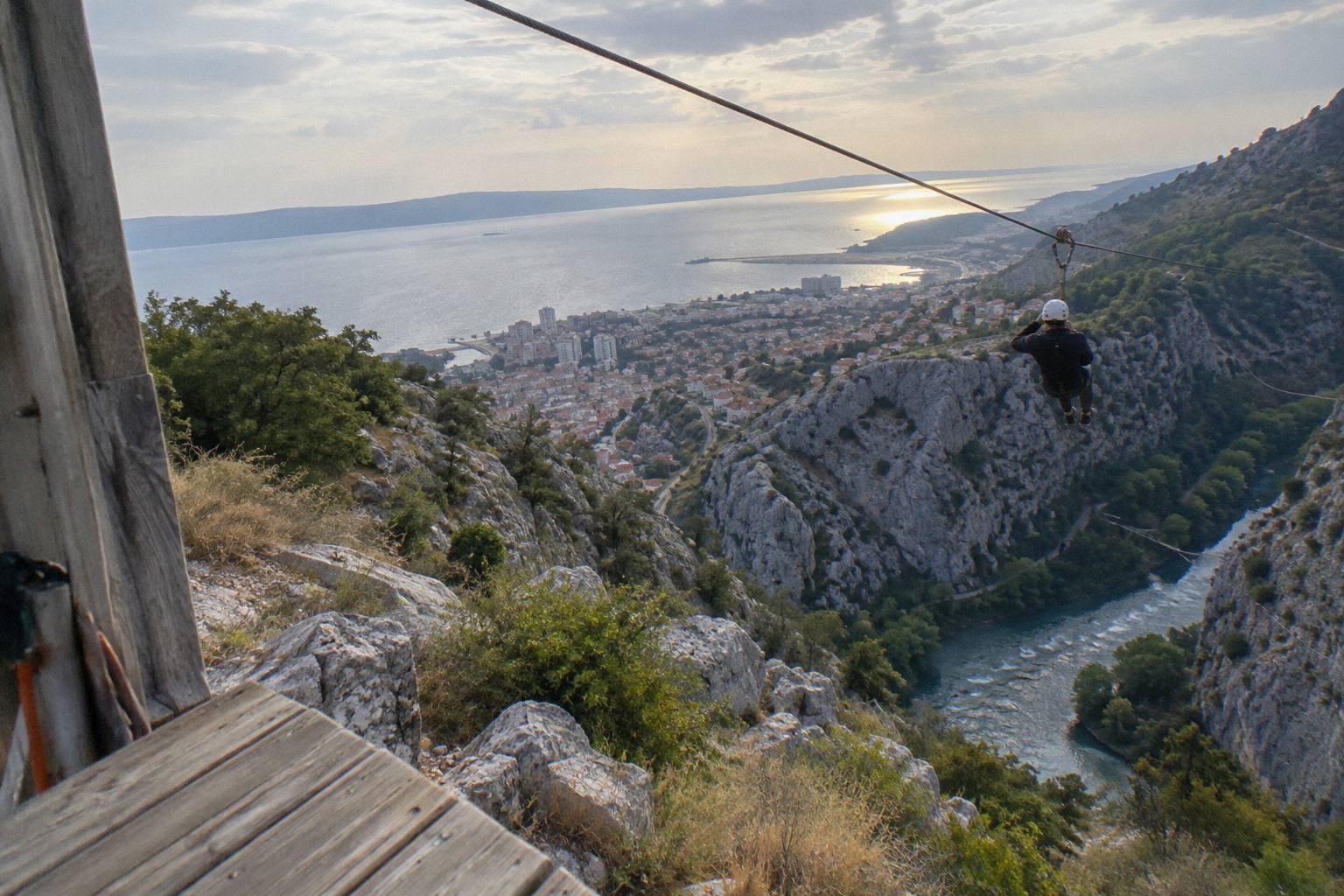
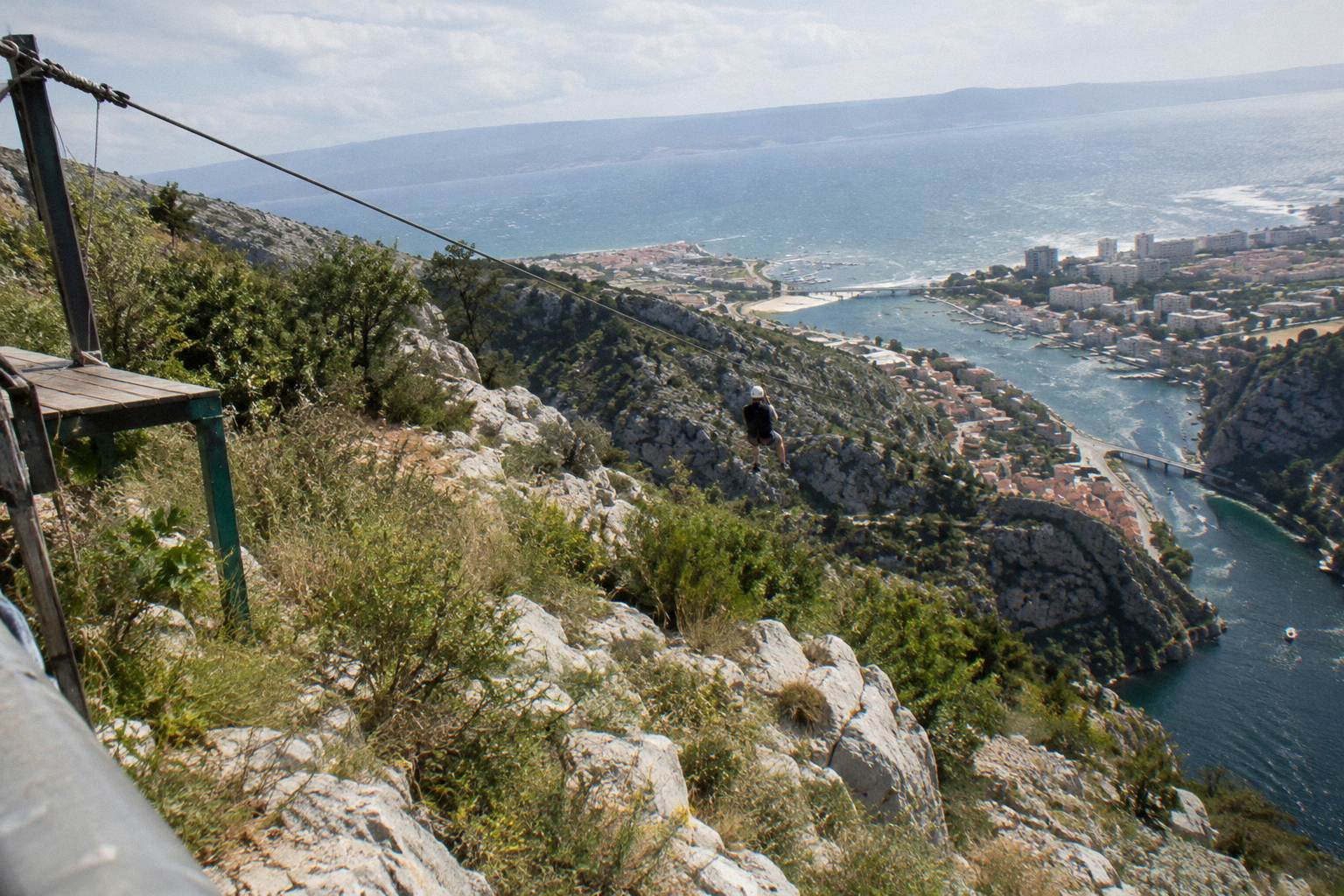
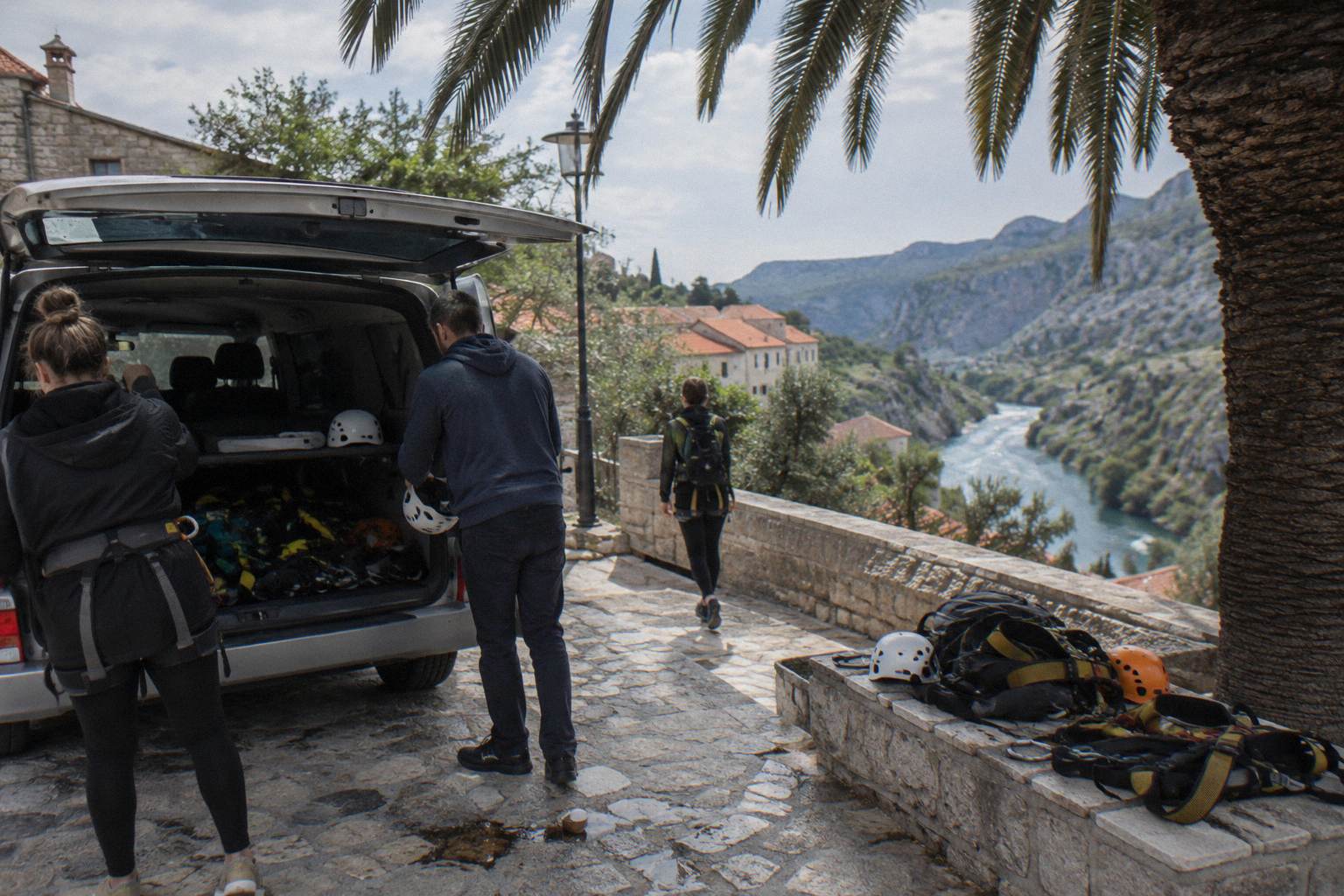
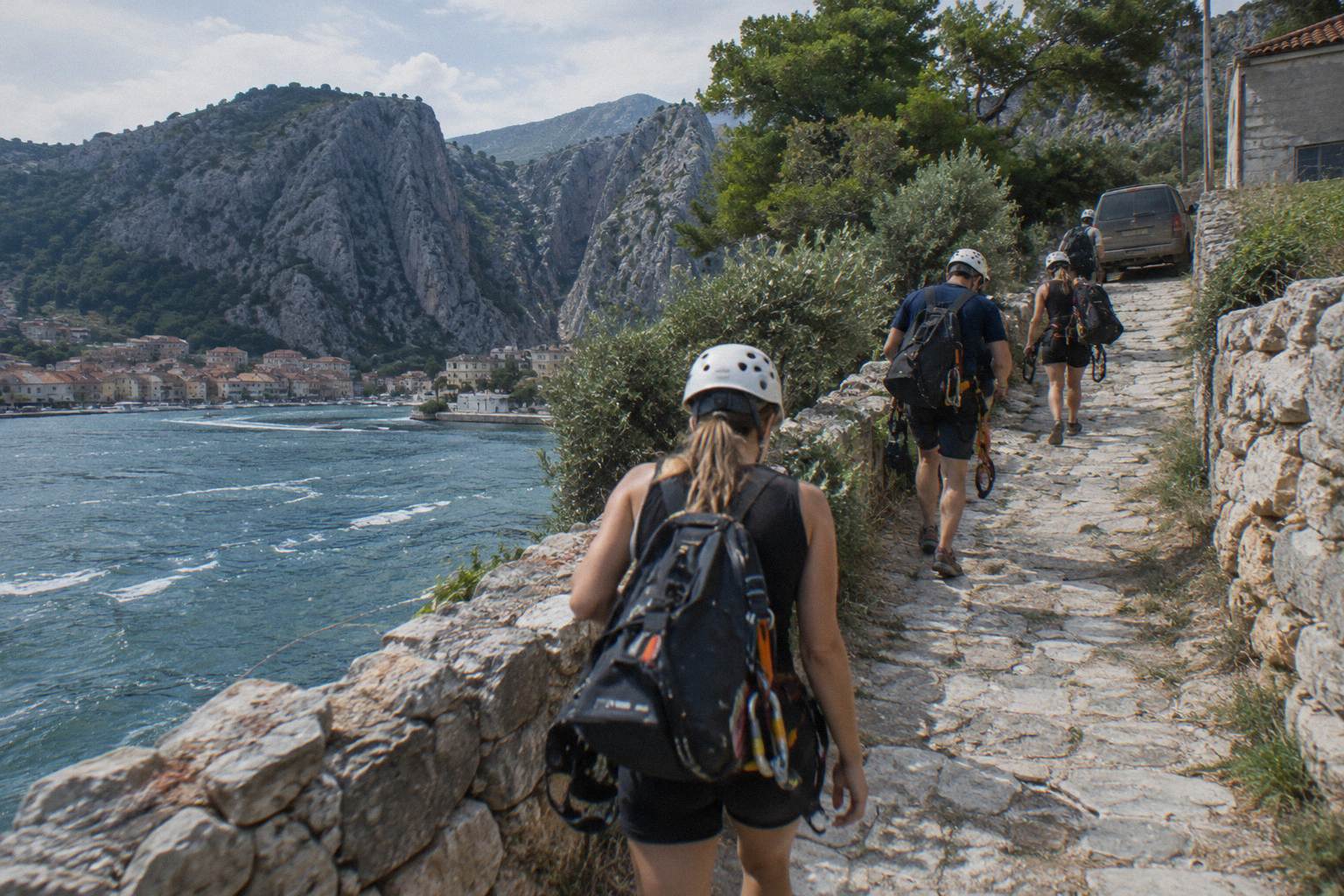
Start with the shape of the experience, because safety and structure are the same conversation here. The ZIPLINE Croatia operation runs the 2.5-Hour Canyon Zipline Ride, an 8-line course totaling 2,100 m, with a longest line of 700 m and heights up to 150 m above the canyon floor. Those are big numbers, and pretending otherwise would help nobody. What makes them manageable is the order things happen in: you meet at the operator's office at Ul. Josipa Pupačića 4 in Omiš old town, a vehicle takes you to the start, you walk uphill for 5 to 10 minutes, and then you begin on two practice lines of just 25 m each. Nobody steps onto a 700 m line cold.
The river below all of this matters too, partly because it explains why the course exists. The Cetina river runs about 101 km from its source to the Adriatic, and its mouth is at Omiš itself. The canyon the zipline crosses is a protected landscape, designated under Croatian nature protection and included in the European Natura 2000 network, which is why the terrain around the course is undeveloped rock rather than buildings. For a rider, that translates to flying over raw canyon walls and the river, not over a town.
One more framing point before the details. This article covers the Omiš course specifically. The Split zipline on Mount Kozjak at Klis, run by Zip Line Split and Homo Volans, is a different park with different numbers: 6 lines, 2,500 m total, a longest line of 800 m, and a weight range of 30 to 110 kg. The two get mixed up constantly in search results, and mixing them up produces false reassurance or false alarm. Everything below about practice lines, group sizes and the meeting point belongs to Omiš unless a sentence says otherwise.
The best single piece of preparation is asking the operator direct questions, and knowing which ones to ask. Cetina Ziplines covers the full picture of both parks across its guides, including how the course at Omiš works step by step, which pairs well with the safety questions below.
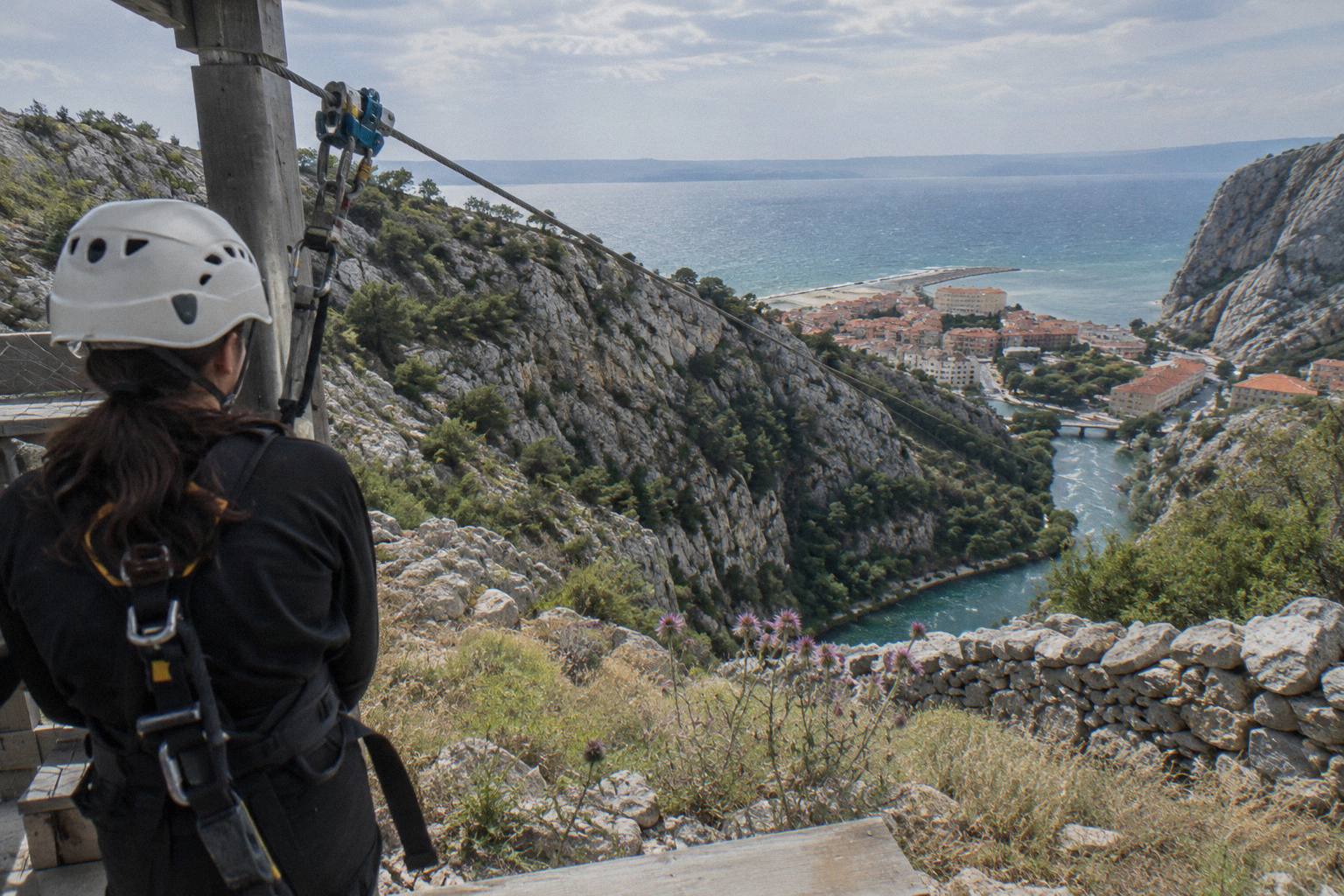
What Safety Setup Does The Omiš Course Actually Have?
The published safety structure at Omiš has four parts: two guides accompany every group, groups are capped at 2 to 12 riders, every session begins with two 25 m practice lines, and hard limits apply (minimum age 7, with weight rules confirmed at booking). The operator describes its guides as licensed. That is the extent of what is officially stated, and it is a reasonable checklist to verify yourself before paying.
Two guides per group is the number to sit with. On a group of up to 12, that means one guide per six riders at the busiest, and on the many small groups of 2 to 5 it means something closer to personal attention. The operator's own program page, at zipline-croatia.com, states the group range and guide count plainly, so this is not an inference from photos or reviews. When you book the 2.5-Hour Canyon Zipline Ride with ZIPLINE Croatia, or its sister product the 3-Hour Canyon Zipline Ride sold through the same Omiš operation, the same structure applies: same 8 lines, same canyon, same guides, same meeting point. The two products differ in booked duration (2.5 hours versus 3 hours) and review pool, not in the safety setup.
The practice lines deserve more attention than they usually get. Two lines of 25 m each, flown first, do several jobs at once: they let you feel the harness taking your weight, let the guides see how you react, and let you discover whether your fear responds to the reality of ziplining or only to the idea of it. Plenty of nervous riders report that the practice section settles more nerves than any amount of reassurance, because the thing itself turns out to be smoother than the imagined version. If it goes badly, telling a guide at that stage is far easier than on line six, and that is precisely why operators build courses this way.
The ride to the start and the approach are part of the picture too. You meet at the old town office 15 minutes before your slot, and vehicle transport to the start is included, so there is no self-drive up a canyon road to worry about. The 5 to 10 minute uphill hike before the first line is short but real, and it doubles as a warm-up and a chance to talk to the guides before anything vertical happens. The course operates all year, with off-season visits by appointment, so winter riders get the same setup rather than a reduced one.
| Feature | Omiš Cetina Canyon Course | Klis Course On Mount Kozjak |
|---|---|---|
| Operator | ZIPLINE Croatia / ZIPLINE | Zip Line Split / Homo Volans |
| Lines | 8 | 6 |
| Total length | 2,100 m | 2,500 m |
| Longest line | 700 m | 800 m |
| Height above ground | up to 150 m | figure not published |
| Group structure | 2 to 12 riders, two guides | group size not published |
| Practice lines first | yes, two 25 m lines | not published |
| Minimum age | 7 | not published |
| Weight rule | confirmed at booking | 30 to 110 kg |
| Price | from €80 per person | from €60 per person |
| Rating | 4.9 (1,601 and 1,307 reviews) | 4.9 (1,729) and 5.0 (593) |
Reading that table: Omiš publishes more of its safety structure than Klis does, while Klis publishes the one figure Omiš keeps for booking time, the exact weight range. Neither gap is a red flag, but both are questions you can put to the operator in one message before booking. For a fuller side-by-side of the two parks, see the guide to choosing ziplining from Split or Omiš.
The other published fact that bears on safety decisions is the cancellation window. Both Omiš rows carry free cancellation up to 24 hours before, which matters for a nervous rider in a practical way: you can book now to hold a slot, and if your gut says no the day before, you are not paying for the decision. That flexibility is itself a safety feature of the purchase, separate from the course.
The Omiš course is not the only thing in the canyon either. The same river hosts rafting and canyoning, and nervous riders sometimes weigh those instead, a tradeoff broken down in the comparison of zipline, rafting and canyoning on the Cetina.
How Do You Brake, And Do Ziplines Snap?
These are the right questions to ask, and the right place to ask them is the operator directly, in writing, before you book. The operator publishes its group structure, practice lines and limits, but does not publish technical details about braking systems or cable specifications. No credible article should fill that gap with invented engineering, so treat any detailed technical claim from a third party with caution and get the answer from the people who maintain the course.
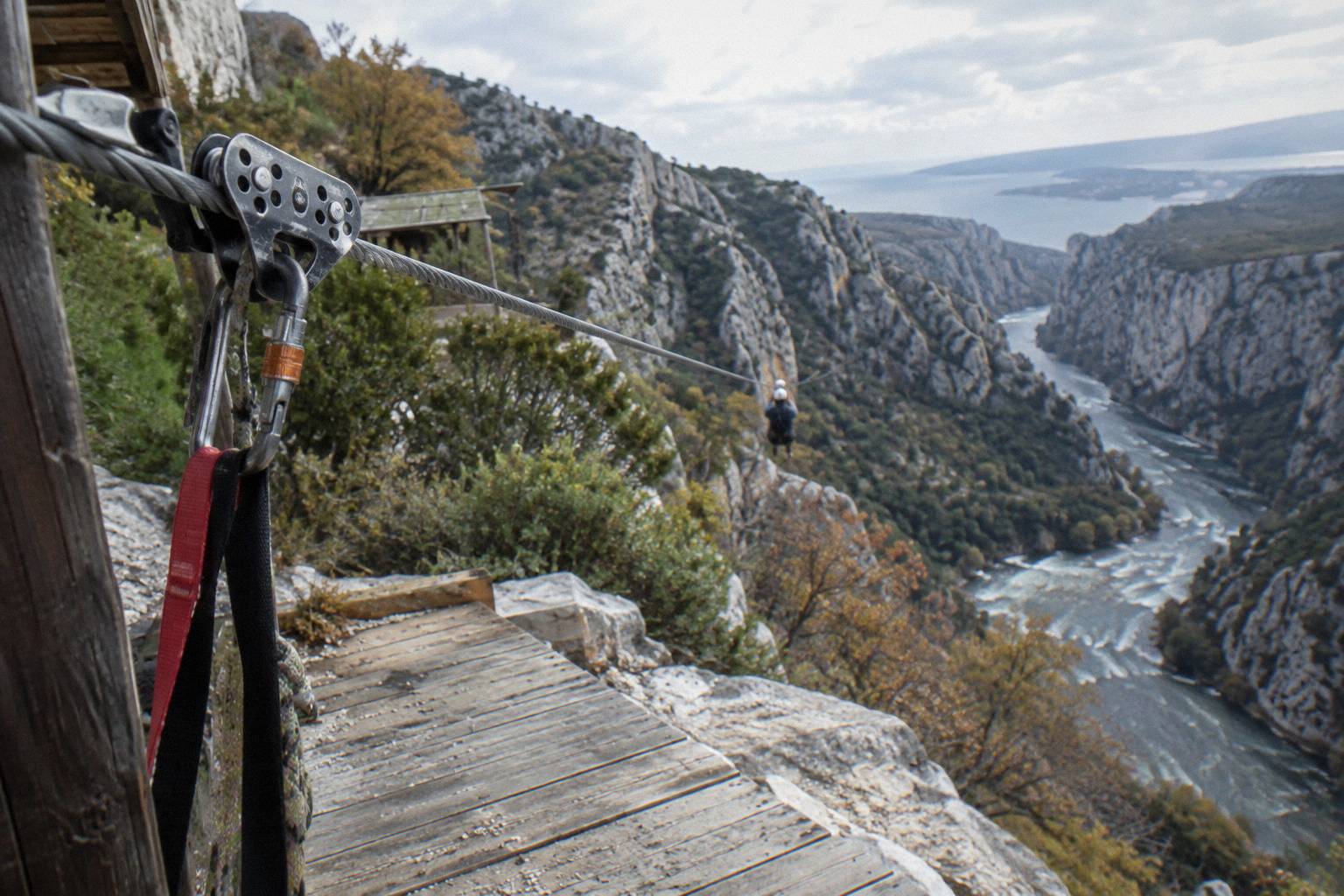
Start with the braking question, because it is the one people mean when they say "but how does it stop". Commercial ziplines worldwide use a range of approaches: gravity and slope design that naturally slows riders near the platform, guide-operated braking at the arrival end, and rider-actuated systems. Which of these the Omiš course uses is a fact the operator holds, and a one-line message asking "who controls braking on your lines, the guide or the rider" will get you a real answer in a day. That answer matters more for your peace of mind than any paragraph here could, because it will be the truth about the actual cables you will ride.
The snapping question deserves a straighter treatment. Millions of people ride commercial ziplines every year, and catastrophic cable failure at a licensed commercial operation is vanishingly rare, which is why it makes news when it happens anywhere in the world. But this article will not print a safety statistic for the Omiš course, because none is published, and a generic global figure would not describe this specific course anyway. What you can do is ask the operator about inspection frequency, and notice whether the answer is specific and boring. Operators with real maintenance routines tend to give them without hesitation.
Is The Zipline Above Omiš Safe? Equipment, Braking And Guides
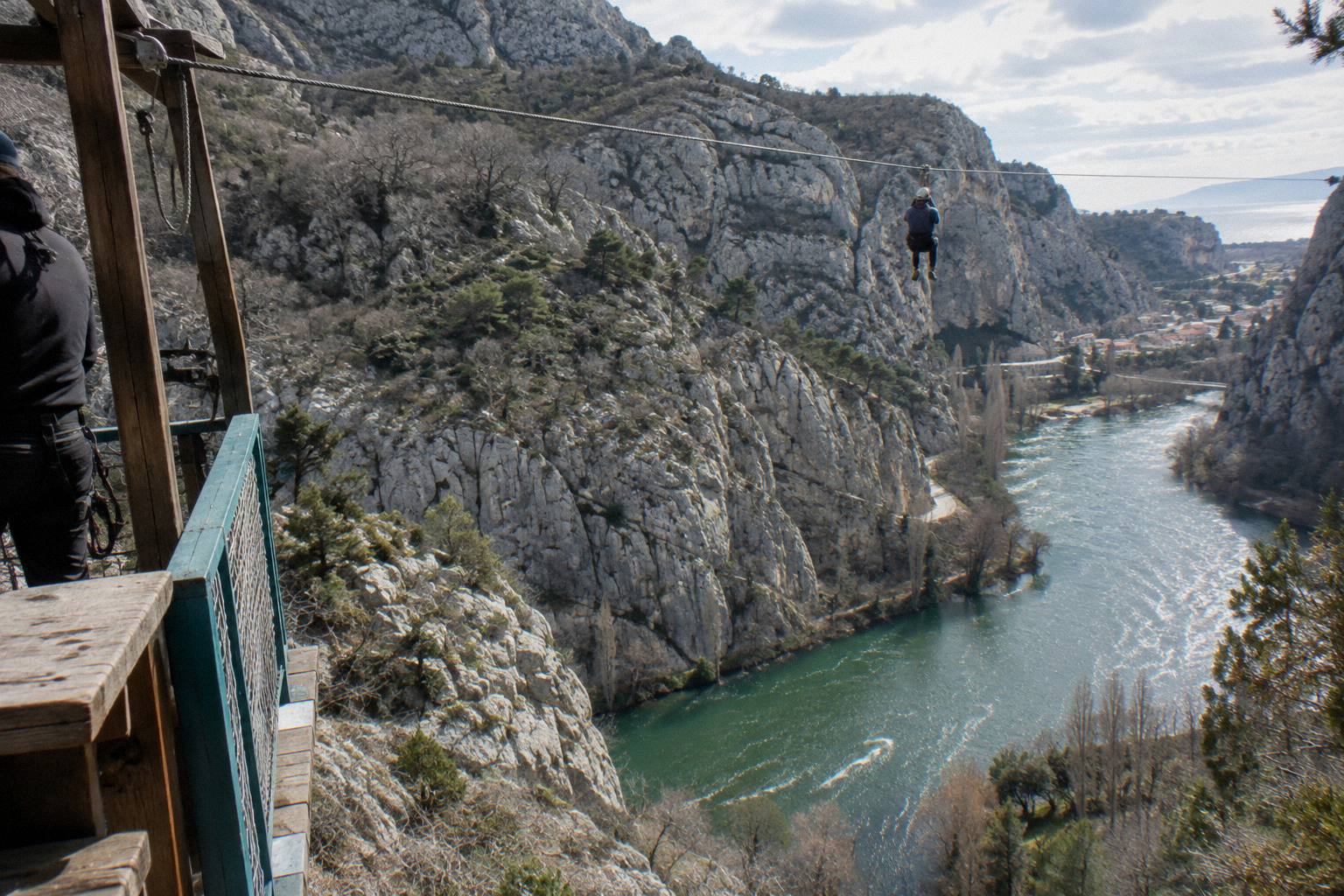
Returning to the headline question with everything above in view: the safety case rests on published structure rather than promises. Two guides per group of at most 12 means supervision ratios most adventure activities would envy. Two 25 m practice lines mean no rider's first experience of the system is also their most exposed one. A minimum age of 7 and enforced weight rules mean the course is not stretching its design envelope to fit everyone. And the operator describes its guides as licensed, which is the full extent of what is claimed, and a reasonable thing to verify by asking what licence and from whom.
What the course does not publish is equally worth knowing, so you can ask about it: exact opening hours and start times (departures vary), the technical braking details, and the specific weight ceiling, which the booking platforms and the operator describe slightly differently, so the number that counts is the one given at booking. None of these gaps is unusual for a zipline of this size, and all of them are closable with one email.
The simplest safety action available right now is booking a slot with the free-cancellation window and using the days before it to get your answers from the operator. If the answers satisfy you, you ride. If they do not, you cancel at no cost up to 24 hours out.
The 2.5-Hour Canyon Zipline Ride with ZIPLINE Croatia is the most direct way to ride this course, from €80 per person, rated 4.9 across 1,601 reviews, with 2.5-Hour Canyon Zipline Ride on the operator's live page. Full details sit on the 2.5-Hour Canyon Zipline Ride page.
Who Are The Guides And What Do Groups Look Like?
Every group on the Omiš course has two guides and at most 12 riders, and the operator describes those guides as licensed. Groups of 2 are the minimum, so you will never be merged into an anonymous crowd, and the two-guide structure means one can manage arrivals while the other handles departures. For a nervous rider, small groups are the single biggest comfort factor after the practice lines.
The guide question is where a nervous rider's anxiety actually lives, even when it dresses up as a question about cables. What you want to know is: will someone competent be watching me, and will they notice if I struggle. A 2 to 12 rider range with two guides answers the watching part with arithmetic rather than marketing. On a full group, each guide oversees six people; on a quiet morning group of four, you have closer to a private session. Compare that with mass-participation activities where one instructor holds thirty people, and the ratio speaks for itself.
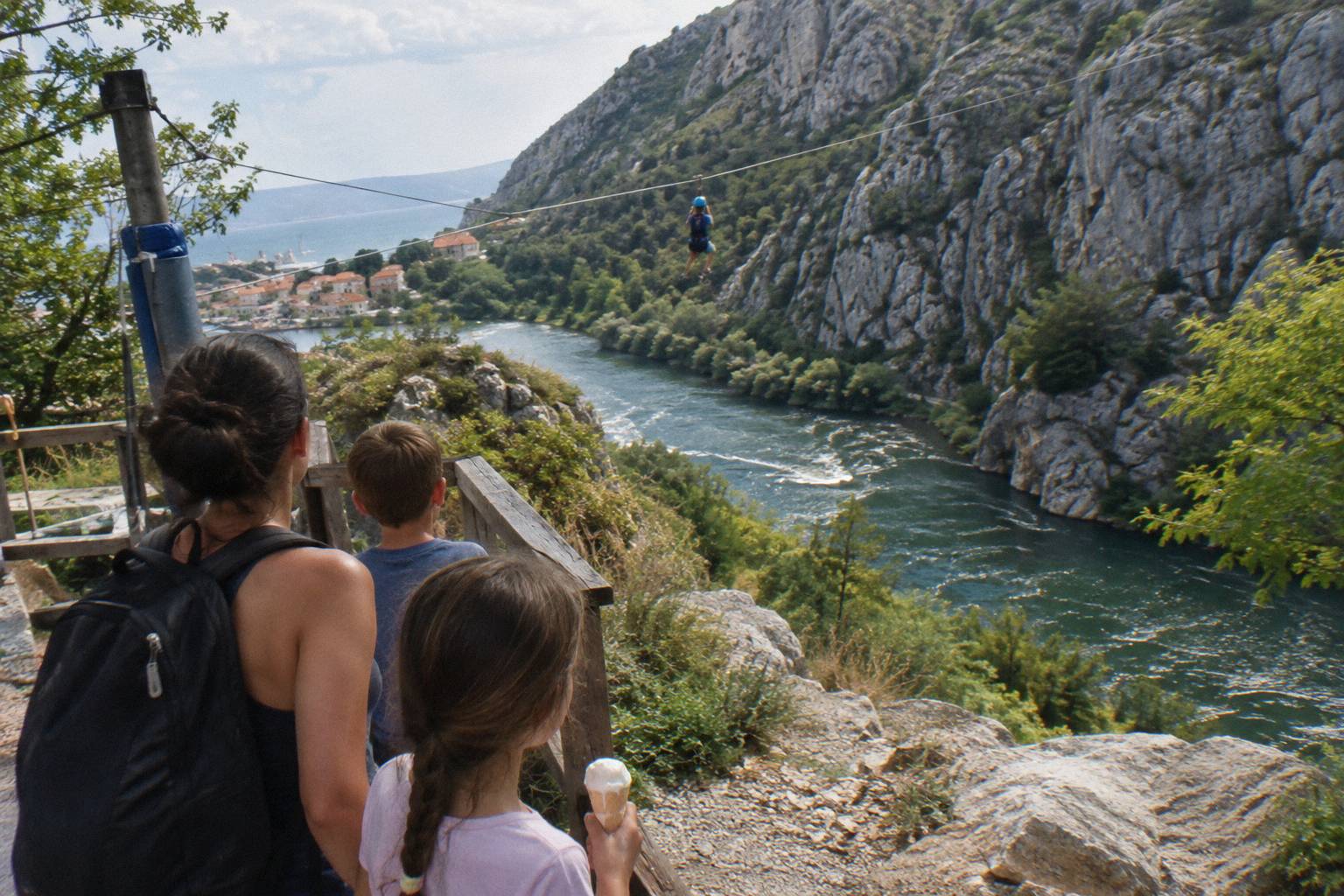
The published reviews support taking the guide team seriously without overclaiming. The 2.5-Hour Canyon Zipline Ride carries a 4.9 rating across 1,601 reviews, and the 3-Hour Canyon Zipline Ride, the same course sold under ZIPLINE branding, carries 4.9 across 1,307 reviews. Nearly 3,000 combined reviews at that level cannot be built on scenery alone; on a fear-adjacent activity, guide quality is usually what reviewers mention, and a rating that consistent across a large pool suggests the experience is repeatable, not lucky. A product with a handful of reviews can show a 5.0 that means little; this pool is large enough to mean something.
There is a companion question the guides cannot answer for you: how your own group composition affects the feel of the day. A family of four booking together will have the group largely to themselves. Solo travelers may be paired with strangers up to the cap of 12, which most riders enjoy and some nervous riders dread; if that matters to you, it is another thing to ask at booking, since group assembly is the operator's call and no rule about it is published. The minimum group of 2 does mean a solo traveler should expect company rather than a lone ride.
For readers whose hesitation is less about equipment and more about whether the whole thing is worth the fear, the walkthrough of whether the Omiš course is worth it with a fear of heights covers that decision from the rider's side.
What Age, Weight And Height Rules Protect Riders?
The Omiš course sets a minimum age of 7 and a published minimum weight of 30 kg, with the upper weight limit confirmed at booking rather than printed. These rules exist because harnesses and braking behavior are designed around body mass ranges: too light and the physics changes at the arrival end, too heavy and the system approaches its rated working range. The limits are the safety system's fine print, and they are enforced for everyone's benefit.
Weight is the clearest example of a rule that is protective rather than arbitrary. Zipline physics depends on the rider's mass: heavier riders arrive faster and lighter riders can slow unexpectedly on sagging cables, and every commercial course sets its range around those realities. The Omiš course publishes a 30 kg minimum, and the ceiling is handled at booking, where the operator can give you the current figure that actually governs admission. If anyone in your party is near either end of a typical range, ask before booking rather than discovering the rule at the office in old town.
Age 7 as the minimum tells you something about the course's temperament. It is not a toddler ride, and it is not an adults-only adrenaline product either; it sits in family-activity territory, which is consistent with everything else published about the structure. A 7-year-old meets the age rule, but a parent knows better than any rulebook whether their particular 7-year-old wants to fly 150 m above a canyon, and the practice lines exist partly so that discovery happens early and safely.
| Rule | Omiš Course | What It Means For You |
|---|---|---|
| Minimum age | 7 | younger children cannot ride, no exceptions published |
| Minimum weight | 30 kg | small children near the age floor may fall short |
| Upper weight | confirmed at booking | ask the operator before paying if near the top |
| Group size | 2 to 12 riders | never a crowd; solo travelers join others |
| Guides | two per group, described as licensed | supervision ratio of 1 to 6 at most |
| Practice | two 25 m lines first | your first flight is short and low-stakes |
| Duration | 2.5 to 3 hours booked | the full experience, not just flight time |
The Klis course on Mount Kozjak handles these rules differently, and if your party includes someone outside Omiš's range it is the natural alternative. Homo Volans runs the 2-3 Hour Zipline, Optional Transport there, with a published weight range of 30 to 110 kg, 6 lines totaling 2,500 m and a longest line of 800 m, from €60 per person, rated 4.9 across 1,729 reviews, which makes it the most reviewed of the four bookable options. Its base sits on the Klis side of Mount Kozjak, about 25 minutes from Split, with a transfer from Split available as a paid add-on. The full operator breakdown of age, weight and height rules across both parks lives in the guide to Omiš zipline age, weight and height limits.
One limit neither park publishes numerically is maximum height, and the Omiš rows carry no height figure at all. In practice, harness fit rather than stature is what matters, and fit is checked by the guides on site. If you are exceptionally tall or simply unsure, add it to the same pre-booking message as your braking and weight questions; a two-line email covers everything this article cannot answer for you.
How Risky Is Ziplining Compared With Other Adventures?
In broad terms, commercial ziplining sits in the same risk family as guided rafting or a via ferrata: real enough to respect, managed by guides, procedures and equipment rules rather than by luck. This article prints no accident statistics for the Omiš course because none are published, and a generic number would misdescribe a specific operation. The usable comparison is structural: supervised, capped, practiced, rule-bound.
The way to think about risk on a course like this one is to look at what stands between you and a bad outcome. Here, that is: a licensed-guide claim from the operator, a hard cap of 12 riders per two guides, mandatory practice lines, enforced age and weight limits, and a year-round operation with an office in Omiš old town that has been selling this same course at volume, with nearly 3,000 combined reviews across its two booking pages. Each of those is one layer, and the layers stack.
What you cannot verify from outside, and should not pretend to, is maintenance culture: how often cables are inspected, how hardware is logged, how guides are retrained. Every one of those is a legitimate question the operator can answer in a sentence, and a confident, specific reply is worth more than any article. An operator who answers "who inspects your cables and how often" plainly has almost certainly been asked a hundred times and has nothing to hide.
There is also the risk comparison people rarely make: the drive to the activity. Your own transport, a coastal road, a rental car in summer traffic carry risks that feel familiar and therefore invisible, while a zipline feels exotic and therefore alarming. Familiarity is not safety, and novelty is not danger. None of this means the course is risk-free; it means the fear weighting most nervous riders apply is systematically skewed toward the new thing and away from the mundane one.
For riders who want the canyon but at a lower intensity, the region offers alternatives on the same river, and the comparison of ziplining versus rafting and canyoning on the Cetina lays out how they differ in commitment, duration and fear factor. A third option for Split-based travelers is the Klis course's other listing, the 3-Hour Zipline, Optional Transfer run by Zip Line Split: same 6 lines and 2,500 m as its sibling, booked at 3 hours, rated 5.0 across 593 reviews, from €60 per person.
What Trips Nervous Riders Up Before Booking
Most bad experiences on courses like this are booking mistakes, not ride failures: showing up outside the weight range, assuming a Split transfer exists for Omiš when it does not, skipping the pre-booking questions, or cancelling too late and losing the fee. Every one of these is avoidable with ten minutes of preparation, and none requires any courage at all.
The first mistake is location confusion. The Omiš course starts in Omiš: you meet at the office at Ul. Josipa Pupačića 4 in the old town, 15 minutes before your time, and a vehicle takes you to the canyon start. There is no Split transfer on this tour, full stop. Travelers based in Split who book Omiš expecting pickup are the single most common mis-booking, and the fix is knowing that the Klis course is the one with the optional paid transfer from Split. The route-planning breakdown in the guide on getting from Split to the Omiš course covers the logistics.
The second mistake is leaving the weight question to arrival day. The upper limit is confirmed at booking, and the booking platforms and the operator have described it slightly differently, so the number that governs your admission is the one the operator gives you when you ask or when you book. A rider near the ceiling who discovers the rule in the old town office has wasted a trip; the same rider who asked on Tuesday has simply picked a different day or a different park.
The third mistake is treating the cancellation window loosely. Free cancellation runs to 24 hours before the experience on both Omiš products. That window is generous, but it ends, and the nervous rider who spends the week before in ambivalence and decides to cancel the morning of has converted a free decision into a paid one. A cleaner pattern: book the slot, send the operator your questions the same day, and make the final call with days of margin.
The fourth mistake is skipping the practice lines mentally, even though you cannot skip them physically. Some nervous riders arrive planning to white-knuckle through, treating the first two short lines as a formality. The practice section is the one part of the day designed for calibration: it tells you how the harness feels, how fast "fast" actually is, and how your fear responds to reality. Riders who pay attention there, and who tell a guide immediately if something feels wrong, get the most out of the course.
Finally, there is the mistake of over-researching generic zipline horror stories. Stories travel; operations are local. A cable article from another continent describes another company, another regulator, another decade. The productive research is specific: the published structure of this course, the operator's answers to your questions, and a review pool of thousands that has already ridden the exact lines you are considering.
Everything above rolls up to a short pre-flight routine: pick the right park for your base and your party, check ages and weights against the rules, message the operator your braking and inspection questions, book with the 24 hour window as your safety net, and cancel free if the answers disappoint. Riders who want the fullest picture of the day, from the old town office to the final line, can follow the step-by-step in how the Omiš course works from meeting to last descent.
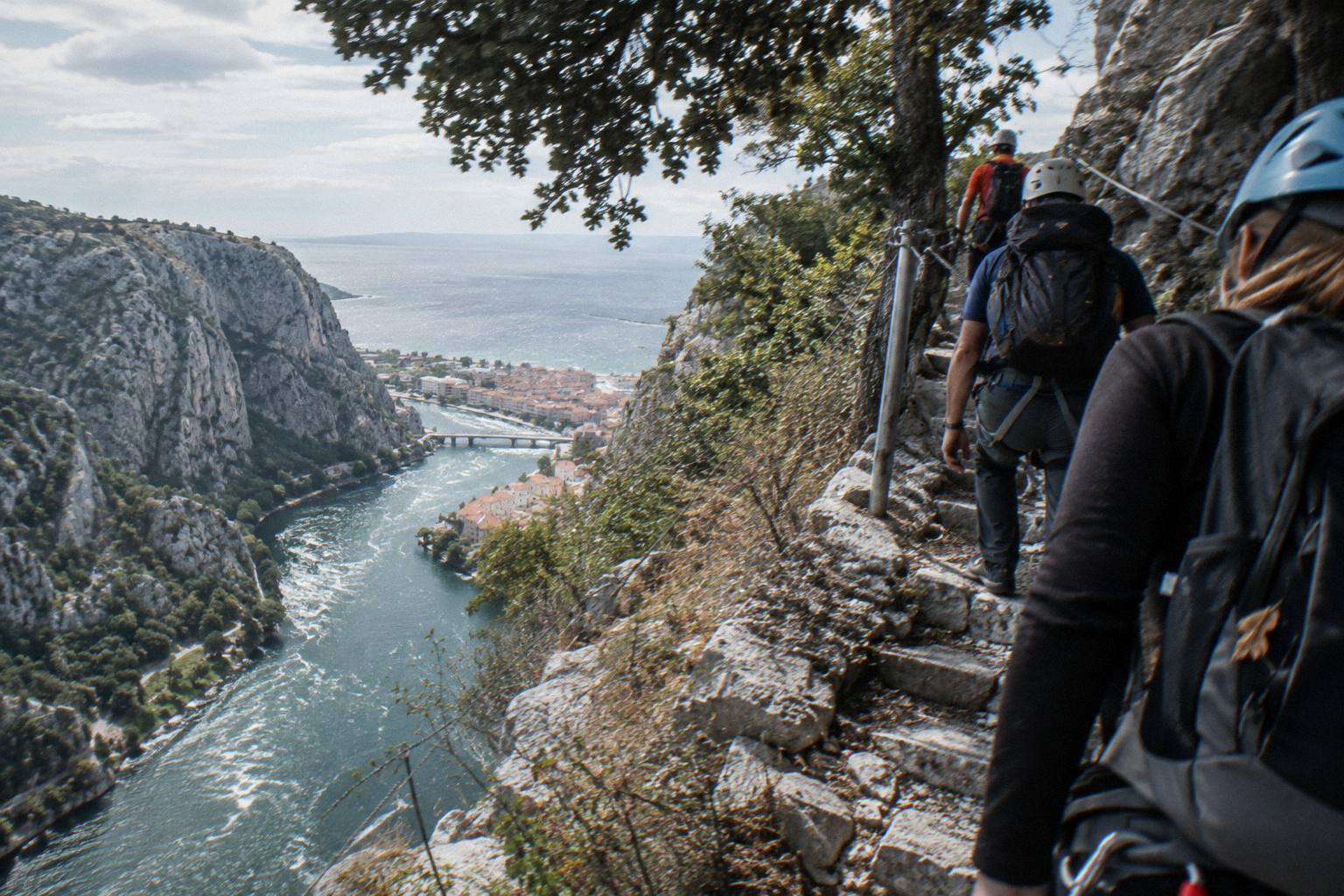
Whichever park suits you, these three options cover the canyon at Omiš and the course at Klis.
Common Questions About Safety On The Omiš Course
How Many Guides Are With Each Group On The Omiš Zipline?
Two guides accompany every group, and groups run from 2 to 12 riders. The operator, ZIPLINE Croatia, describes its guides as licensed. On a full group that is one guide per six riders, and on quieter slots the ratio is closer to private.
Is There A Practice Line Before The Big Ziplines?
Yes, two of them. Every session on the Omiš course begins with two practice lines of 25 m each, well before riders reach the longer lines, the longest of which is 700 m. It is the part of the day designed to let you and the guides check how you respond before anything high.
What Are The Age And Weight Limits?
The minimum age is 7 and the published minimum weight is 30 kg. The upper weight limit is confirmed at booking, so anyone near a limit should ask the operator before paying. There is no published height rule for the Omiš course.
What Happens If I Panic On A Line?
No procedure for mid-line panic is published, so this is a question to put to the operator directly when you book. What the structure does offer is early detection: the two 25 m practice lines let you and the guides see how you react before you commit to the long lines, and telling a guide your concerns at that stage is the moment designed for it.
Can I Cancel If I Change My Mind About Riding?
Yes, up to 24 hours before the experience, free of charge, on both Omiš products. That window lets you book a slot now, ask the operator your safety questions in the meantime, and walk away at no cost if the answers do not satisfy you.
Does The Tour Include Transport From Split?
No. The Omiš course starts at the operator's office in Omiš old town, with vehicle transport from there to the canyon start included. There is no Split transfer. Travelers who want a Split pickup should look at the Klis course on Mount Kozjak, where the transfer is an optional paid add-on.