What To Wear And Bring For The Canyon Zipline Near Omiš
Practical clothing and packing advice for the Cetina canyon course at Omiš: footwear, layers, hair, phones, water, and what the 5 to 10 minute uphill hike means for your kit.
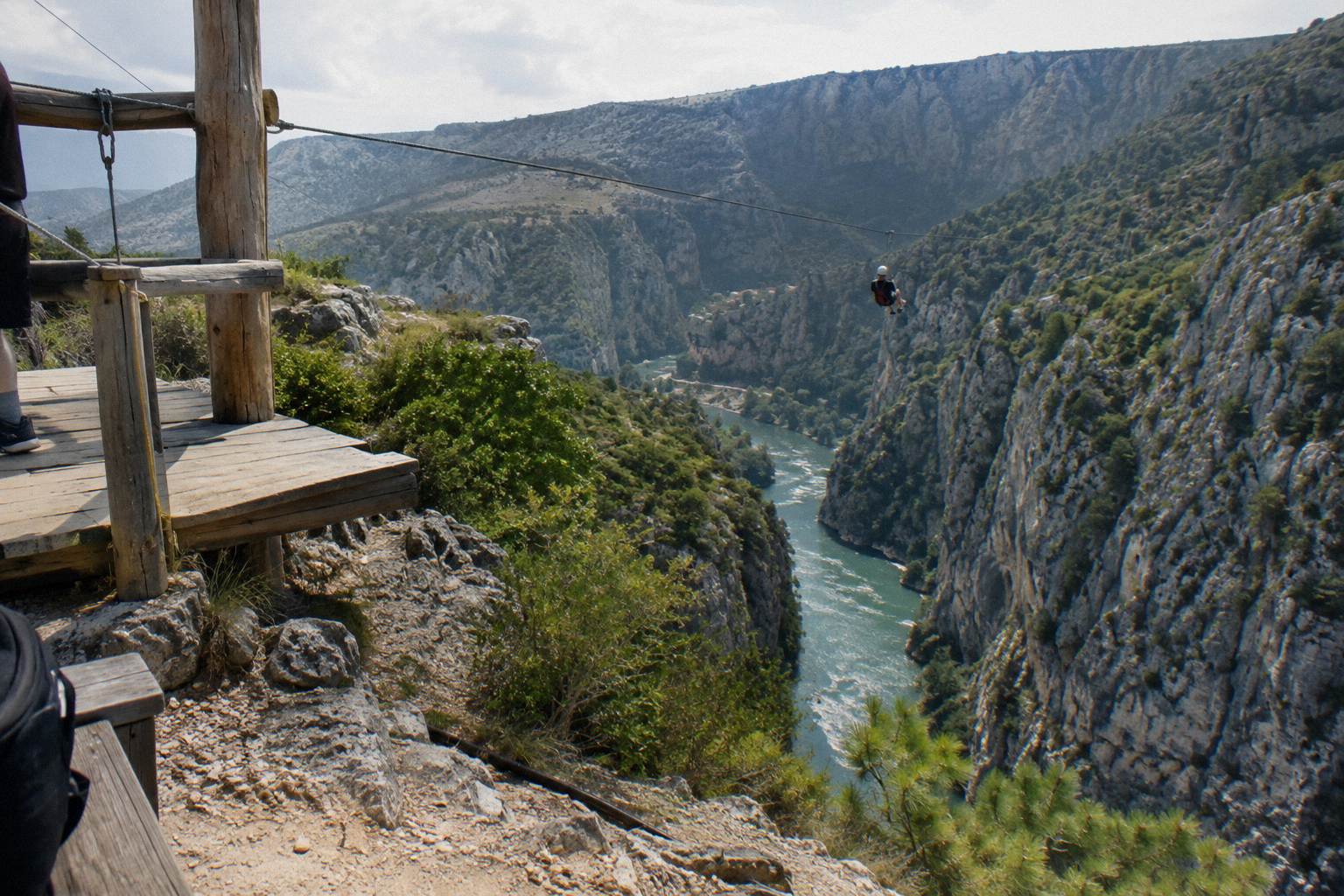
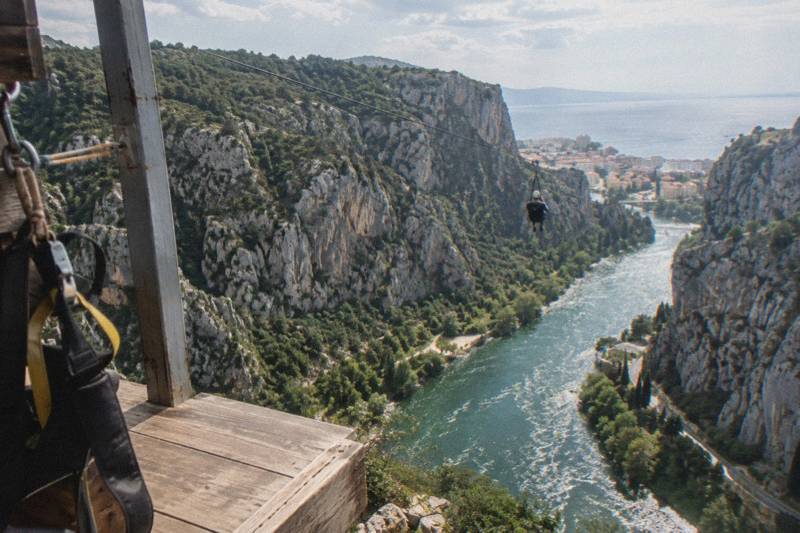
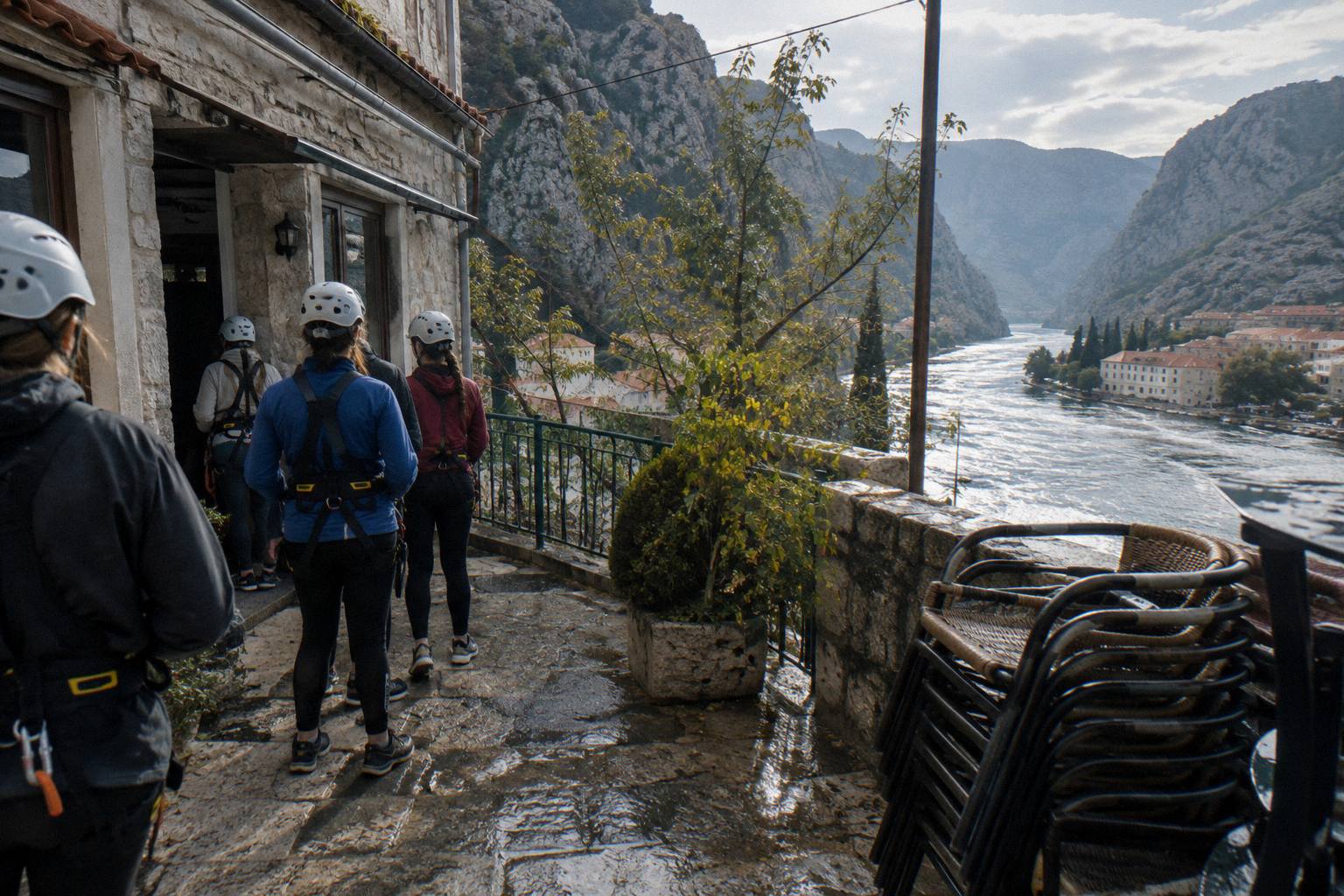
The Cetina carves its final kilometres through a limestone gorge before reaching the sea at Omiš, and the zipline course above that gorge asks more of your shoes than of anything else you wear. The river runs about 101 km from its source to its Adriatic mouth, per the Cetina river overview, and the stretch you fly over sits inside a protected landscape. ZIPLINE Croatia, the operator of the Omiš course, publishes no dress code. What it does publish shapes every clothing decision on this page: a meeting point in Omiš old town, included vehicle transport to the start, and a short uphill hike of 5 to 10 minutes before the first line.
This is a general-advice packing guide, not a set of operator rules. Nothing here is supplied, required or prohibited by the operator unless the page says so plainly. Where a fact is confirmed, such as the group size of 2 to 12 with two guides, or the two 25 m practice lines that open every session, it comes from the operator and its booking pages. Everything else is the kind of sensible preparation any hiker would recognise.
Before the kit list, one orientation note that saves people a packing mistake. There are two zipline parks on this stretch of the Dalmatian coast, and they are not the same trip. The Cetina canyon course at Omiš is run by ZIPLINE Croatia, and its 2.5-Hour Canyon Zipline Ride and 3-Hour Canyon Zipline Ride are the tours this page prepares you for. The Split course on Mount Kozjak at Klis is run by Zip Line Split and Homo Volans, a different park in different terrain, and one of its listings confirms that a harness, helmet, gloves and bottled water are provided. That provision detail belongs to Kozjak alone. Do not assume it applies at Omiš, and pack accordingly.
What To Wear And Bring For Ziplining Above Omiš
Wear closed, grippy shoes and clothing you can hike and harness in: training shoes or light hiking shoes, trousers or long shorts, a fitted top, and hair tied back. Bring water, sun protection, a layer for the canyon air, and minimal valuables. No operator dress code is published for the Omiš course, so this is general preparation built around the confirmed facts: a 5 to 10 minute uphill hike, a harness, and time spent outdoors.
That is the whole answer in one paragraph. The rest of this page explains why each item earns its place, what the confirmed course facts imply for your kit, and where the two Omiš listings differ in ways that affect your bag rather than your wardrobe. The 2.5-Hour Canyon Zipline Ride by ZIPLINE Croatia and the 3-Hour Canyon Zipline Ride run the same 8 lines, the same 2,100 m, and the same meeting point in the old town, so one packing list serves both. If you are still choosing between them, the Omiš tour comparison guide breaks down how the two listings differ.
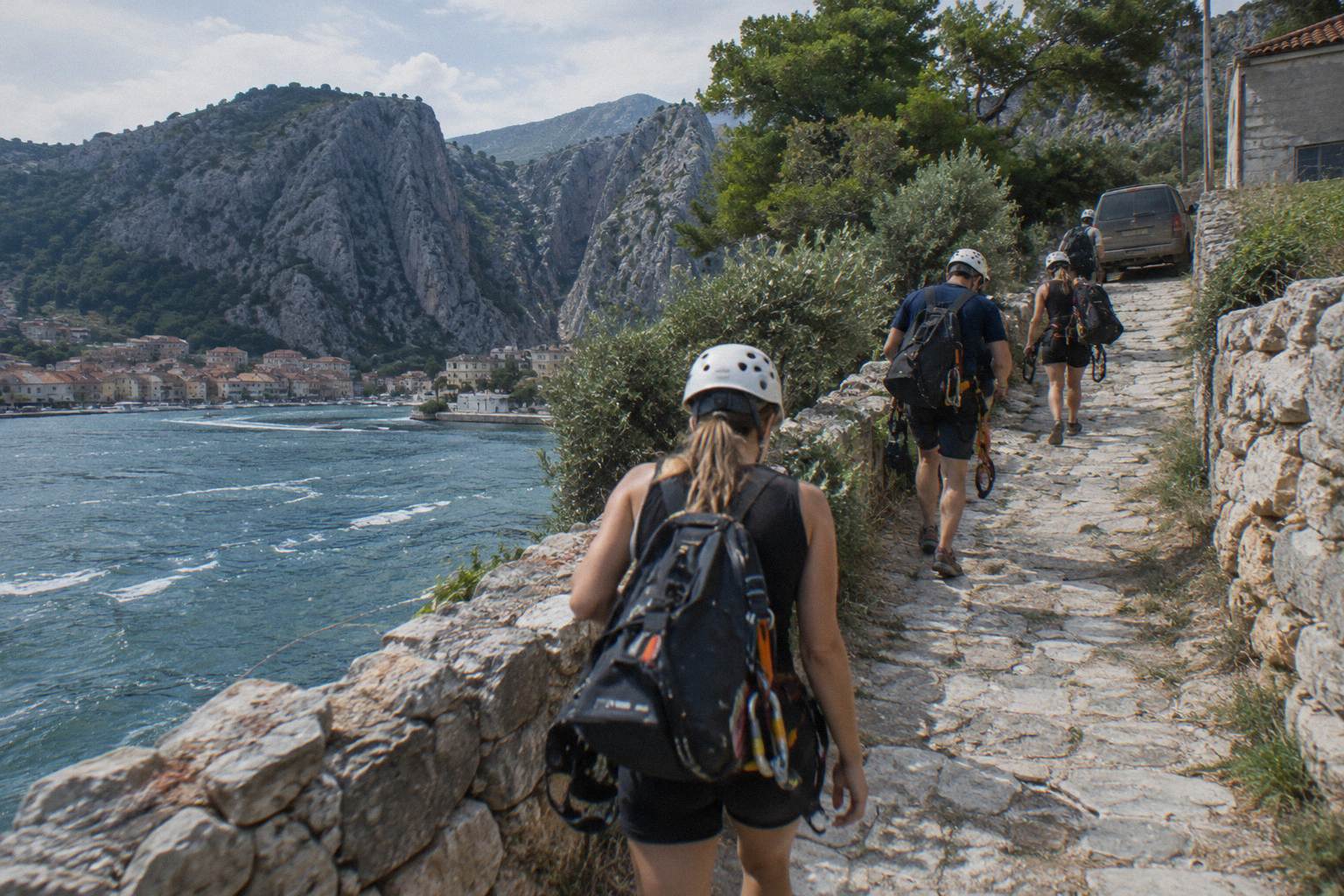
The single most useful mental shift is this: you are dressing for a short canyon hike that happens to include flying, not for a flying session that happens to include walking. The operator confirms vehicle transport from the old town office to the start area, which removes the long approach, and then a 5 to 10 minute uphill hike before the first line, which puts the approach back in miniature. Shoes matter for those minutes more than for anything on the wires themselves, because once you are clipped in, the guides and the gear do the work.
What Shoes Work Best For The Uphill Approach?
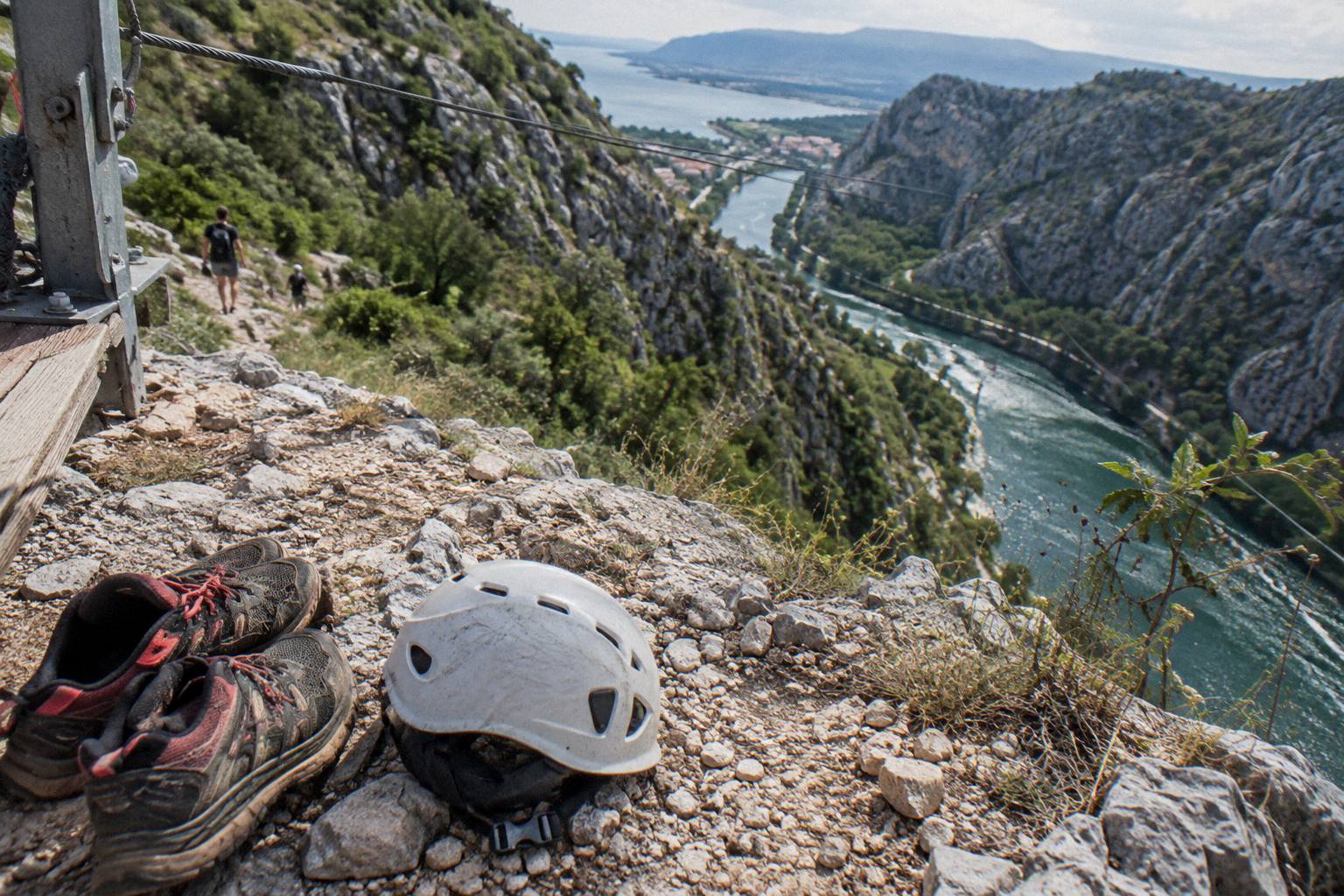
Closed-toe shoes with real tread are the one item worth being strict about. The confirmed 5 to 10 minute uphill hike before the first line covers canyon ground, and the same shoes carry you back down after the final line. Training shoes, trail shoes or light hiking shoes all work. Sandals, flip-flops, high heels and smooth-soled plimsolls do not, for reasons of grip and harness comfort rather than any published rule.
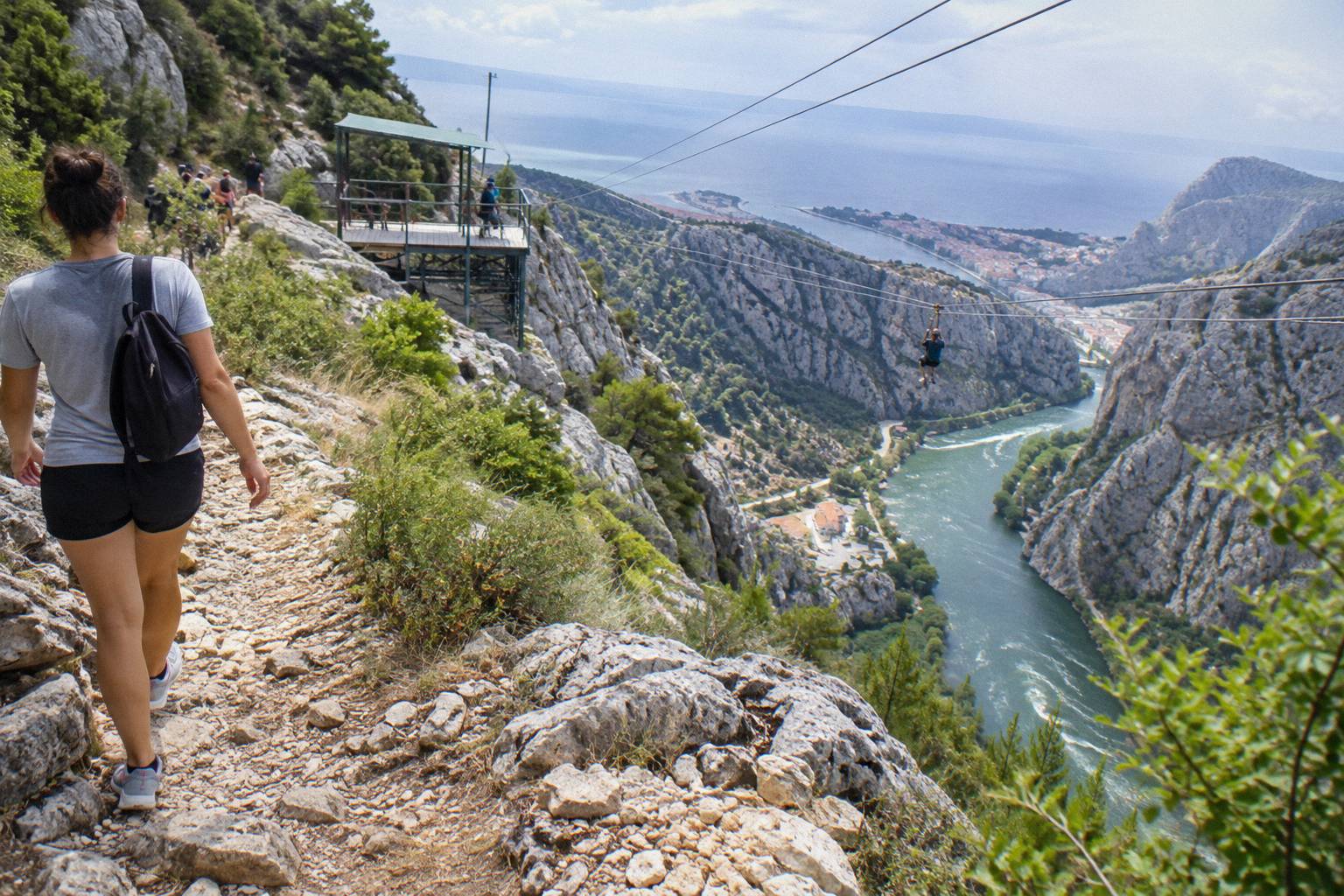
The uphill hike is short but genuine. Ten minutes of canyon slope is enough to turn a smooth sole into a slipping problem on loose limestone gravel, and it is enough to remind you why hiking shoes exist. You do not need mountaineering boots. A pair of ordinary trainers with a healthy tread pattern handles this terrain comfortably, and many riders wear exactly that. What you want to avoid is the shoe that looks fine on the seafront promenade in Omiš and behaves badly on the first gravel section of the approach.
There is a second, quieter reason for closed shoes: the harness. On any zipline, the seating harness puts load through the thighs and hips while your feet hang free or make contact with platforms and ground at each station. Closed shoes protect your toes on the platforms and give you something solid to stand on during the two 25 m practice lines that open the session. Those practice lines are exactly where riders fumble a landing or two, and where a stubbed toe in a sandal would colour the rest of the morning. You can read more about how the full session runs in the guide to how the Omiš course works.
A note on laces. Anything loose flapping around a platform, a harness or a guide's equipment check is a minor annoyance you can remove in five seconds at home. Tie them properly, tuck the ends, and the question is closed.
Does Clothing Matter Under A Harness?
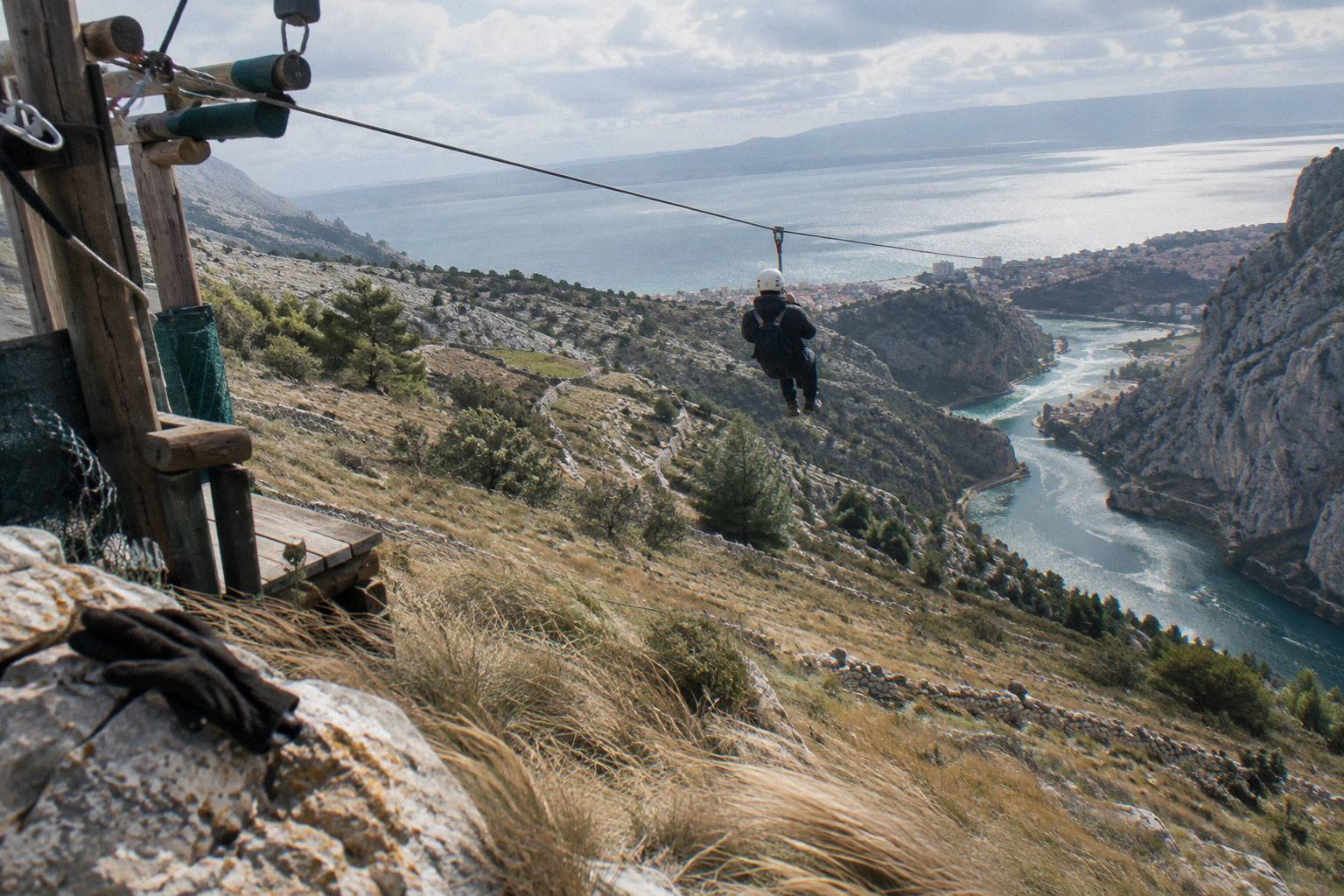
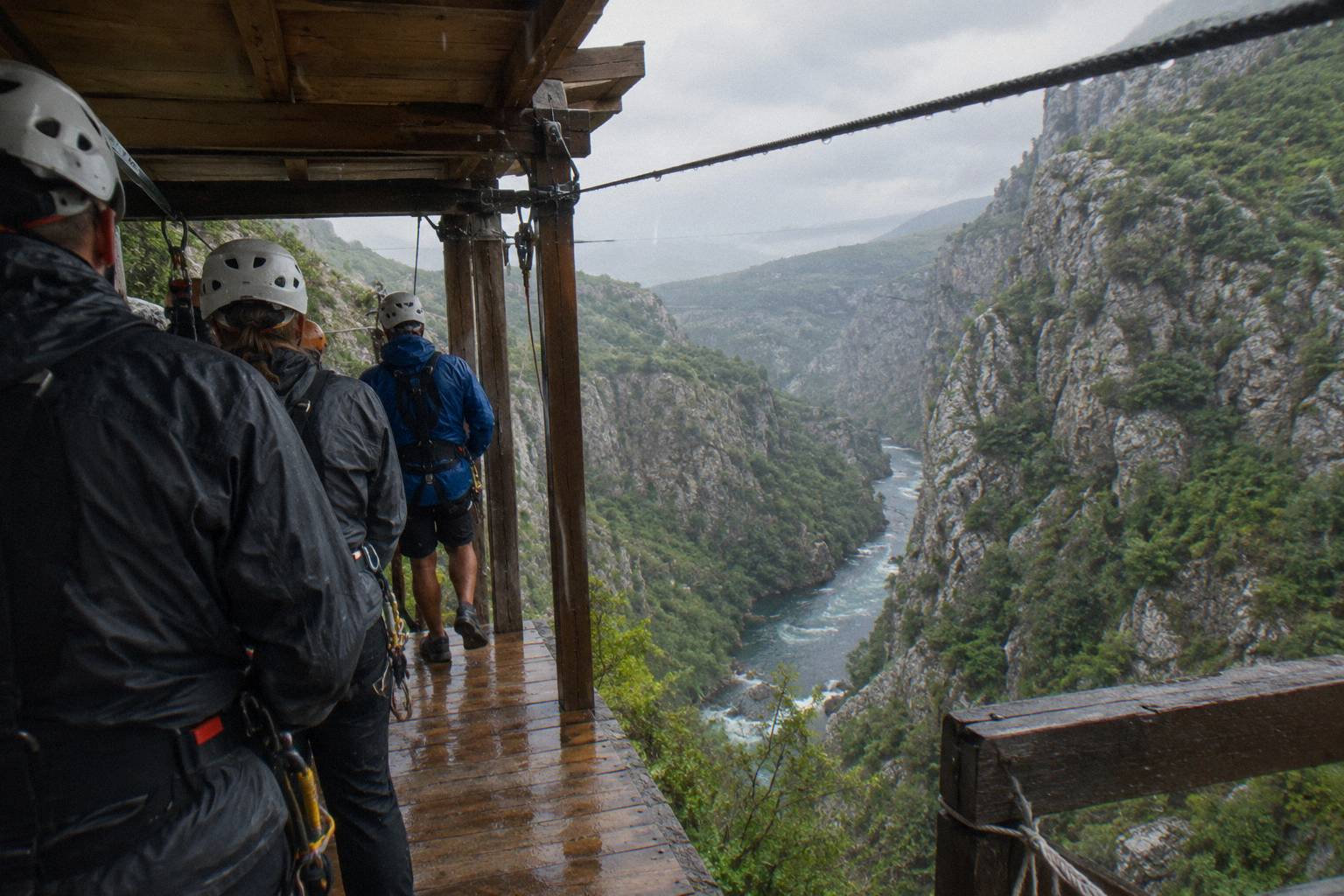
Yes, more than most first-time riders expect. A zipline harness wraps around your waist and thighs, so fitted clothing beats loose layers, and trousers or longer shorts beat very short ones. Avoid anything with dangling cords, scarves or long loose sections. The course runs up to 150 m above ground, where air moves differently than it does at the old town office, so a light layer you can shed is worth packing.
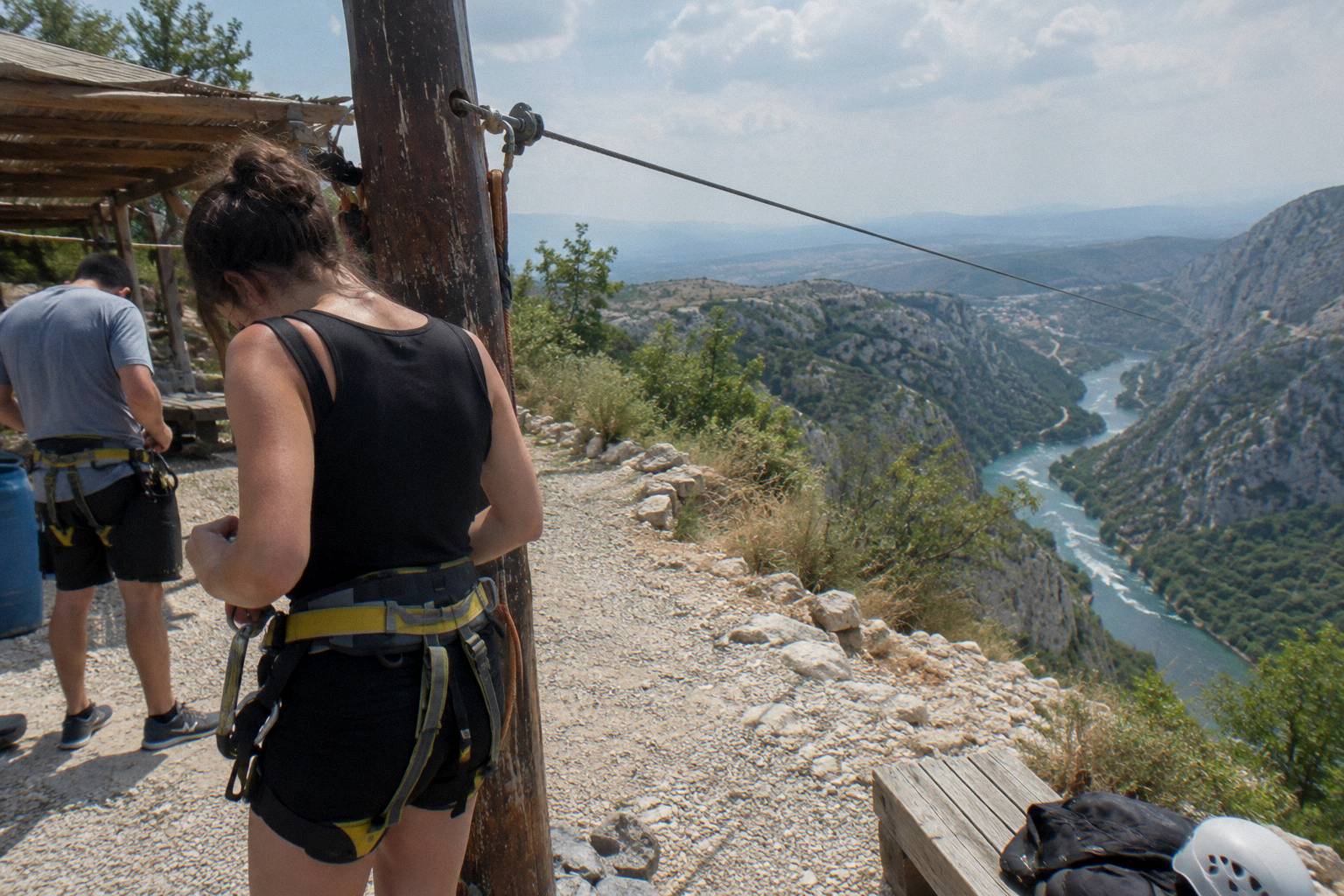
Start with the lower half. Longer shorts or trousers keep the harness leg loops off bare skin, which is a comfort matter across a 2.5 to 3 hour session rather than a safety one. Leggings, joggers, hiking trousers and knee-length shorts all behave well. Very short shorts work, technically, but riders who wear them tend to notice the leg loops by line three or four. Jeans are fine in cool weather and warm in July; there is no wrong answer, only a trade-off between the walk up and the air at height.
The upper half is about fit and layers. A fitted t-shirt is the base for most of the season. Over it, bring one light layer, a fleece or a windproof shell, even on a day that feels hot at sea level in Omiš. The canyon walls shade sections of the course at different times of day, and the higher lines run through air that has been funnelling down a limestone gorge. The protected Cetina canyon designation covers a landscape shaped by exactly that funnelling. A layer that fits in a small backpack costs nothing to carry and solves the whole question.
Hair deserves its own sentence. Long hair must go up and, ideally, back: a low bun or plaited tail rather than a high ponytail, because a helmet sits on your crown and a helmet plus a high ponytail is a headache within ten minutes. The same logic applies to anything else that dangles. Necklaces, hoop earrings, lanyards and loose scarves all belong in a zipped pocket before the practice lines, not because of any rule the operator publishes, but because loose items and harness hardware are a poor pairing on any course in the world.
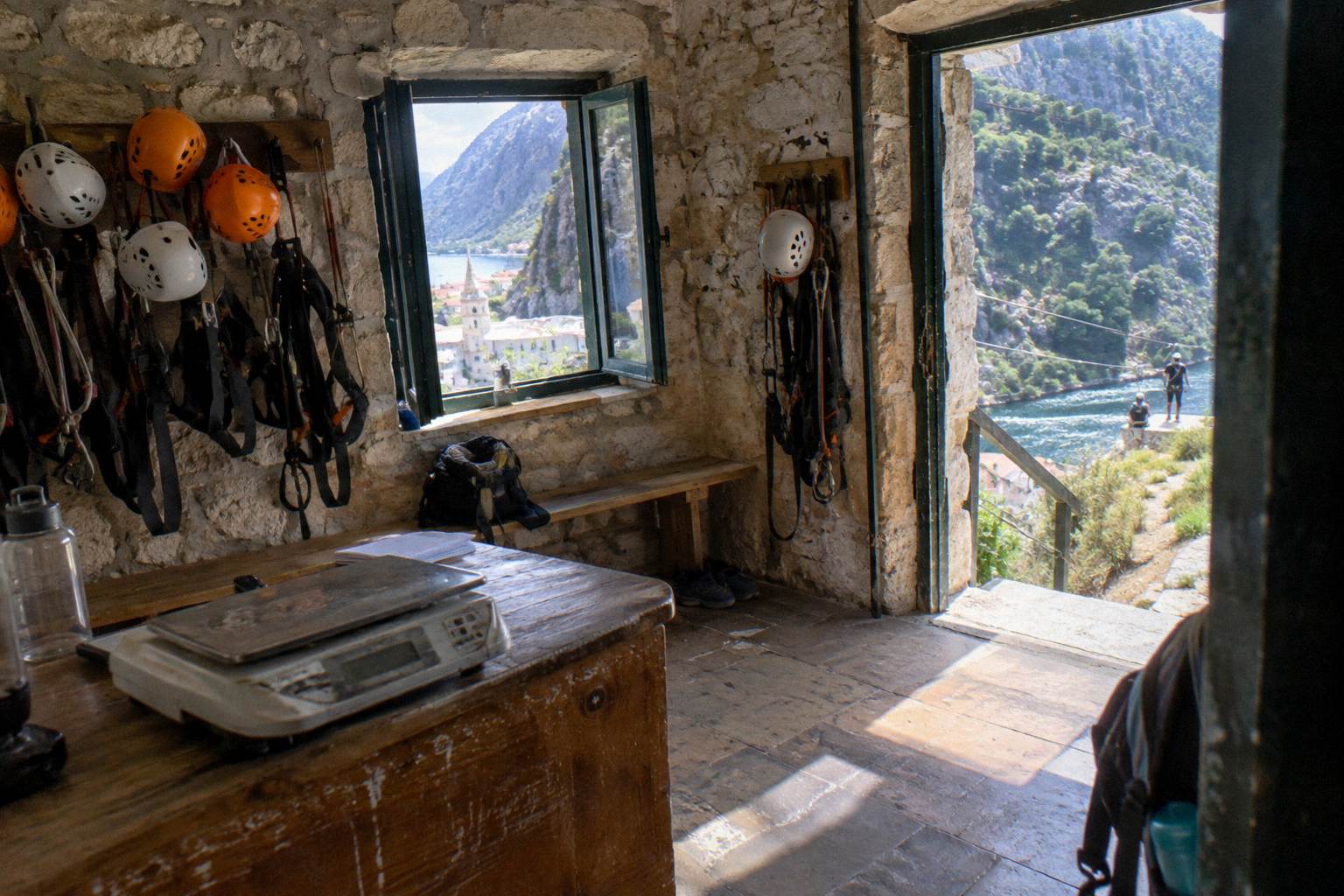
One contrast worth knowing while you plan: at the Mount Kozjak course in Klis, the Zip Line Split listing for the 3-Hour Zipline, Optional Transfer confirms that helmet, harness and gloves are provided. The Omiš course pages do not itemise their provided equipment the same way, so the safe planning posture at Omiš is to assume the operator supplies the technical gear you clip into and to bring nothing technical yourself. Gloves are the one item on the boundary: if your hands chill easily, a thin pair of your own weighs almost nothing.
Should You Take A Backpack On The Course?
A small backpack is useful for the hike and the waiting, but plan on leaving most of it behind at the start area or in the vehicle rather than carrying it on the lines. Bring a small daypack with water, a layer and sun protection, keep it light and zipped, and keep valuables to the absolute minimum: phone, a little cash or card, and nothing you would hate to lose.
The logistics support this. You meet at Ul. Josipa Pupačića 4 in the old town 15 minutes before your slot, ride to the start in the operator's vehicle, hike up for 5 to 10 minutes, and then spend 2.5 to 3 hours moving through 8 lines with your group of 2 to 12 and two guides. Somewhere in that sequence, before the practice lines, there is a natural moment to leave a bag where the vehicle and the tour logistics keep it. A small bag makes that easy. A suitcase does not, and yes, people arrive at old town offices with suitcases mid-transfer between accommodation; the office staff have seen it, but your day is better without it.
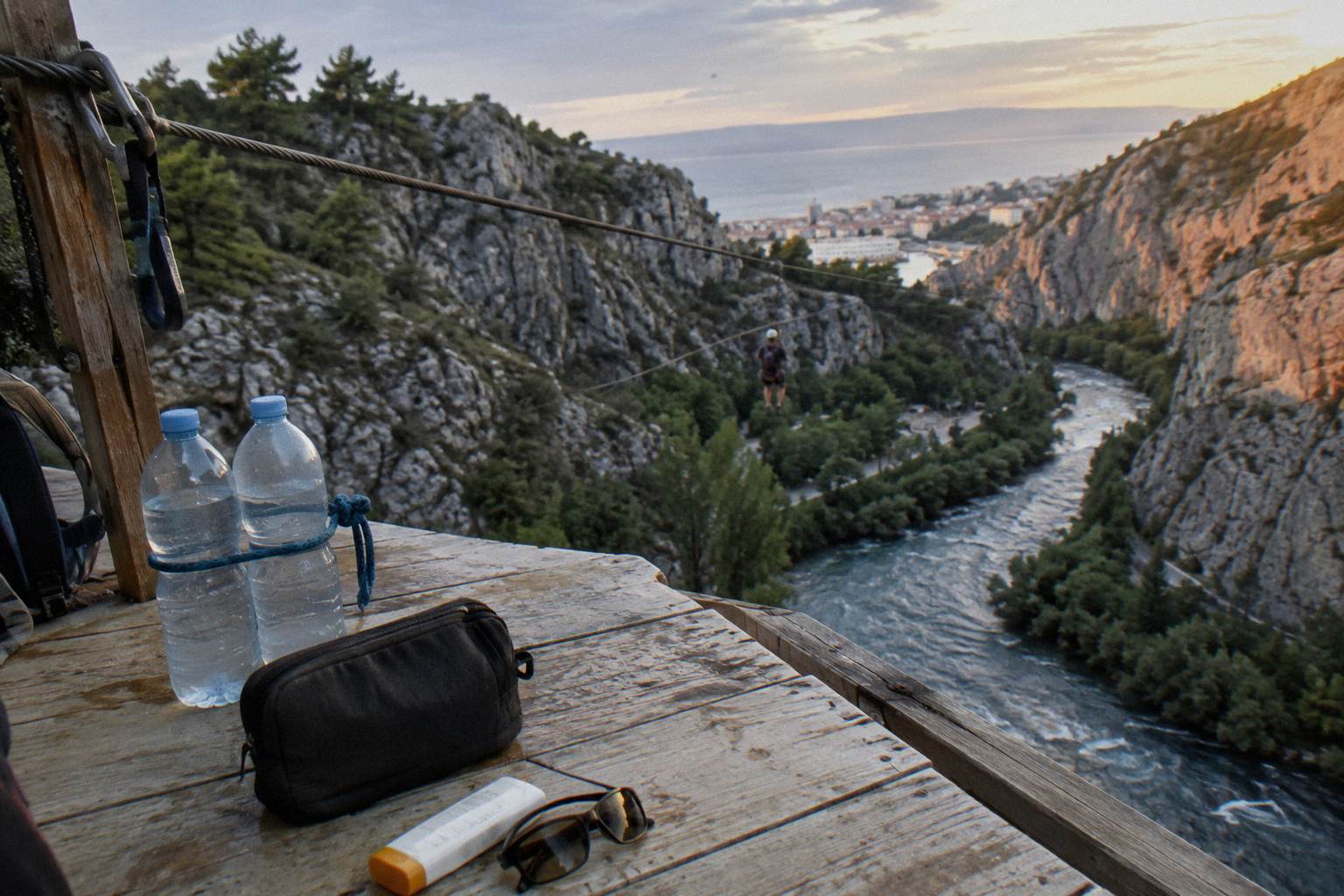
What goes in the small bag, in priority order. Water first: a 0.5 to 1 litre bottle, more in high summer, because a canyon hike plus a 700 m longest line plus waiting time between rides adds up to a genuinely thirsty morning. Second, the layer discussed above. Third, sun protection: sunscreen applied before you leave the accommodation, sunglasses with a retention strap, and a cap that fits under whatever headgear you end up wearing. Fourth, any personal medication you would not want to be without for three hours, from asthma inhalers to motion sickness tablets.
What stays out of the bag. Laptops, passports, jewellery, drones, large cameras, and anything on the "would ruin the trip if lost" list. There is no published secure-storage promise at the Omiš start area, so the correct posture is simply not to bring things that need securing. The phone question is big enough to deserve its own section below.
One packing decision flows from the booking itself rather than from the canyon. Every Omiš listing carries free cancellation up to 24 hours before, which means the weather question gets answered late. Pack the layer and the sunscreen both, decide on the morning, and let the 24 hour window be the deadline rather than the forecast from three days out.
What Does The Meeting Point Mean For Your Kit?
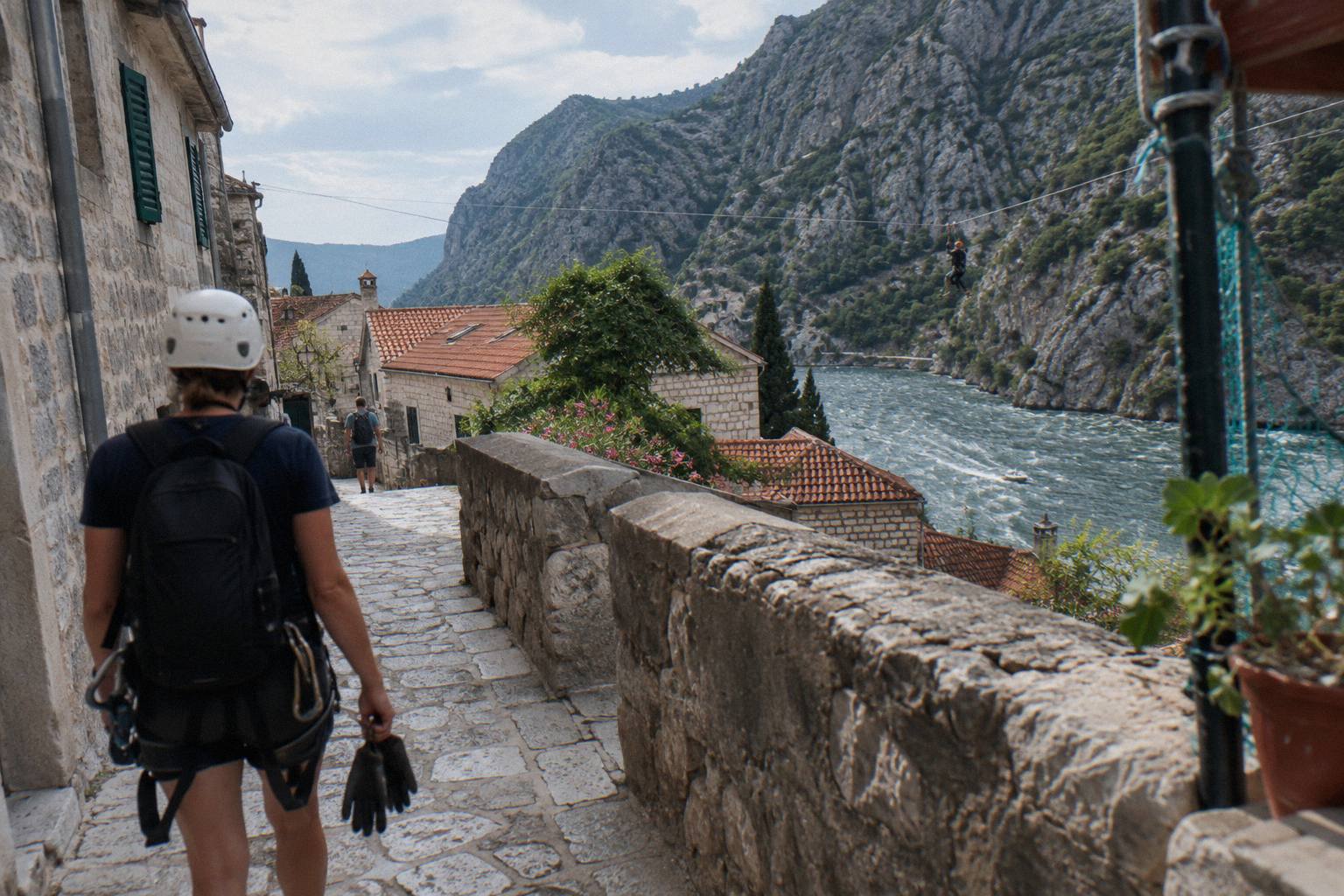
The Ul. Josipa Pupačića 4 office in Omiš old town is a town-centre meeting point, so you arrive dressed for a town and finish dressed for a canyon. Wear your hiking clothes or change before you leave your accommodation: there is no published changing facility at the office. Arrive 15 minutes early with your booking confirmation to hand and everything already in the small bag you plan to hike with.
Old town Omiš is stone streets and café terraces, and the office sits in the middle of it. The practical implication is that whatever you wear to the office is what you wear up the hill, unless you have planned a change in advance, and the operator confirms no changing arrangements at the meeting point. Riders staying in Omiš itself have it easy: the accommodation is minutes away and the decision costs nothing. Riders coming from further afield should treat the departure point as the changing room and arrive canyon-ready.
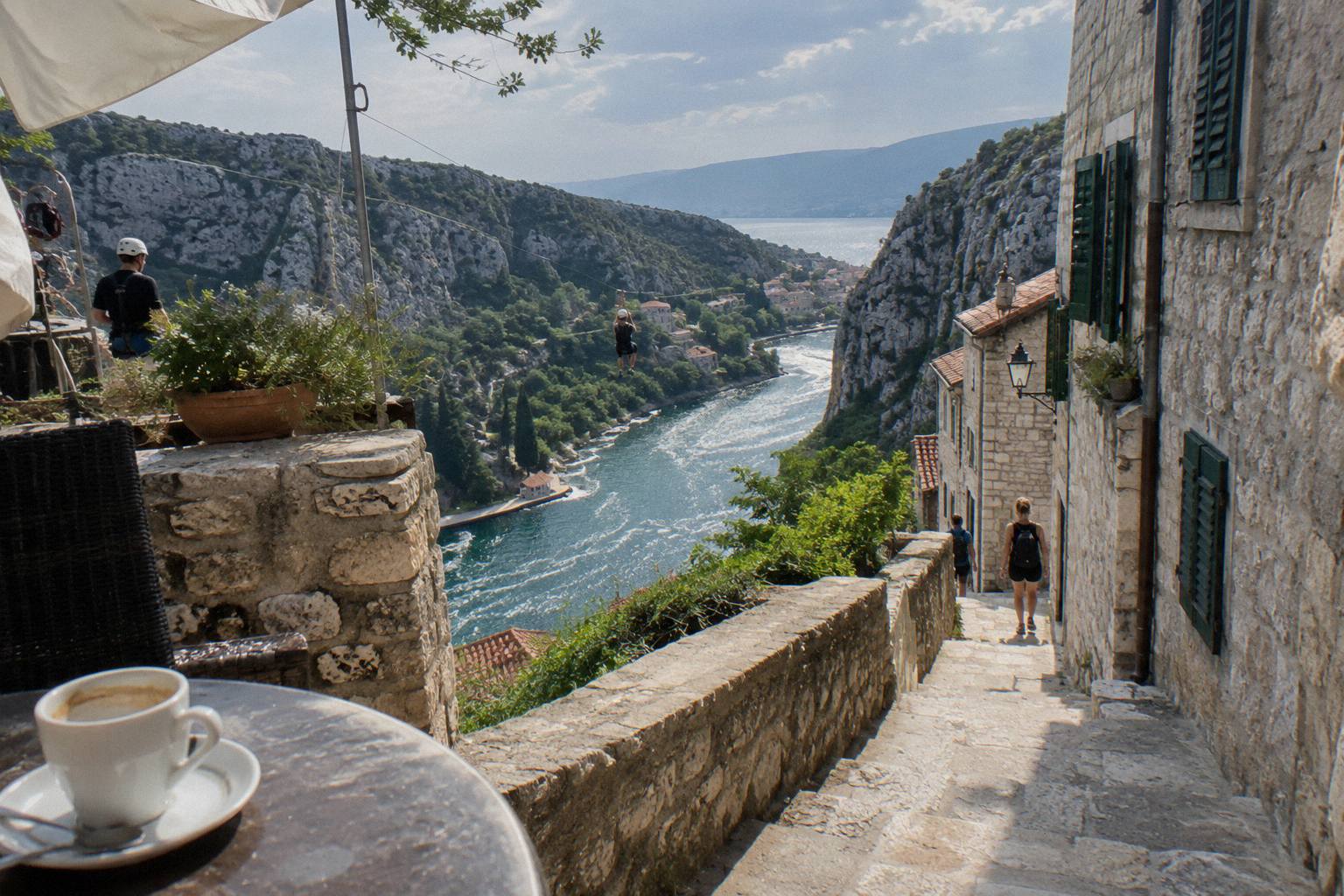
The 15 minute buffer is not padding. It covers check-in, the group assembling, and the practical questions that always come up before the vehicle leaves: where the bags go, who has the water, which of the 2 to 12 riders in your group has done a zipline before. Arriving at the office at the stroke of your start time means the group waits or the departure compresses, and neither is a good note to begin on. Fifteen early minutes with a coffee on the seafront is the version of this morning everyone prefers.
Keep the confirmation accessible. A screenshot on your phone beats a PDF buried in email, because old town streets are not the place to be hunting for signal. The booking pages for both Omiš tours, the 2.5-hour and 3-hour versions, price from €80 per person, and the confirmation carries the details that match what the office expects. If you have not booked yet and want the price and cancellation picture in one place, the comparison in the tours-compared guide covers both rows; when you are ready, you can also check availability for the 2.5-Hour Canyon Zipline Ride directly.
Can You Bring A Phone Or Camera?
A zipped-pocket phone is realistic and common; a loose phone is not. Bring your phone secured in a zipped trouser or shorts pocket or a small zipped bag, and treat anything heavier, such as a camera or an action camera on a mount, as something to ask the guides about at the start rather than assume. No operator photo policy is published for the Omiš course, so the safe default is minimal kit and questions on arrival.
The physics of the situation are simple. You will be leaning into a harness up to 150 m above the canyon floor on the longest lines, with both hands free, and anything not secured will find the lowest pocket, the gap, or the open air. Shirts with chest pockets, shorts with loose side pockets and jackets with unzipped pockets are where phones live dangerously. One zipped pocket solves it. If your hiking clothes have none, a small zipped hip bag worn tight is the next best thing, and it doubles as the wallet and key solution.
The dedicated camera question is worth a paragraph of its own, because the canyon is the kind of place that makes people regret leaving a camera behind. A small point-and-shoot in a zipped pocket is manageable. An action camera is a different conversation: mounts, straps and sticks interact with helmets and harnesses in ways that vary course by course and operator by operator, and the Omiš operator publishes no policy on them. The right move is to ask the two guides during check-in at the office, before the vehicle leaves. Their answer on the day is the only one that counts, and the guide to cameras and photos at Omiš walks through the whole question in more depth.
What you can plan without asking: battery and storage. A three hour outdoor morning with a camera-happy owner drains a phone faster than a normal day, and cold canyon mornings in the shoulder season drain it faster again. Charge fully, carry a small power bank in the daypack you leave at the start, and clear some storage the night before. These are the boring preparations that separate a morning with photos from a morning with a black screen.
How Does The Season Change The Packing List?
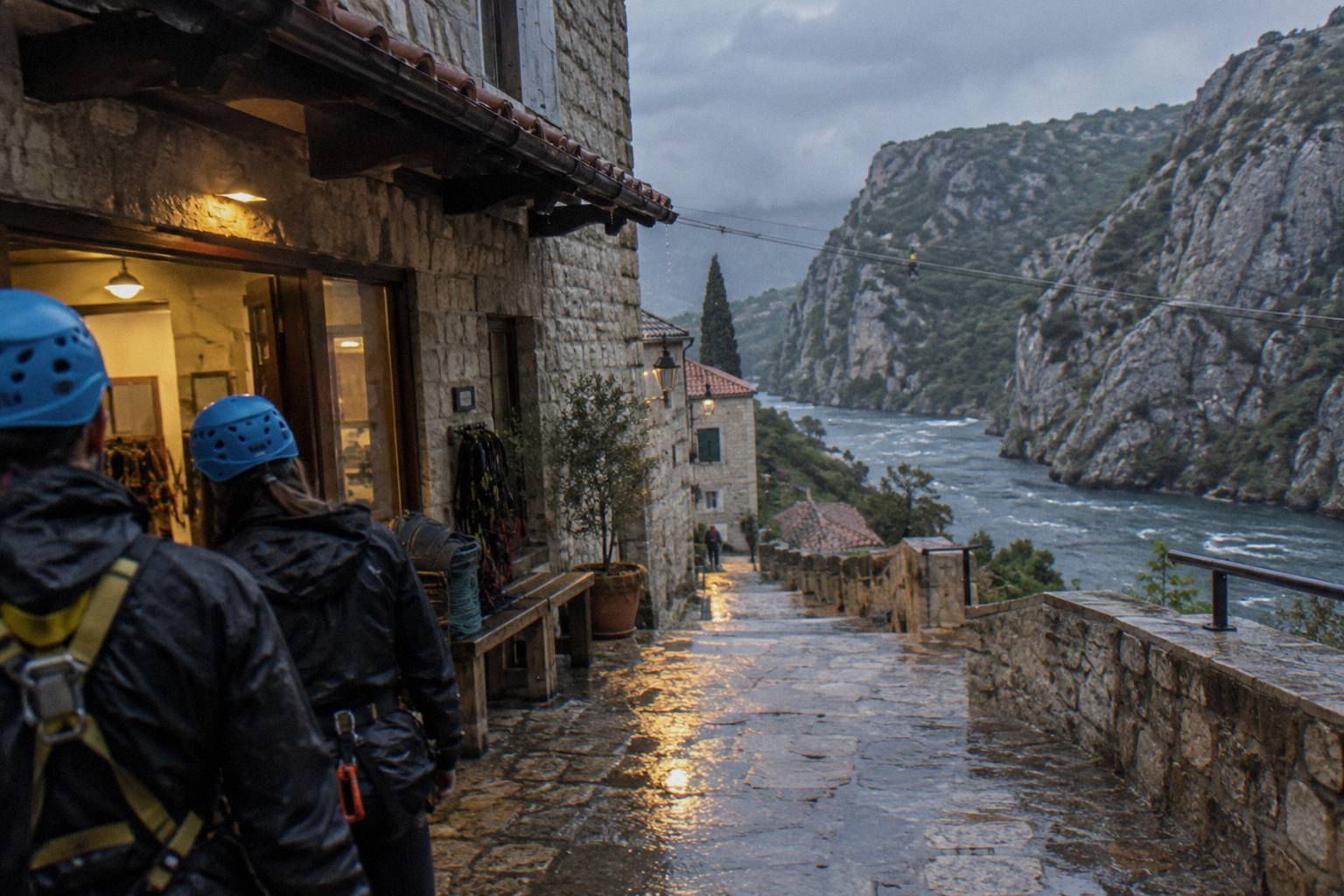
The course runs all year, by appointment off-season, so the packing list shifts with the calendar: full sun kit and extra water in summer, a warm layer and rain awareness in spring and autumn, and a genuine cold-weather plan for winter visits. The confirmed constant across every season is the 5 to 10 minute uphill hike, so the shoes never change, only what goes in the daypack.
Summer is the season of sun and water management. High sun on exposed limestone is unforgiving, and the course spends hours above a canyon rather than under trees. Sunscreen applied before departure, a cap, sunglasses with a strap, and a full water bottle are the four summer non-negotiables, and the general advice is to start drinking before the hike rather than waiting for thirst at the top. A tube of sunscreen in the daypack lets you top up before the return hike, and the layer can be skipped on all but the earliest departures.
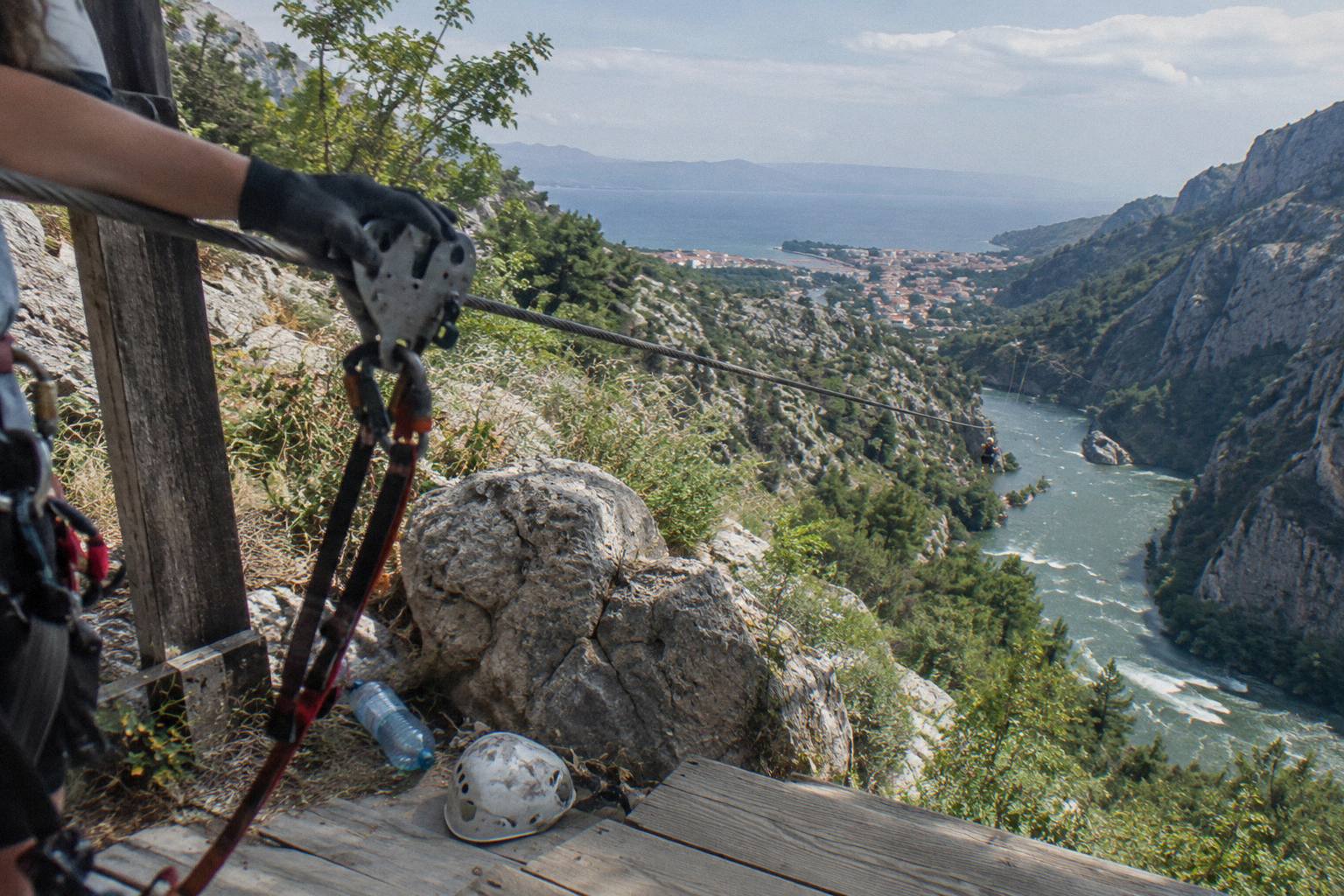
Spring and autumn are the two-faced seasons of the Dalmatian coast, and the ones where the layer earns its space. A morning that begins mild in Omiš old town can turn cool at height two hours later, and a light rain shower over the canyon is a normal event rather than a shock. A windproof shell packs to nothing and covers both cases. Check the forecast the evening before, pack for the pessimistic version, and remember that the 24 hour free cancellation on both Omiš listings means a genuinely bad forecast has a cost-free answer. The season and conditions guide covers the timing question in full.
Winter riding is a real option here rather than a theoretical one, since the operator runs all year with off-season visits by appointment. The winter packing list is the summer list reversed: warm base layer, fleece, shell, gloves if your hands run cold, and the same grippy shoes, now doing more work on a potentially damp uphill hike. Daylight matters too in the off-season, since a 2.5 to 3 hour session plus the old town meeting eats a visible slice of a short winter afternoon. Booking a morning slot is the general advice.
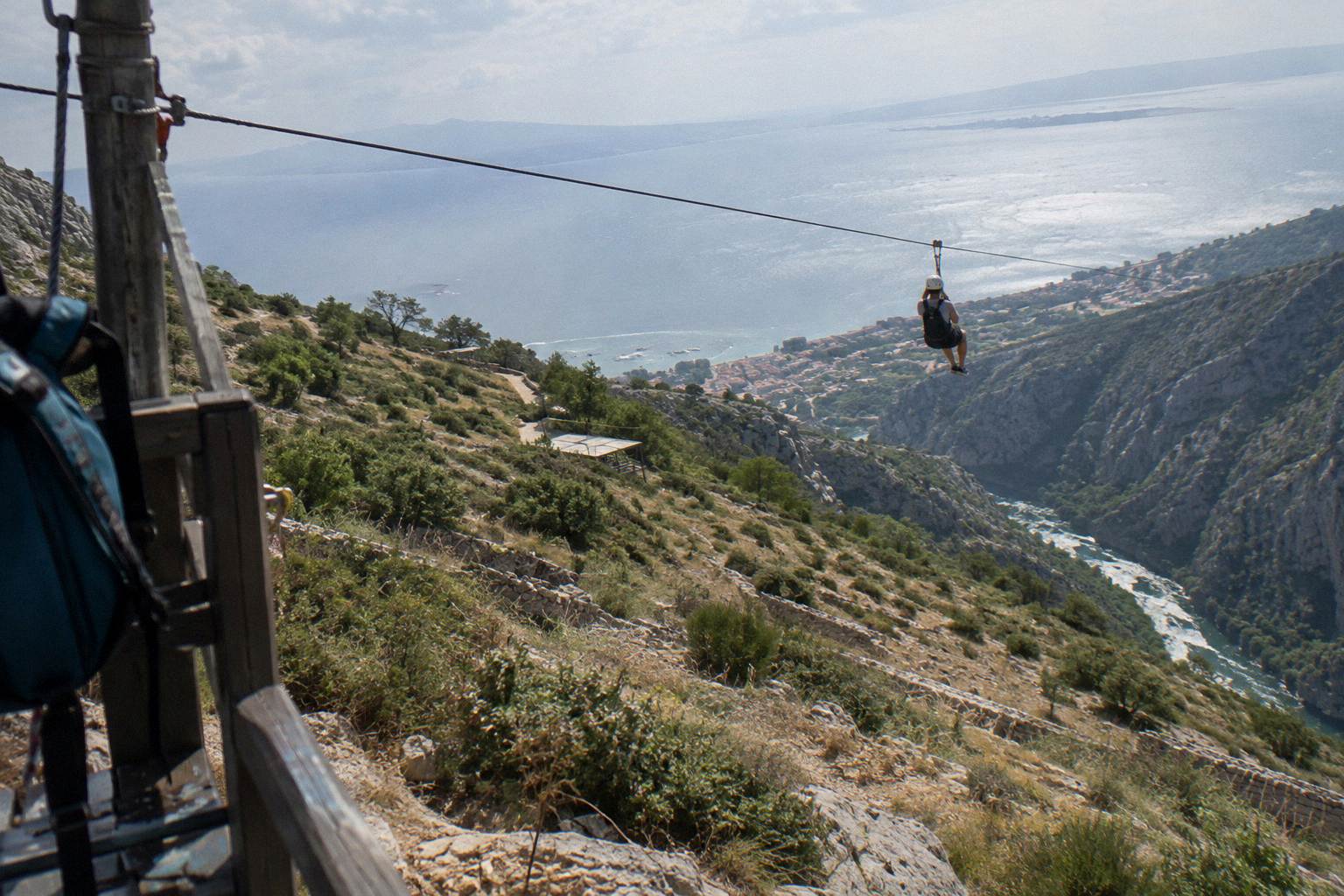
What Trips People Up When Packing?
The recurring mistakes are small and avoidable: sandals for the uphill hike, a suitcase at the old town office, a phone in an open pocket, no water for a three hour morning, and assuming the Kozjak course's provided-equipment list applies at Omiš. Each one costs a rider comfort rather than safety, and each one is fixed by a five minute decision the night before.
The equipment-assumption mistake deserves the clearest wording because it is the one readers are most likely to make. The Klis course on Mount Kozjak, run by Zip Line Split and Homo Volans, has listings that confirm harness, helmet, gloves and bottled water as provided, alongside its own figures: 6 lines, 2,500 m total, an 800 m longest line and a weight range of 30 to 110 kg. The Omiš canyon course, run by ZIPLINE Croatia, has its own figures, 8 lines and 2,100 m among them, and its pages do not itemise provided equipment the same way. Mixing the two lists is the classic preparation error on this coast: a rider reads the Klis provision list, books Omiš, and arrives assuming bottled water is part of the deal. Bring your own water and the question never arises.
The second trap is packing for the postcard rather than the morning. Omiš in photographs is a beach town at a river mouth, and it is tempting to dress for the seafront. The course, though, is a canyon session with a hike at the start, and the seafront outfit fails the first gravel section. Dress for the hike, look slightly overdressed for the promenade for the fifteen minutes between the café and the office, and be exactly right for the next three hours.
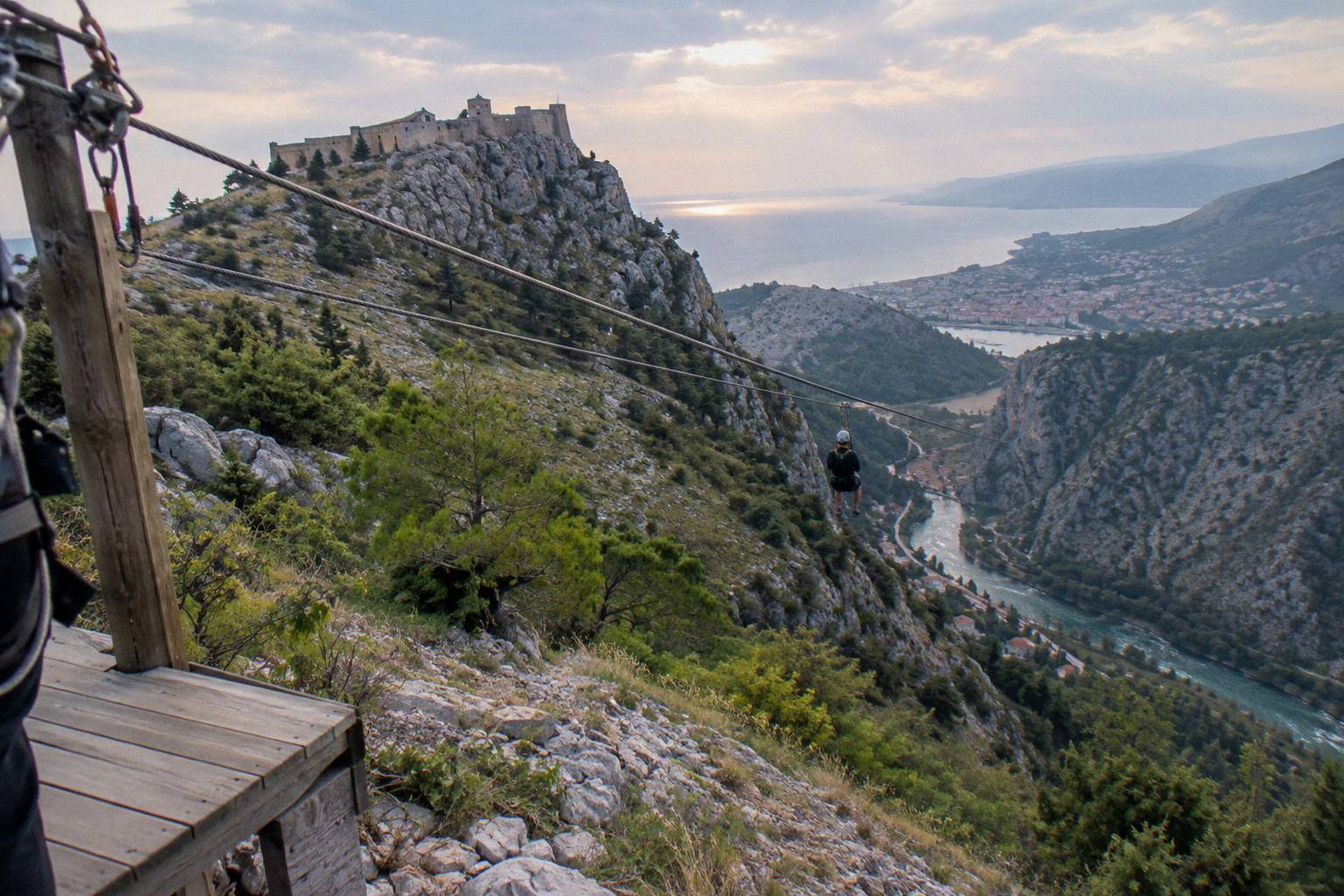
The third trap is the group one. Groups run 2 to 12 riders with two guides, and in a family or friends group the packing quality averages out across everyone: one person with water becomes everyone's water vendor, one person in sandals slows the uphill hike for the group. A two minute group message the night before, "closed shoes, water, tied hair, small bag", is the highest value preparation on this entire page. The minimum age on the Omiš course is 7, so family groups with younger riders should read the age and limits breakdown before confirming slots.
| Kit Item | Why It Earns Its Place | Confirmed Basis |
|---|---|---|
| Closed grippy shoes | The 5 to 10 minute uphill hike before the first line | Operator course description |
| Trousers or long shorts | Harness comfort across 2.5 to 3 hours of riding | General advice |
| Light layer or shell | Heights up to 150 m above the canyon floor | Operator course description |
| Water bottle | Outdoor morning of 2.5 to 3 hours plus the hike | General advice |
| Zipped pocket or small bag | Hands free on lines up to 700 m long | General advice |
| Sun protection | Exposed limestone canyon setting, summer especially | General advice |
Common Questions About Packing For The Canyon Course
What To Wear And Bring For Ziplining Above Omiš?
Wear closed, grippy shoes and comfortable hiking clothes you can wear under a harness, with hair tied back. Bring water, sun protection, a light layer and your phone in a zipped pocket. No operator dress code is published for the Omiš course, so treat this as sensible preparation built around the confirmed 5 to 10 minute uphill hike and a 2.5 to 3 hour outdoor session.
Do I Need Special Shoes For Ziplining At Omiš?
No special shoe is needed, only ordinary closed shoes with decent tread. Training shoes, trail shoes or light hiking shoes all handle the confirmed 5 to 10 minute uphill approach. Sandals and smooth soles are the footwear to avoid, for grip on the hike and comfort on the platforms rather than because of any published rule.
Are Helmets And Gloves Provided At The Omiš Course?
The Omiš operator's pages do not itemise provided equipment, so plan on the technical riding gear being supplied and bring nothing technical yourself. At the separate Mount Kozjak course in Klis, the Zip Line Split listing does confirm helmet, harness, gloves and bottled water as provided. If your hands chill easily at Omiš, bring a thin pair of your own gloves.
Can I Bring A Backpack On The Lines?
Bring a small daypack for water, a layer and sun protection, and plan to leave it with the vehicle or at the start before the riding begins rather than carrying it on the lines. Keep valuables to a minimum: phone, payment, and nothing whose loss would matter. A zipped pocket or small hip bag covers what you keep on you.
What Should I Do With My Phone?
Keep it in a zipped pocket or small zipped bag for the whole session. Anything loose finds its way out when you are leaning into a harness up to 150 m above the ground. Charge fully and clear storage the night before, and ask the two guides about action-camera mounts at check-in, since no camera policy is published for the course.
Does The Packing List Change In Winter?
Yes. The course runs all year, by appointment off-season, so a winter visit swaps the sun kit for a warm layer, a shell and gloves, while the grippy shoes stay constant for the uphill hike. Book a morning slot in the shorter winter daylight, and use the 24 hour free cancellation on both Omiš listings if the forecast turns.
One last pairing note for riders comparing the coast's two courses. ZIPLINE's 3-Hour Canyon Zipline Ride covers the same Omiš terrain as its 2.5-hour sibling, so the kit list above is identical for both; the difference sits in the booked duration and the check-in rhythm, not in what you wear. Riders heading to the Klis course instead should check the Split-side options overview for how the two parks sit together, since the Kozjak base carries its own weight range of 30 to 110 kg and its optional paid transfer from Split. Whichever course you choose, the preparation is the same shape: proper shoes, a small bag, tied hair, and fifteen early minutes in the right place.
The final checklist, compressed: shoes with tread, trousers or long shorts, fitted top, one layer, hair up and back, water, sunscreen, sunglasses with a strap, phone in a zipped pocket, confirmation screenshotted, and nothing you would mourn. Arrive at Ul. Josipa Pupačića 4 in Omiš old town 15 minutes before your slot dressed for a canyon rather than a promenade, and the packing part of the day is finished before the vehicle even leaves.